


Wydawcy
Katalog tematyczny
- Archeologia (109)
- Ekonomia, finanse, business (13704)
- Filozofia (1445)
- Historia (3040)
- Języki i językoznawstwo (2356)
- Lifestyle, hobby i rozrywka (475)
- Medycyna (9704)
- Nauki humanistyczne (4)
- Nauki o Ziemi i środowisku (2638)
- Nauki ścisłe (20412)
- Nauki społeczne (8486)
- Nauki techniczne (13450)
- Budownictwo lądowe (1045)
- Chemia przemysłowa (2258)
- Elektronika i telekomunikacja (3287)
- Energetyka (1122)
- Inne nauki stosowane (363)
- Inżynieria biochemiczna (507)
- Inżynieria transportu (232)
- Mechanika i materiały (3316)
- Nauka o środowisku (321)
- Rolnictwo (507)
- Technika, ogólnie (475)
- Prawo (1696)
- Publikacje informacyjne i interdyscyplinarne (1288)
- Religia i wierzenia (917)
- Technika komputerowa (4067)
- Zdrowie, relacje międzyludzkie i rozwój osobisty (657)





Informacje szczegółowe o książce
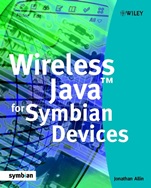
Wireless Java for Symbian Devices
ISBN 9780471486848
Autor: Jonathan Allin, Colin Turfus, Alan Robinson, Lucy Sweet, John Bown
Wydawca: Wiley
Dostępność: 3-6 tygodni
Cena: 466,20 zł
Przed złożeniem zamówienia prosimy o kontakt mailowy celem potwierdzenia ceny.
ISBN13: |
9780471486848 |
ISBN10: |
0471486841 |
Autor: |
Jonathan Allin, Colin Turfus, Alan Robinson, Lucy Sweet, John Bown |
Oprawa: |
Paperback |
Rok Wydania: |
2001-08-24 |
Ilość stron: |
512 |
Wymiary: |
235x189 |
Tematy: |
TJ |
......as computing moves away from the desktop and into our hands, we demand ever–higher reliability. Device manufacturers and service providers can no longer afford to think in terms of proprietary systems. They think instead of open standards and cross–platform Java technology." From the foreword by Greg Papadopoulos, CTO, Sun Microsystems, Inc.
Java(TM) is the preferred language for developing applications and services on the Symbian OS: It is a powerful programming environment that enables fast, secure deployment of applications and services onto a wide range of wireless devices. Symbian′s Java implementation gives developers access to key wireless technologies, including telephony, contacts management, calendaring, Datagram messaging and power monitoring.
Complete with numerous illustrative and real–world examples, this ′from–the–source′ guide provides developers with authoritative, practical and timely information on:
∗ using the Symbian Software Development Kits.
∗ the JavaPhone and Personal Java APIs, and how they are implemented.
∗ writing efficient and optimized code for constrained devices.
∗ understanding and working with Java on Communicator reference designs.
∗ creating games.
∗ accessing native functionality through JNI (Java Native Interface).
∗ creating wireless services.
∗ operator and service provider issues, including security, provisioning, rapid and reliable development.
The book also contains contributions from Colin Turfus, Lucy Sweet, Alan Robinson and John Bown of Symbian and wireless case studies from Digia Oy (A Symbian Competence Center) and Telenor R&D.
Spis treści:
Foreword (Greg Papadopoulos, CTO, Sun Microsystems, Inc.).
SECTION 1.
Getting started.
The development tools including a look at the SDK, emulator and Java tools. Compiling a ′Hello World′ program an
d deploying a program on target devices.
The Crystal Communicator reference design.
An introduction to Crystal, the Crystal APIs and design considerations. Command button arrays, the virtual cursor, Crystal Toolkit APIs and putting it all together.
The Quartz Communicator reference design.
An introduction to Quartz, the anatomy of a Quartz application, APIs and tuning Java applications for Quartz.
SECTION 2.
PersonalJava.
Summary of PersonalJava, a look at the Symbian implementation of PersonalJava, the timer classes and example, the capability interfaces, what they are and how they relate to Quartz and Crystal reference designs.
JavaPhone.
The JavaPhone architecture and working with JavaPhone, conventions, JavaPhone on the Symbian OS, the APIs and resources.
Games.
Models for games, multiplayer games, separation of distinct engine parts. Strategy games and action games design issues, platform constraints. Case–study: wireless four player Whist, with example code.
UI Guidelines.
A round–up of Symbian devices and how they support Java. Creating a user interface that works, writing applications that look good and work well on constrained devices.
Optimization.
Guidelines for optimization, tools for optimization, and enhancing Java ′s performance. Design patterns, memory management and what ′s next in enhancing Java performance on WIDs.
SECTION 3.
Creating Wireless Services.
Understanding the needs and wants of service providers and network operators, and how Java fits in with these. Benefits and limits of Java on WIDs, opportunities, security and application delivery.
Security.
Developing a secure environment, the components necessary to create a secure environment, Symbian OS v6.0 security capabilities and security management in the future.
Provisioning.
The MID Profile, Applets,the Java service provisioning manager, Java Web Start, MExE –iBus//Mobile messaging service.Case Studies.
Two case studies from the wireless community: the ′Simple Conference Service ′ is an example of a chat/draw service from Digia Oy, a Symbian Competence Center; and the ′Handheld Travel Assistant ′,a location–based mapping service from Telenor R&D.
SECTION 4.
JNI Programming.
What is the Java Native Interface? JNI and the Symbian OS, the build environment for JNI projects and troubleshooting tips.
Looking to the Future.
Beyond Symbian OS v6,J2ME technologies, Jini, MExE and WAP.
Nota biograficzna:
JONATHAN ALLIN is Symbian′s Java Technology Manager. He is one of a number of people in Symbian whose role is to ensure that Symbian provides a first class Java platform for wireless information devices. He is responsible for Symbian′s Wireless Java technology training program and wrote the Java section in Professional Symbian Programming.
Okładka tylna:
"......as computing moves away from the desktop and into our hands, we demand ever–higher reliability. Device manufacturers and service providers can no longer afford to think in terms of proprietary systems. They think instead of open standards and cross–platform Java technology." From the foreword by Greg Papadopoulos, CTO, Sun Microsystems, Inc.
Java(TM) is the preferred language for developing applications and services on the Symbian OS: It is a powerful programming environment that enables fast, secure deployment of applications and services onto a wide range of wireless devices. Symbian′s Java implementation gives developers access to key wireless technologies, including telephony, contacts management, calendaring, Datagram messaging and power monitoring.
Complete with numerous illustrative and real–world examples, this ′from–the–source′ guide provides developers with authoritative, practical and timely information on:
∗ using the Symbian
Software Development Kits.
∗ the JavaPhone and Personal Java APIs, and how they are implemented.
∗ writing efficient and optimized code for constrained devices.
∗ understanding and working with Java on Communicator reference designs.
∗ creating games.
∗ accessing native functionality through JNI (Java Native Interface).
∗ creating wireless services.
∗ operator and service provider issues, including security, provisioning, rapid and reliable development.
The book also contains contributions from Colin Turfus, Lucy Sweet, Alan Robinson and John Bown of Symbian and wireless case studies from Digia Oy (A Symbian Competence Center) and Telenor R&D.
Koszyk
Książek w koszyku: 0 szt.
Wartość zakupów: 0,00 zł
Informacje


Kontakt
Gambit
Centrum Oprogramowania
i Szkoleń Sp. z o.o.
Al. Pokoju 29b/22-24
31-564 Kraków
Siedziba Księgarni
ul. Kordylewskiego 1
31-542 Kraków
+48 12 410 5991
+48 12 410 5987
+48 12 410 5989
Subskrypcje
Administratorem danych osobowych jest firma Gambit COiS Sp. z o.o. Na podany adres będzie wysyłany wyłącznie biuletyn informacyjny.
Autoryzacja płatności

Informacje na temat autoryzacji płatności poprzez PayU.

© Copyright 2012: GAMBIT COiS Sp. z o.o. Wszelkie prawa zastrzeżone.
Projekt i wykonanie: Alchemia Studio Reklamy