


Wydawcy
Katalog tematyczny
- Archeologia (109)
- Ekonomia, finanse, business (13704)
- Filozofia (1445)
- Historia (3040)
- Języki i językoznawstwo (2356)
- Lifestyle, hobby i rozrywka (475)
- Medycyna (9704)
- Nauki humanistyczne (4)
- Nauki o Ziemi i środowisku (2638)
- Nauki ścisłe (20412)
- Astronomia (294)
- Biologia (5119)
- Chemia (6540)
- Chemia analityczna (361)
- Chemia fizyczna (346)
- Chemia nieorganiczna (137)
- Chemia organiczna (535)
- Krystalografia (27)
- Minerologia (46)
- Fizyka (3309)
- Matematyka (4574)
- Nauki ścisłe, ogólnie (503)
- Nauki społeczne (8486)
- Nauki techniczne (13450)
- Prawo (1696)
- Publikacje informacyjne i interdyscyplinarne (1288)
- Religia i wierzenia (917)
- Technika komputerowa (4067)
- Zdrowie, relacje międzyludzkie i rozwój osobisty (657)





Informacje szczegółowe o książce
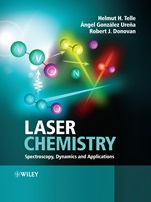
Laser Chemistry: Spectroscopy, Dynamics and Applications
ISBN 9780471485711
Autor: Helmut H. Telle, Angel González Ureña, Robert J. Donovan
Wydawca: Wiley
Dostępność: 3-6 tygodni
Cena: 426,30 zł
Przed złożeniem zamówienia prosimy o kontakt mailowy celem potwierdzenia ceny.
ISBN13: |
9780471485711 |
ISBN10: |
0471485713 |
Autor: |
Helmut H. Telle, Angel González Ureña, Robert J. Donovan |
Oprawa: |
Paperback |
Rok Wydania: |
2007-04-13 |
Ilość stron: |
516 |
Wymiary: |
246x189 |
Tematy: |
PN |
Laser Chemistry: Spectroscopy, Dynamics and Applications is a carefully structured introduction to the basic theory and concepts of this subject. Assuming little in the way of prior knowledge, the book details underlying concepts and provides an overview of experimental techniques, supported by a broad range of case studies.
Concentrating on molecular mechanisms and the fundamental nature of the phenomena, the book emphasises the basic science rather than presenting over–lengthy mathematical derivations and formalisms.
After introducing concepts and methodologies, an extensive range of examples in presented and discussed, covering spectroscopy, photochemistry, gas–phase, cluster, solution and surface reaction dynamics, analytical chemistry, medical chemistry and environmental chemistry. Additionally, a dedicated section on application is provided at the end of the book.assumes little prior knowledge and avoids excessive mathematical rigourdetailed treatments and key issues are presented in separate boxesconcentrates on molecular mechanism and the fundamental nature of laser chemistryprovides an overview of experimental techniques and a broad range of case studies
Laser Chemistry: Spectroscopy, Dynamics and Applications is a valuable reference for students of chemical physics, physical chemistry, photochemistry, laser spectroscopy and analytical chemistry.
Spis treści:
Preface.
About the authors.
Chapter 1 Introduction.
1.1 Basic concepts in laser chemistry.
1.2 Organization of the book.
Part 1 Principles of lasers and laser systems.
Chapter 2 Atoms and molecules, and their interaction with light waves.
2.1 Quantum states, energy levels and wave functions.
2.2 Dipole transitions and transition probabilities.
2.3 Einstein coefficients and excited–state lifetimes.
2.4 Spectroscopic line shapes.
2.5 The polarization of light waves.
2.6 Basic concepts of
coherence.
2.7 Coherent superposition of quantum states and the concept of wave packets.
Chapter 3 The basics of lasers.
3.1 Fundamentals of laser action.
3.2 Laser resonators.
3.3 Frequency and spatial properties of laser radiation.
3.4 Gain in continuous–wave and pulsed lasers.
3.5 Q–switching and the generation of nanosecond pulses.
3.6 Mode locking and the generation of picosecond and femtosecond pulses.
Chapter 4 Laser systems.
4.1 Fixed–wavelength gas lasers: helium–neon, rare–gas ion and excimer lasers.
4.2 Fixed–wavelength solid–state lasers: the Nd:YAG laser.
4.3 Tuneable dye laser systems.
4.4 Tuneable Ti:sapphire laser systems.
4.5 Semiconductor diode lasers.
4.6 Quantum cascade lasers.
4.7 Non–linear crystals and frequency–mixing processes.
4.8 Three–wave mixing processes: doubling, sum and difference frequency generation.
4.9 Optical parametric oscillation.
Part 2 Spectroscopic techniques in laser chemistry.
Chapter 5 General concepts of laser spectroscopy.
5.1 Spectroscopy based on photon detection.
5.2 Spectroscopy based on charged particle detection.
5.3 Spectroscopy based on measuring changes of macroscopic physical properties of the medium.
Chapter 6 Absorption spectroscopy.
6.1 Principles of absorption spectroscopy.
6.2 Observable transitions in atoms and molecules.
6.3 Practical implementation of absorption spectroscopy.
6.4 Multipass absorption techniques.
Chapter 7 Laser–induced fluorescence spectroscopy.
7.1 Principles of laser–induced fluorescence spectroscopy.
7.2 Important parameters in laser–induced fluorescence.
7.3 Practical implementation of laser–induced fluorescence spectroscopy.
Chapter 8 Light scattering methods: Raman spectroscopy and other processes.
8.1 Light scattering.
8.2 Principles of Raman spectroscopy.
8.3 Practic
al implementation of Raman spectroscopy.
Chapter 9 Ionization spectroscopy.
9.1 Principles of ionization spectroscopy.
9.2 Photoion detection.
9.3 Photoelectron detection.
9.4 Photoion imaging.
Part 3 Optics and measurement concepts.
Chapter 10 Reflection, refraction and diffraction.
10.1 Selected properties of optical materials and light waves.
10.2 Reflection and refraction at a plane surface.
10.3 Light transmission through prisms.
10.4 Light transmission through lenses and imaging.
10.5 Imaging using curved mirrors.
10.6 Superposition, interference and diffraction of light waves.
10.7 Diffraction by single and multiple apertures.
10.8 Diffraction gratings.
Chapter 11 Filters and thin–film coatings.
11.1 Attenuation of light beams.
11.1 Beam splitters.
11.3 Wavelength–selective filters.
11.4 Polarization filters.
11.5 Reflection and filtering at optical component interfaces.
11.6 Thin–film coatings.
Chapter 12 Optical fibres.
12.1 Principles of optical fibre transmission.
12.2 Attenuation in fibre transmission.
12.3 Mode propagation in fibres.
Chapter 13 Analysis instrumentation and detectors.
13.1 Spectrometers.
13.2 Interferometers.
13.3 Photon detectors exploiting the photoelectric effect.
13.4 Photodetectors based on band–gap materials.
13.5 Measuring laser power and pulse energy.
13.6 Analysis of charged particles for charge, mass and energy.
13.7 Charged–particle detection.
Chapter 14 Signal processing and data acquisition.
14.1 Signals, noise and noise reduction.
14.2 DC, AC and balanced detection methods.
14.3 Lock–in detection techniques.
14.4 Gated integration/boxcar averaging techniques.
14.5 Event counting.
14.6 Digital conversion and data acquisition.
Part 4 Laser studies of photodissociation, photoionization and unimolecular processes.
Chapter 15 Photodissociation of diatomic molecules.
15.1 Photofragment kinetic energy.
15.2 Angular distributions and anisotropic scattering.
15.3 Predissociation and curve crossing.
15.4 Femtosecond studies: chemistry in the fast lane.
15.5 Dissociation and oscillatory continuum emission.
Chapter 16 Photodissociation of triatomic molecules.
16.1 Photodissociation of water.
16.2 Photodissociation of ozone.
16.3 Laser–induced fluorescence and cavity ring–down studies.
16.4 Femtosecond studies: transition–state spectroscopy.
Chapter 17 Photodissociation of larger polyatomic molecules: energy landscapes.
17.1 Rydberg tagging.
17.2 Photodissociation of ammonia.
17.3 Selective bond breaking.
17.4 Molecular elimination and three–body dissociation.
Chapter 18 Multiple and multiphoton excitation, and photoionization.
18.1 Infrared multiple–photon activation and unimolecular dissociation.
18.2 Continuum intermediate states and bond stretching.
18.3 High–resolution zero kinetic energy photoelectron spectroscopy.
18.4 Autoionization.
18.5 Photoion–pair formation.
Chapter 19. Coherent control and the future of ultra–short probing.
19.1 Coherent control of chemical processes.
19.2 The future of attosecond probing.
Part 5 Laser studies of bimolecular reactions.
Chapter 20 Basic concepts of kinetics and reaction dynamics.
20.1 Résumé of kinetics.
20.2 Introduction to reaction dynamics: total and differential reaction cross–section.
20.3 Connection between dynamics and kinetics.
20.4 Basic concepts of potential energy surfaces.
20.5 Calculating potential energy surfaces.
Chapter 21 The molecular beam method: basic concepts and examples of bimolecular reaction studies.
21.1 Basic concepts.
21.2 Interpretation of spatial and energy distributions: dynamics of a two–body collision.
21.3 Interpretation of spatial and energy distributions: products angular and velo
Koszyk
Książek w koszyku: 0 szt.
Wartość zakupów: 0,00 zł
Informacje


Kontakt
Gambit
Centrum Oprogramowania
i Szkoleń Sp. z o.o.
Al. Pokoju 29b/22-24
31-564 Kraków
Siedziba Księgarni
ul. Kordylewskiego 1
31-542 Kraków
+48 12 410 5991
+48 12 410 5987
+48 12 410 5989
Subskrypcje
Administratorem danych osobowych jest firma Gambit COiS Sp. z o.o. Na podany adres będzie wysyłany wyłącznie biuletyn informacyjny.
Autoryzacja płatności

Informacje na temat autoryzacji płatności poprzez PayU.

© Copyright 2012: GAMBIT COiS Sp. z o.o. Wszelkie prawa zastrzeżone.
Projekt i wykonanie: Alchemia Studio Reklamy