


Wydawcy
Katalog tematyczny
- Archeologia (109)
- Ekonomia, finanse, business (13704)
- Filozofia (1445)
- Historia (3040)
- Języki i językoznawstwo (2356)
- Lifestyle, hobby i rozrywka (475)
- Medycyna (9704)
- Nauki humanistyczne (4)
- Nauki o Ziemi i środowisku (2638)
- Nauki ścisłe (20412)
- Nauki społeczne (8486)
- Nauki techniczne (13450)
- Prawo (1696)
- Publikacje informacyjne i interdyscyplinarne (1288)
- Religia i wierzenia (917)
- Technika komputerowa (4067)
- Zdrowie, relacje międzyludzkie i rozwój osobisty (657)





Informacje szczegółowe o książce
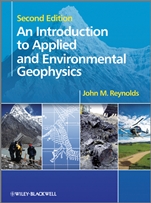
An Introduction to Applied and Environmental Geophysics
ISBN 9780471485353
Autor: John M. Reynolds
Wydawca: Wiley
Dostępność: 3-6 tygodni
Cena: 648,90 zł
Przed złożeniem zamówienia prosimy o kontakt mailowy celem potwierdzenia ceny.
ISBN13: |
9780471485353 |
ISBN10: |
0471485357 |
Autor: |
John M. Reynolds |
Oprawa: |
Hardback |
Rok Wydania: |
2011-04-18 |
Numer Wydania: |
2nd Edition |
Ilość stron: |
710 |
Wymiary: |
273x208 |
Tematy: |
AT |
An Introduction to Applied and Environmental Geophysics, 2nd Edition, describes the rapidly developing field of near–surface geophysics. The book covers a range of applications including mineral, hydrocarbon and groundwater exploration, and emphasizes the use of geophysics in civil engineering and in environmental investigations. Following on from the international popularity of the first edition, this new, revised, and much expanded edition contains additional case histories, and descriptions of geophysical techniques not previously included in such textbooks.
The level of mathematics and physics is deliberately kept to a minimum but is described qualitatively within the text. Relevant mathematical expressions are separated into boxes to supplement the text. The book is profusely illustrated with many figures, photographs and line drawings, many never previously published. Key source literature is provided in an extensive reference section; a list of web addresses for key organizations is also given in an appendix as a valuable additional resource.
Covers new techniques such as Magnetic Resonance Sounding, Controlled– Source EM, shear–wave seismic refraction, and airborne gravity and EM techniques Now includes radioactivity surveying and more discussions of down–hole geophysical methods; hydrographic and Sub–Bottom Profiling surveying; and UneXploded Ordnance detection Expanded to include more forensic, archaeological, glaciological, agricultural and bio–geophysical applications Includes more information on physio–chemical properties of geological, engineering and environmental materials Takes a fully global approach Companion website with additional resources available at www.wiley.com/go/reynolds/introduction2e Accessible core textbook for undergraduates as well as an ideal reference for industry professionalsThe second edition is ideal for students wanting a broad introduction to the subject and is also designed for practicing civil and geotechnical engineers, geologists, archaeologists and environmental scientists who heed an overview of modern geophysical methods relevant to their discipline. While the first edition was the first textbook to provide such a comprehensive coverage of environmental geophysics, the second edition is even more far ranging in terms of techniques, applications and case histories.
Preface to the 2nd Edition.
Acknowledgements.
1 Introduction.
1.1 What are ′applied′ and ′environmental′ geophysics?
1.2 Geophysical methods.
1.3 Matching geophysical methods to applications.
1.4 Planning a geophysical survey.
1.5 Geophysical survey design.
2 Gravity Methods.
2.1 Introduction.
2.2 Physical basis.
2.3 Measurement of gravity.
2.4 Gravity meters.
2.5 Corrections to gravity observations.
2.6 Interpretation methods.
2.7 Applications and case histories.
3 Geomagnetic Methods.
3.1 Introduction.
3.2 Basic concepts and units of geomagnetism.
3.3 Magnetic properties of rocks.
3.4 The Earth s magnetic field.
3.5 Magnetic instruments.
3.6 Magnetic surveying.
3.7 Qualitative interpretation.
3.8 Quantitative interpretation.
3.9 Applications and case histories.
4 Applied Seismology: Introduction and Principles.
4.1 Introduction.
4.2 Seismic waves.
4.3 Raypath geometry in layered ground.
4.4 Loss of seismic energy.
4.5 Seismic energy sources.
4.6 Detection and recording of seismic waves.
5 Seismic Refraction Surveying.
5.1 Introduction.
5.2 General principles of refraction surveying.
5.3 Geometry of refracted raypaths.
5.4 Interpretational methods.
5.5 Applications and case histories.
5.6 Shear wave methods.
6 Seismic Reflection Surveying.
6.1 Introduction.
6.2 Reflection surveys.
6.3 Reflection data processing.
6.4 Correlating seismic data with borehole logs and cones.
6.5 Interpretation.
6.6 Applications.
7 Electrical Resistivity Methods.
7.1 Introduction.
7.2 Basic principles.
7.3 Electrode configurations and geometric factors.
7.4 Modes of deployment.
7.5 Interpretation methods.
7.6 ERT applications and case histories.
7.7 Mise–`a–la–masse (MALM) method.
7.8 Leak detection through artificial membranes.
8 Spontaneous (Self) Potential Methods.
8.1 Introduction.
8.2 Occurrence of self–potentials.
8.3 Origin of self–potentials.
8.4 Measurement of self–potentials.
8.5 Corrections to SP data.
8.6 Interpretation of self–potential anomalies.
8.7 Applications and case histories.
8.8 Electrokinetic (EK) surveying.
9 Induced Polarisation.
9.1 Introduction.
9.2 Origin of induced polarisation effects.
9.3 Measurement of induced polarisation.
9.4 Applications and case histories.
10 Electromagnetic Methods: Introduction and Principles.
10.1 Introduction.
10.2 Principles of EM surveying.
10.3 Airborne EM surveying.
10.4 Seaborne EM surveying.
10.5 Borehole EM surveying.
11 Electromagnetic Methods: Systems and Applications.
11.1 Introduction.
11.2 Continuous–wave (CW) systems.
11.3 Pulse–transient (TEM) or time–domain (TDEM) EM systems.
12 Electromagnetic Methods: Systems and Applications II.
12.1 Very–low–frequency (VLF) methods.
12.2 The telluric method.
12.3 The magnetotelluric (MT) method.
12.4 Magnetic Resonance Sounding (MRS).
13 Introduction to Ground–Penetrating Radar.
13.1 Introduction.
13.2 Principles of operation.
13.3 Propagation of radiowaves.
13.4 Dielectric properties of earth materials.
13.5 Modes of data acquisition.
13.6 Data processing.
13.7 Interpretation techniques.
14 Ground–Penetrating Radar: Applications and Case Histories.
14.1 Geological mapping.
14.2 Hydrogeology and groundwater contamination.
14.3 Glaciological applications.
14.4 Engineering applications on manmade structures.
14.5 Voids within manmade structures.
14.6 Archaeological investigations.
14.7 Forensic uses of GPR.
14.8 Wide–aperture radar mapping and migration processing.
14.9 Borehole radar.
14.10 UXO and landmine detection.
14.11 Animals.
15 Radiometrics.
15.1 Introduction.
15.2 Natural radiation.
15.3 Radioactivity of rocks.
15.4 Radiation detectors.
15.5 Data correction methods.
15.6 Radiometric data presentation.
15.7 Case histories.
Appendix.
References.
Index.
"A course using it will provide as much geophysics as many want or need, he says, but can also establish a foundation for more advanced courses. It discusses some topics rarely covered in introductory texts, such as geophysical survey design and line optimization techniques, image processing of potential field data, recent developments in high–resolution seismic reflection profiling, and electrical resistivity sub–surface imaging." (Book News, 1 August 2011)
Koszyk
Książek w koszyku: 0 szt.
Wartość zakupów: 0,00 zł
Informacje


Kontakt
Gambit
Centrum Oprogramowania
i Szkoleń Sp. z o.o.
Al. Pokoju 29b/22-24
31-564 Kraków
Siedziba Księgarni
ul. Kordylewskiego 1
31-542 Kraków
+48 12 410 5991
+48 12 410 5987
+48 12 410 5989
Subskrypcje
Administratorem danych osobowych jest firma Gambit COiS Sp. z o.o. Na podany adres będzie wysyłany wyłącznie biuletyn informacyjny.
Autoryzacja płatności

Informacje na temat autoryzacji płatności poprzez PayU.

© Copyright 2012: GAMBIT COiS Sp. z o.o. Wszelkie prawa zastrzeżone.
Projekt i wykonanie: Alchemia Studio Reklamy