


Wydawcy
Katalog tematyczny
- Archeologia (109)
- Ekonomia, finanse, business (13704)
- Filozofia (1445)
- Historia (3040)
- Języki i językoznawstwo (2356)
- Lifestyle, hobby i rozrywka (475)
- Medycyna (9704)
- Chirurgia (272)
- Inne gałęzie medycyny (1871)
- Medycyna kliniczna (4187)
- Choroby wewnętrzne (514)
- Dermatologia (51)
- Diagnostyka medyczna (3)
- Endokrynologia (144)
- Gastroenterologia (27)
- Geriatria (50)
- Ginekologia i położnictwo (134)
- Hematologia (46)
- Hepatologia (10)
- Kardiologia (71)
- Laryngologia (12)
- Nefrologia (10)
- Neurologia (500)
- Oftalmologia (50)
- Pediatria (33)
- Pulmunologia (32)
- Reumatologia (14)
- Terapia genowa (1)
- Układ mięśniowo-szkieletowy (1)
- Urologia (14)
- Medycyna niekonwencjonalna (14)
- Medycyna przedkliniczna (269)
- Medycyna, ogólnie (1740)
- Medyczne służby pomocnicze (745)
- Studia medyczne (16)
- Weterynaria (548)
- Nauki humanistyczne (4)
- Nauki o Ziemi i środowisku (2638)
- Nauki ścisłe (20412)
- Nauki społeczne (8486)
- Nauki techniczne (13450)
- Prawo (1696)
- Publikacje informacyjne i interdyscyplinarne (1288)
- Religia i wierzenia (917)
- Technika komputerowa (4067)
- Zdrowie, relacje międzyludzkie i rozwój osobisty (657)







Informacje szczegółowe o książce
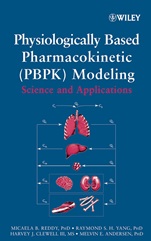
Physiologically Based Pharmacokinetic Modeling: Science and Applications
ISBN 9780471478140
Autor: Micaela Reddy, R. S. Yang, Melvin E. Andersen, Harvey J. Clewell III
Wydawca: Wiley
Dostępność: 3-6 tygodni
Cena: 871,50 zł
Przed złożeniem zamówienia prosimy o kontakt mailowy celem potwierdzenia ceny.
ISBN13: |
9780471478140 |
ISBN10: |
0471478148 |
Autor: |
Micaela Reddy, R. S. Yang, Melvin E. Andersen, Harvey J. Clewell III |
Oprawa: |
Hardback |
Rok Wydania: |
2005-07-15 |
Ilość stron: |
420 |
Wymiary: |
241x166 |
Tematy: |
MJ |
A definitive, single source of information on PBPK modeling
Physiologically–based pharmacokinetic (PBPK) modeling is becoming increasingly important in human health risk assessments and in supporting pharmacodynamic modeling for toxic responses. Organized by classes of compounds and modeling purposes so users can quickly access information, this is the first comprehensive reference of its kind.
This book presents an overview of the underlying principles of PBPK model development. Then it provides a compendium of PBPK modeling information, including historical development, specific modeling challenges, and current practices for:Halogenated AlkanesHalogenated AlkenesAlkene and Aromatic CompoundsReactive Vapors in the Nasal CavityAlkanes, Oxyhydrocarbons, and Related CompoundsPesticides and Persistent Organic PollutantsDioxin and Related CompoundsMetals and Inorganic CompoundsDrugsAntineoplastic AgentsPerinatal TransferMixturesDermal Exposure Models
In addition to pinpointing specific information, readers can explore diverse modeling techniques and applications. An authoritative reference for toxicologists, ecotoxicologists, risk assessors, regulators, pharmacologists, pharmacists, and graduate students in pharmacokinetics and toxicology, Physiologically–Based Pharmacokinetic Modeling compiles information from leaders in the field and discusses future directions for PBPK modeling.
Spis treści:
Preface.
Acknowledgments.
Contributors.
Chapter 1. Introduction: A Historical Perspective of the Development and Applications of PBPK Models.
1. Introduction.
2. A Historical Perspective.
2–1. Responses to Inhaled Compounds.
2–2. Pharmaceutical Applications.
2–3. Occupational and Environmental Applications.
2–4. Digital Computation and PBPK Modeling.
3. Expansion of PBPK Model Applications.
3–1
. PBPK Models for Tissue Dosimetry from Secondary Data.
3–2. Biological Mechanisms Underlying PK Behaviors.
3–3. Chemicals as Probes of Biological Processes.
3–4. Risk Assessment Applications.
3–5. PBPK Models as Repository of Mechanistic Data on Distribution and Response.
4. Summary.
PART I: PBPK MODELING FOR VOLATILE ORGANIC COMPOUNDS.
Chapter 2. Halogenated Alkanes.
1. Introduction.
2. PBPK Model Development for Volatile Organics.
2–1. Model Formulation.
2–2. Model Equations.
2–3. Model Parameterization.
2–4. Model Calculations.
3. Advances in Experimental Methods Demonstrated for Groups of Chemicals.
4. PBPK Models for Halogenated Alkanes.
4–1. Anesthetic Gases.
4–2. Chlorofluorocarbons (CFCs), Refrigerants and Halons.
4–3. Halogenated Alkanes.
5. Summary.
Chapter 3. Halogenated Alkenes.
1. Introduction.
2. The Chloroethylenes: Background.
3. Review of PBPK Models.
3–1. Vinyl Chloride (VC).
3–2. Vinyl Fluoride (VF).
3–3. cis–1,2–Dichloroethylene (cDCE) and trans–1,2–Dichloroethylene (tDCE).
3–4. Vinylidene Chloride (VDC).
3–5. Trichloroethylene (TCE).
3–6. Tetrachloroethylene (PERC).
3–7. Allyl Chloride (AC).
3–8. b–Chloroprene (CD).
3–9. Hexachlorobutadiene, HCB.
4. Summary.
Chapter 4. Alkene and Aromatic Compounds.
1. Introduction.
2. PK and Pharmacodynamic Properties Important in PBPK Model Development for Aromatic and Alkene Compounds.
2–1. Metabolism and Mode of Action.
2–2. Model Structures.
2–3. PK Differences.
2–4. Extrahepatic Metabolism and Transport of Metabolites.
2–5. GSH Conjugation.
2–6. Endogenous Production.
2–7. Reactivity with DNA and Protein.
2–8. Inhibition of Second O
xidative Steps.
2–9. Variability and PK Differences.
2–10. Subcompartments in PBPK Models.
2–11. “Privileged Access” of Epoxide Hydratase to Epoxide Substrates.
3. Review of Aromatic and Alkene PBPK Models.
3–1. Benzene–A Known Human Carcinogen with an Uncertain Mode of Action.
3–2. Styrene– Early PBPK Models.
3–3. 1,3–Butadiene.
3–4. Isoprene.
3–5. Ethylene, Propylene and their Oxides.
3–6. Naphthalene and Other PAHs.
3–7. Halobenzenes.
3–8. Miscellaneous Related Compounds.
4. Summary.
Chapter 5. Reactive Vapors in the Nasal Cavity.
Introduction.
1–1. Nasal Effects and Risk Assessment.
1–2. General Models for Nasal Uptake.
1–2–1. Air Phase.
1–2–2. Specific Nasal Regions.
1–2–3. Air Phase Mass Transfer Coefficients.
1–2–4. Interfacial Mass Transfer Coefficient.
1–2–5. Tissue Diffusion.
2. No Air–Phase Models.
2–1. The “Perfused Nose” Model.
2–2. Vinyl Acetate.
3. Creating the Air Phase Compartments.
3–1. Computational Fluid Dynamics.
3–2. Estimating the Air Phase Mass Transfer Coefficient.
3–3. Estimating Air Phase Mass Transfer Coefficients – Acrylic Acid.
4. Other Models for Vapors Affecting Nasal Tissues.
4–1. Vinyl Acetate.
4–2. Ethyl Acrylate and its Metabolite, Acrylic Acid.
4–2. Epichlorohydrin.
5. Methyl Methacrylate.
6. Formaldehyde.
7. Hydrogen Sulfide.
10. Summary.
Chapter 6. Alkanes, Oxyhydrocarbons, and Related Compounds.
1. Introduction.
2. Purposes for PBPK Model Development.
3. PBPK Models for Four Classes of Compounds.
3–1. Alkanes.
3–2. Oxyhydrocarbons.
3–3. Alkylbenzenes.
3–4. Siloxanes.
4. Summary.
PARK II: PBPK MODEL DEVELOPM
ENT FOR ENVIRONMENTAL POLLUTANTS.
Chapter 7. Pesticides and Persistent Organic Pollutants (POPs).
1. Introduction.
2. Pesticides.
2–1. Chemical Classes of Pesticides.
2–2. Modeling Tissue Distribution.
2–3. Modeling Metabolism.
2.4 Summary of Individual Models.
3. Polychlorinated and Polybrominated Biphenyls, PCBs and PBBs.
3–1. Modeling in Mammals.
3–2. Modeling in Nonmammalian Species.
4. Summary.
Chapter 8. Dioxin and Related Compounds.
1. Introduction.
2. Toxicity.
3. Mode of Action.
4. Pharmacokinetics.
4–1. Absorption, Metabolism, and Excretion.
4–2. Distribution.
5. PBPK Models of TCDD.
5–1. PBPK Models of TCDD in Rodents.
5–2. PBPK Models of TCDD in Humans.
6. Summary.
Chapter 9. Metals and Inorganic Compounds.
1. Introduction.
2. Physiologically Based Modeling of Metals.
2–1. Arsenic.
2–2. Nickel.
2–3. Lead.
2–4. Chromium.
3. PBPK Models for Non–Metals.
3–1. A PBPK Model for Fluoride, a Bone–Seeking Non–Metal.
3–2. PBPK Models for Other Non–Metals.
4. Compartmental Models for Miscellaneous Inorganic and/or Endogenous Chemicals.
5. Research Needs.
5–1. The Need for Physiologically Based Modeling for Essential Metals.
5–2. Other Research Needs.
6. Summary.
PART III: PHARMACEUTICAL APPLICATIONS OF PBPK MODELS.
Chapter 10. Drugs.
1. Introduction.
2. Describing the Tissue Distribution of Drugs.
3. Describing Metabolism and Other Clearance Processes of Drugs.
4. Other Issues in Model Development for Drugs.
4–1. Altered Physiological States.
4–2. Drug Stereospecificity.
4–3. Non Steady–State Dynamics.
4–4. Drug Interactions.
4–5. Utilization of In Vitro Data.
5. Future Perspectives.
6. Summary.
Chapter 11. Antine
Koszyk
Książek w koszyku: 0 szt.
Wartość zakupów: 0,00 zł
Informacje


Kontakt
Gambit
Centrum Oprogramowania
i Szkoleń Sp. z o.o.
Al. Pokoju 29b/22-24
31-564 Kraków
Siedziba Księgarni
ul. Kordylewskiego 1
31-542 Kraków
+48 12 410 5991
+48 12 410 5987
+48 12 410 5989
Subskrypcje
Administratorem danych osobowych jest firma Gambit COiS Sp. z o.o. Na podany adres będzie wysyłany wyłącznie biuletyn informacyjny.
Autoryzacja płatności

Informacje na temat autoryzacji płatności poprzez PayU.

© Copyright 2012: GAMBIT COiS Sp. z o.o. Wszelkie prawa zastrzeżone.
Projekt i wykonanie: Alchemia Studio Reklamy