


Wydawcy
Katalog tematyczny
- Archeologia (109)
- Ekonomia, finanse, business (13704)
- Filozofia (1445)
- Historia (3040)
- Języki i językoznawstwo (2356)
- Lifestyle, hobby i rozrywka (475)
- Medycyna (9704)
- Nauki humanistyczne (4)
- Nauki o Ziemi i środowisku (2638)
- Nauki ścisłe (20412)
- Nauki społeczne (8486)
- Nauki techniczne (13450)
- Budownictwo lądowe (1045)
- Chemia przemysłowa (2258)
- Elektronika i telekomunikacja (3287)
- Energetyka (1122)
- Inne nauki stosowane (363)
- Inżynieria biochemiczna (507)
- Inżynieria transportu (232)
- Mechanika i materiały (3316)
- Nauka o środowisku (321)
- Rolnictwo (507)
- Technika, ogólnie (475)
- Prawo (1696)
- Publikacje informacyjne i interdyscyplinarne (1288)
- Religia i wierzenia (917)
- Technika komputerowa (4067)
- Zdrowie, relacje międzyludzkie i rozwój osobisty (657)





Informacje szczegółowe o książce
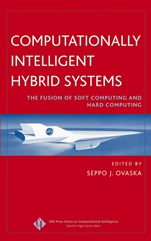
Computationally Intelligent Hybrid Systems: The Fusion of Soft Computing and Hard Computing
ISBN 9780471476689
Autor: Seppo J. Ovaska
Wydawca: Wiley
Dostępność: 3-6 tygodni
Cena: 784,35 zł
Przed złożeniem zamówienia prosimy o kontakt mailowy celem potwierdzenia ceny.
ISBN13: |
9780471476689 |
ISBN10: |
0471476684 |
Autor: |
Seppo J. Ovaska |
Oprawa: |
Hardback |
Rok Wydania: |
2004-11-23 |
Ilość stron: |
440 |
Wymiary: |
242x128 |
Tematy: |
TJ |
The practical guide to the integration of soft and hard computing for today’s engineering applications
Over the next decade, the fusion of soft and hard computing will play an increasingly important role in the development of intelligent systems for aerospace, electric power generation, and other safety–critical applications. Computationally Intelligent Hybrid Systems is the only book to examine the practical issues involved in the creation of high–performance, cost–effective applications using a synthesis of neural networks, fuzzy systems, and evolutionary computation with traditional computing methods.
This uniquely crafted work combines the experience of many internationally recognized experts in the soft and hard computing research worlds to present practicing engineers with the broadest possible array of methodologies for developing innovative and competitive solutions to real–world problems. Each of the chapters illustrates the wide–ranging applicability of the fusion concept in such critical areas as:Computer security and data miningElectrical power systems and large–scale plantsMotor drives and tool wear monitoringUser interfaces and the World Wide Web Aerospace and robust control
This is an essential guide for practicing engineers, researchers, and R&D managers who wish to create or understand computationally intelligent hybrid systems, as well as an excellent primary source for graduate courses in soft computing, engineering applications of artificial intelligence, and related topics.
Spis treści:
Contributors.
Foreword (David B. Fogel).
Preface.
Editor’s Introduction to Chapter 1.
1 INTRODUCTION TO FUSION OF SOFT COMPUTING AND HARD COMPUTING (Seppo J. Ovaska).
1.1 Introduction.
1.2 Structural Categories.
1.3 Characteristic Features.
1.4 Characterization of Hybrid Applications.
1.5 Conclusi
ons and Discussion.
References.
Editor’s Introduction to Chapter 2.
2 GENERAL MODEL FOR LARGE–SCALE PLANT APPLICATION (Akimoto Kamiya).
2.1 Introduction.
2.2 Control System Architecture.
2.3 Forecasting of Market Demand.
2.4 Scheduling of Processes.
2.5 Supervisory Control.
2.6 Local Control.
2.7 General Fusion Model and Fusion Categories.
2.8 Conclusions.
References .
Editor’s Introduction to Chapter 3.
3 ADAPTIVE FLIGHT CONTROL: SOFT COMPUTING WITH HARD CONSTRAINTS (Richard E. Saeks).
3.1 Introduction.
3.2 The Adaptive Control Algorithms.
3.3 Flight Control.
3.4 X–43A–LS Autolander.
3.5 LOFLYTE Optimal Control.
3.6 LOFLYTE Stability Augmentation.
3.7 Design for Uncertainty with Hard Constraints.
3.8 Fusion of Soft Computing and Hard Computing.
3.9 Conclusions.
References.
Editor’s Introduction to Chapter 4.
4 SENSORLESS CONTROL OF SWITCHED RELUCTANCE MOTORS (Adrian David Cheok).
4.1 Introduction.
4.2 Fuzzy Logic Model.
4.3 Accuracy Enhancement Algorithms.
4.4 Simulation Algorithm and Results.
4.5 Hardware and Software Implementation.
4.6 Experimental Results.
4.7 Fusion of Soft Computing and Hard Computing.
4.8 Conclusion and Discussion.
References.
Editor’s Introduction to Chapter 5.
5 ESTIMATION OF UNCERTAINTY BOUNDS FOR LINEAR AND NONLINEAR ROBUST CONTROL (Gregory D. Buckner).
5.1 Introduction.
5.2 Robust Control of Active Magnetic Bearings.
5.3 Nominal H1 Control of the AMB Test Rig.
5.4 Estimating Modeling Uncertainty for H1 Control of the AMB Test Rig.
5.5 Nonlinear Robust Control of the AMB Test Rig.
5.6 Estimating Model Uncertainty for SMC of the AMB Test Rig.
5.7 Fusion of Soft Computing and Hard Computing.
5.8 Conclusion.
References.
Editor’s Introduction to Chapter 6.
6 INDIRECT ON–LINE TOOL WEAR MONITORING (Bernhard Sick).
6.1 Introduction.
6.2 Proble
m Description and Monitoring Architecture.
6.3 State of the Art.
6.4 New Solution.
6.5 Experimental Results.
6.6 Fusion of Soft Computing and Hard Computing.
6.7 Summary and Conclusions.
References.
Editor’s Introduction to Chapter 7.
7 PREDICTIVE FILTERING METHODS FOR POWER SYSTEMS APPLICATIONS (Seppo J. Ovaska).
7.1 Introduction.
7.2 Multiplicative General–Parameter Filtering.
7.3 Genetic Algorithm for Optimizing Filter Tap Cross–Connections.
7.4 Design of Multiplierless Basis Filters by Evolutionary Programming.
7.5 Predictive Filters for Zero–Crossings Detector.
7.6 Predictive Filters for Current Reference Generators.
7.7 Fusion of Soft Computing and Hard Computing.
7.8 Conclusion.
References.
Appendix 7.1: Coefficients of 50–Hz Sinusoid–Predictive FIR Filters.
Editor’s Introduction to Chapter 8.
8 INTRUSION DETECTION FOR COMPUTER SECURITY (Sung–Bae Cho and Sang–Jun Han).
8.1 Introduction.
8.2 Related Works.
8.3 Intrusion Detection with Hybrid Techniques.
8.4 Experimental Results.
8.5 Fusion of Soft Computing and Hard Computing.
8.6 Concluding Remarks.
References.
Editor’s Introduction to Chapter 9.
9 EMOTION GENERATING METHOD ON HUMAN–COMPUTER INTERFACES (Kazuya Mera and Takumi Ichimura).
9.1 Introduction.
9.2 Emotion Generating Calculations Method.
9.3 Emotion–Oriented Interaction Systems.
9.4 Applications of Emotion–Oriented Interaction Systems.
9.5 Fusion of Soft Computing and Hard Computing.
9.6 Conclusion.
References.
Editor’s Introduction to Chapter 10.
10 INTRODUCTION TO SCIENTIFIC DATA MINING: DIRECT KERNEL METHODS AND APPLICATIONS (Mark J. Embrechts, Boleslaw Szymanski, and Karsten Sternickel).
10.1 Introduction.
10.2 What Is Data Mining?
10.3 Basic Definitions for Data Mining.
10.4 Introduction to Direct Kernel Methods.
10.5 Direct Kernel Ri
dge Regression.
10.6 Case Study #1: Predicting the Binding Energy for Amino Acids.
10.7 Case Study #2: Predicting the Region of Origin for Italian Olive Oils.
10.8 Case Study #3: Predicting Ischemia from Magnetocardiography.
10.9 Fusion of Soft Computing and Hard Computing.
10.10 Conclusions.
References.
Editor’s Introduction to Chapter 11.
11 WORLD WIDE WEB USAGE MINING (Ajith Abraham).
11.1 Introduction.
11.2 Daily and Hourly Web Usage Clustering.
11.3 Daily and Hourly Web Usage Analysis.
11.4 Fusion of Soft Computing and Hard Computing.
11.5 Conclusions.
References.
INDEX.
ABOUT THE EDITOR.
Nota biograficzna:
SEPPO J. OVASKA, DSc (Tech), is a professor in the Department of Electrical and Communications Engineering at Helsinki University of Technology, Finland. He is a senior member of the IEEE, and has published more than 180 papers in peer–reviewed journals and international conferences.
Okładka tylna:
The practical guide to the integration of soft and hard computing for today’s engineering applications
Over the next decade, the fusion of soft and hard computing will play an increasingly important role in the development of intelligent systems for aerospace, electric power generation, and other safety–critical applications. Computationally Intelligent Hybrid Systems is the only book to examine the practical issues involved in the creation of high–performance, cost–effective applications using a synthesis of neural networks, fuzzy systems, and evolutionary computation with traditional computing methods.
This uniquely crafted work combines the experience of many internationally recognized experts in the soft and hard computing research worlds to present practicing engineers with the broadest possible array of methodologies for developing innovative and competitive solutions to real–world problems. Each of the chapters illustrates
Koszyk
Książek w koszyku: 0 szt.
Wartość zakupów: 0,00 zł
Informacje


Kontakt
Gambit
Centrum Oprogramowania
i Szkoleń Sp. z o.o.
Al. Pokoju 29b/22-24
31-564 Kraków
Siedziba Księgarni
ul. Kordylewskiego 1
31-542 Kraków
+48 12 410 5991
+48 12 410 5987
+48 12 410 5989
Subskrypcje
Administratorem danych osobowych jest firma Gambit COiS Sp. z o.o. Na podany adres będzie wysyłany wyłącznie biuletyn informacyjny.
Autoryzacja płatności

Informacje na temat autoryzacji płatności poprzez PayU.

© Copyright 2012: GAMBIT COiS Sp. z o.o. Wszelkie prawa zastrzeżone.
Projekt i wykonanie: Alchemia Studio Reklamy