


Wydawcy
Katalog tematyczny
- Archeologia (109)
- Ekonomia, finanse, business (13704)
- Filozofia (1445)
- Historia (3040)
- Języki i językoznawstwo (2356)
- Lifestyle, hobby i rozrywka (475)
- Medycyna (9704)
- Nauki humanistyczne (4)
- Nauki o Ziemi i środowisku (2638)
- Nauki ścisłe (20412)
- Nauki społeczne (8486)
- Nauki techniczne (13450)
- Prawo (1696)
- Publikacje informacyjne i interdyscyplinarne (1288)
- Religia i wierzenia (917)
- Technika komputerowa (4067)
- Zdrowie, relacje międzyludzkie i rozwój osobisty (657)





Informacje szczegółowe o książce
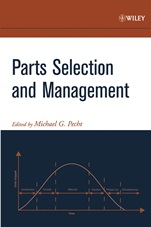
Parts Selection and Management
ISBN 9780471476054
Autor: Michael Pecht
Wydawca: Wiley
Dostępność: 3-6 tygodni
Cena: 696,15 zł
Przed złożeniem zamówienia prosimy o kontakt mailowy celem potwierdzenia ceny.
ISBN13: |
9780471476054 |
ISBN10: |
0471476056 |
Autor: |
Michael Pecht |
Oprawa: |
Hardback |
Rok Wydania: |
2004-02-25 |
Ilość stron: |
340 |
Wymiary: |
261x187 |
Tematy: |
KM |
Increase profitability and reduce risk through effective parts selection and management
Corporations recognize that technology can be the key to fueling product design and development. But just as crucial–if not more–to a company’s success are the decisions about when, what, and how a technology will be used. Few companies have failed because the right technology was not available; many have failed when a technology was not effectively selected and managed.
Parts Selection and Management is a guide to increasing company profitability and reducing the time–to–profit through the efficient management of the process of parts selection and management. Taking an "eyes–on, hands–off" approach to parts selection, this guidebook addresses risk–assessment, decision–making steps, and subsequent management activities. The book covers everything from methodologies for parts selection and management, product requirements and specifications, and manufacturer assessment procedures to ways to track part changes through the supply chain, reliability assessment, and environmental, legislative, and legal issues.
Written by a seasoned professional, teacher, and author in the field, the book enables companies to:Employ effective risk assessment and mitigation techniquesMake an informed company–wide decision about parts selection and managementChoose parts to fit the functionality of the product and other constraintsMaximize system supportability by preparing for parts obsolescenceImprove supply–chain interactions and communications with customers and regulatory agencies to minimize time–to–profit
Shedding light on a neglected but essential aspect of product development, Parts Selection and Management will give your organization the tools you need to avoid the risks associated with product use while promoting flexibility, innovation, and c
reativity in your product development.
Spis treści:
Preface.
Acknowledgments.
An Additional Acknowledgment.
Editor.
Authors.
Acronyms.
Chapter 1. Motivation for a Parts Selection and Management Program (Sanjay Tiku and Michael Pecht).
1.1 Technology Advances.
1.2 Market Challenges.
1.3 Sypply Chain Trends.
1.4 Availability and Life Cycle Mismatch Issues.
1.5 Standards Reorganization.
1.6 Objectives of a Parts Selection and Management Program.
1.7 References.
Chapter 2. Methodology for Parts Selection and Management (Margaret Jackson, et al.).
2.1 Responsbilities and Composition of the Parts Management Team.
2.2 The Overall Parts Selection and Management Methodology.
2.3 Product Requirements and Constraints Identification.
2.4 Technology Sensing and Cascading.
2.5 Candidate Part and Part Manufacturer Selection.
2.6 Manufacturer, Part, and Distributor Assessments.
2.7 Determination of the Local Environment.
2.8 Performance Assessment.
2.9 Reliability Assessment.
2.10 Assembly Assessment.
2.11 Life Cycle Mismatch Assessment.
2.12 Risk Management.
2.13 References.
Chapter 3. Product Requirements, Constraints, and Specifications (Peter Sandborn and Chris Wilkinson).
3.1 Product Requirements Definition and Realization Constraints.
3.2 Who Defines the Requirements and Constraints?
3.3 Requirements and Constraints Definition Risks.
3.4 The Requirements Document.
3.5 Approving Requirements and Contraints – Buy–in.
3.6 Preliminary Specification.
3.7 Requirements Tracking.
3.8 Summary.
3.9 References.
Chapter 4. Using the Part Datasheet (Diganta Das and Michael Pecht).
4.1 The Contents of a Datasheet.
4.2 The Status of the Part and Datasheet.
4.3 The Part Number.
4.4 Ratings of an Electronic Part.
4.5 Reliability Information.
4.6 Thermal Characteristics.
4.7 Electrical Specif
ications.
4.8 Derating and Safe Operating Area.
4.9 Summary.
4.10 References.
Chapter 5. Candidate Parts Selection: Making the First Cut (Diganta Das and Peter Sandborn).
5.1 Candidate Part Identification Process.
5.2 Part Databases.
5.3 Part Procurement.
5.4 Summary.
5.5 References.
Chapter 6. Manufacturer Assessment Procedure and Criteria (Toby Syrus, et al.).
6.1 Manufacturer Assessment Process.
6.2 Manufacturer Identification.
6.3 Manufacturer Assessment Categories.
6.4 Results.
6.5 Summary.
6.6 References.
Chapter 7. Part Assessment Guidelines and Criteria (Toby Syrus, et al.).
7.1 Part Assessment Process.
7.2 Part Grouping.
7.3 Part Assessment Categories.
7.4 Case Study Results.
7.5 Summary.
7.6 References.
Chapter 8. Electronic Part Distribution and Distributor Assessment (Sanjay Tiku, et al.).
8.1 Why Part Manufacturers Use Distributors.
8.2 Why Customers Buy From Distributors.
8.3 Types of Electronic Parts Distributors.
8.4 Distributor Identification for Assessment.
8.5 Distributor Assessment.
8.6 Summary.
8.7 References.
Chapter 9. Tracking Part Changes Through the Part Supply Chain (Steven Murray, et al.).
9.1 Introduction.
9.2 Manufacturers Change Control.
9.3 Standards and Authorities for Notifying Customers of Part Changes.
9.4 Change Notification Paths.
9.5 Case Study: Change Notification Policies in Practice.
9.6 Case Study: Examples of Commonly Made Changes.
9.8 References.
Chapter 10. Parts Selection and Management to Avoid Counterfeit Electronic Parts (Sanjay Tiku, et al.).
10.1 Business and National Security Implications of Conterfeiting.
10.2 Examples of Counterfeit Electronic Parts.
10.3 Legislative Initiatives and Organized Activities Against Counterfeiting.
10.4 Preventing Counterfeiting of Parts: Recommendations for Electronic Part Man
ufacturers.
10.5 Preventing Supply of Counterfeit Parts: Recommendations for OEMs.
10.6 Summary.
10.7 References.
Chapter 11. Equipment Supplier Intervention Techniques (Anant Mathur, et al.).
11.1 The Parts Selection and Management Process.
11.2 Why Use Equipment Supplier Intervention?
11.3 Methods of Equipment Supplier Intervention.
11.4 Cost Implications of Equipment Supplier Intervention.
11.5 Provisional Acceptance.
11.6 Case Study.
11.7 Summary.
11.8 References.
Chapter 12. Determination of the Life Cycle Environment (Niranjan Vijayaragavan, et al.).
12.1 Defining the Life Cycle Environmental Profile.
12.2 Steps in Developing an LCEP.
12.3 Considerations and Recommendations.
12.4 Life Cycle Phases and Environmental Factors.
12.5 Environmental Factors and Their Effects.
12.6 Quantification of Environmental Loads.
12.7 Summary.
12.8 References.
Chapter 13. Performance (Diganta Das, et al.).
13.1 Methods of Mitigating the Discrepancy Between System Needs and Part Ratings.
13.2 Methods of Uprating.
13.3 Parameter Conformance.
13.4 Parameter Recharacterization.
13.5 Stress Balancing.
13.6 Reliability Issues with Uprating.
13.7 Case Study: Single Inline Memory Module.
13.8 References.
Chapter 14. Reliability Assessment (Michael Pecht and Jingsong Xie).
14.1 Candidate Part.
14.2 Life Cycle Loads.
14.3 Using Tests to Assess Reliability.
14.4 Using Virtual Reliability Assessment to Assess Reliability.
14.5 Using Accelerated Testing to Assess Reliability.
14.6 Conduct the Accelerated Tests.
14.7 Summary.
14.8 References.
Chapter 15. Assembly Requirements and Constraints Assessment (Peter Sandborn and Michael Pecht).
15.1 Assembly Compatibility.
15.2 Routing Compatibility.
15.3 Test and Rework Acceptability.
15.4 References.
Chapter 16. Obsolescence Prediction and Management
Koszyk
Książek w koszyku: 0 szt.
Wartość zakupów: 0,00 zł
Informacje


Kontakt
Gambit
Centrum Oprogramowania
i Szkoleń Sp. z o.o.
Al. Pokoju 29b/22-24
31-564 Kraków
Siedziba Księgarni
ul. Kordylewskiego 1
31-542 Kraków
+48 12 410 5991
+48 12 410 5987
+48 12 410 5989
Subskrypcje
Administratorem danych osobowych jest firma Gambit COiS Sp. z o.o. Na podany adres będzie wysyłany wyłącznie biuletyn informacyjny.
Autoryzacja płatności

Informacje na temat autoryzacji płatności poprzez PayU.

© Copyright 2012: GAMBIT COiS Sp. z o.o. Wszelkie prawa zastrzeżone.
Projekt i wykonanie: Alchemia Studio Reklamy