


Wydawcy
Katalog tematyczny
- Archeologia (109)
- Ekonomia, finanse, business (13704)
- Filozofia (1445)
- Historia (3040)
- Języki i językoznawstwo (2356)
- Lifestyle, hobby i rozrywka (475)
- Medycyna (9704)
- Nauki humanistyczne (4)
- Nauki o Ziemi i środowisku (2638)
- Nauki ścisłe (20412)
- Astronomia (294)
- Biologia (5119)
- Chemia (6540)
- Chemia analityczna (361)
- Chemia fizyczna (346)
- Chemia nieorganiczna (137)
- Chemia organiczna (535)
- Krystalografia (27)
- Minerologia (46)
- Fizyka (3309)
- Matematyka (4574)
- Nauki ścisłe, ogólnie (503)
- Nauki społeczne (8486)
- Nauki techniczne (13450)
- Prawo (1696)
- Publikacje informacyjne i interdyscyplinarne (1288)
- Religia i wierzenia (917)
- Technika komputerowa (4067)
- Zdrowie, relacje międzyludzkie i rozwój osobisty (657)





Informacje szczegółowe o książce
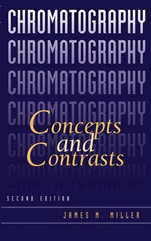
Chromatography: Concepts and Contrasts
ISBN 9780471472070
Autor: James M. Miller
Wydawca: Wiley
Dostępność: 3-6 tygodni
Cena: 681,45 zł
Przed złożeniem zamówienia prosimy o kontakt mailowy celem potwierdzenia ceny.
ISBN13: |
9780471472070 |
ISBN10: |
0471472077 |
Autor: |
James M. Miller |
Oprawa: |
Hardback |
Rok Wydania: |
2004-12-21 |
Numer Wydania: |
2nd Edition |
Ilość stron: |
520 |
Wymiary: |
243x161 |
Tematy: |
PN |
A classic on all of the major chromatographic techniques–now fully updated
Still a popular text today, the first edition of Chromatography: Concepts and Contrasts was one of the first books to cover all of the different types of chromatography. This new Second Edition offers the latest information on the topic while preserving the clear, unified approach that has made the original a classroom favorite.
Chromatography: Concepts and Contrasts, Second Edition presents the theoretical base common to various chromatographic methods, giving readers a set of general concepts for a broad understanding of the practice before moving on to discuss specific techniques. It covers gas chromatography (GC), liquid chromatography in columns (LC), and thin layer chromatography (TLC), as well as related topics such as extraction, solid phase extraction, solid phase microextraction, and mass spectrometry. The resulting text combines technical depth and comprehensiveness with accessible language and clear descriptions.
New material covered in this Second Edition includes:Sample preparationCapillary electrophoresis and capillary electrochromatographyChromatography with mass spectrometric detectionApplications in chemistry, biology, and other areasIndustrial and government practices in regulated industriesInternet resources for chromatographers
Whether used as a graduate or upper–level undergraduate textbook, or as a guide for professionals, Chromatography: Concepts and Contrasts, Second Edition provides the most concise, comprehensive, and up–to–date chromatography resource available today.
Spis treści:
Preface to Second Edition.
Acknowledgments.
Preface to the First Edition.
Symbols, Abbreviations, and Acronyms.
1 Impact of Industrial and Government Regulatory Practices on Analytical Chromatography.
1.1 Locus of Chromatography in Chemical Indust
ry.
1.2 Governmental Organizations.
1.3 Nongovernmental Agencies.
1.4 Standards, Calibration, and NIST.
1.5 USP and Other Pharmacopoeias.
1.6 International Guidelines for Analytical Laboratories.
1.7 Final Comments.
References.
2 Introduction to Chromatography.
2.1 Brief History.
2.2 Definitions and Classifications.
2.3 Summary.
References.
3 Band Broadening and Kinetics.
3.1 Configurations of the Stationary Phase.
3.2 Rate Theory.
References.
4 Physical Forces and Interactions.
4.1 Intermolecular and Interionic Forces.
4.2 Size Exclusion—Molecular Sieving.
4.3 Some Models.
References.
5 Optimization and the Achievement of Separation.
5.1 Kinetics and Zone Broadening.
5.2 Thermodynamics and Zone Migration.
5.2 Achievement of Separation.
5.4 Optimization of Separations.
References.
6 Comparisons Between Chromatographic Modes.
6.1 Gas Chromatography Compared to Liquid Chromatography.
6.2 Supercritical Fluids and Supercritical Fluid Chromatography.
6.3 Reduced Parameters.
6.4 Columnar and Planar Configurations.
References.
7 Gas Chromatography.
7.1 Early History, Theories, and Classifications.
7.2 Instrumentation for Capillary GC.
7.3 Instrumentation for Packed–Column GC.
7.4 Stationary Phase.
7.5 Temperature Effects.
7.6 Special Topics.
7.7 Summary and Evaluation.
References.
8 Liquid Chromatography in Columns.
8.1 Introductory Classifications.
8.2 Classification of HPLC Modes.
8.3 Instrumentation.
8.4 Reversed–Phase Method Development and Optimization.
8.5 RP–HPLC Alternatives for the Pharmaceutical Industry.
8.6 Preparative LC.
8.7 Special Topics.
8.8 Summary and Evaluation.
References.
9 Quantitation: Detectors and Methods.
9.1 Detectors.
9.2 Data Acquisition and Processing.
9.3 Quantitative Analysis.
Referenc
es.
10 Chromatography with Mass Spectral Detection (GC/MS and LC/MS).
10.1 Basics of Mass Spectrometry.
10.2 Gas ChromatographyrMass Spectrometry.
10.3 Liquid ChromatographyrMass Spectrometry.
10.4 Other Hyphenated Methods.
10.5 Summary.
References.
11 Liquid Chromatography on Plane Surfaces.
11.1 Paper Chromatography.
11.2 Thin–Layer Chromatography.
11.3 Other Topics.
11.4 Literature Summary and Applications.
References.
12 Qualitative Analysis.
12.1 Retention Parameters.
12.2 Other Methods of Qualitative Analysis.
References.
13 Capillary Electrophoresis and Capillary Electrochromatography 365
13.1 Principles of Electrophoresis.
13.2 Zone Electrophoresis.
13.3 Capillary Electrophoresis.
13.4 Capillary Electrochromatography.
References.
14 Sample Preparation.
14.1 Extraction.
14.2 Dialysis.
14.3 Derivatization.
References.
15 Special Applications.
15.1 Multidimensional Chromatography.
15.2 Biological Applications.
15.3 Chiral Separations.
15.4 Other Topics.
References.
16 Selection of a Method.
16.1 Methods of Attack.
16.2 The Internet.
16.3 Experimental Approach.
16.4 Summary.
References.
Some Internet Web Sites of Interest to Chromatographers.
Appendix A ICH Glossary.
Appendix B.
Index.
Nota biograficzna:
JAMES M. MILLER, PhD, is Emeritus Professor in the Department of Chemistry at Drew University in Madison, New Jersey. He is the coauthor of Basic Gas Chromatography with Harold McNair and coeditor of Analytical Chemistry in a GMP Environment with Jonathan Crowther, both published by Wiley. Dr. Miller is a Fellow of the Charles A. Dana Research Institute for Scientists Emeriti (RISE).
Okładka tylna:
A classic on all of the major chromatographic techniques–now fully updated
Still a popular text today, the
first edition of Chromatography: Concepts and Contrasts was one of the first books to cover all of the different types of chromatography. This new Second Edition offers the latest information on the topic while preserving the clear, unified approach that has made the original a classroom favorite.
Chromatography: Concepts and Contrasts, Second Edition presents the theoretical base common to various chromatographic methods, giving readers a set of general concepts for a broad understanding of the practice before moving on to discuss specific techniques. It covers gas chromatography (GC), liquid chromatography in columns (LC), and thin layer chromatography (TLC), as well as related topics such as extraction, solid phase extraction, solid phase microextraction, and mass spectrometry. The resulting text combines technical depth and comprehensiveness with accessible language and clear descriptions.
New material covered in this Second Edition includes:Sample preparationCapillary electrophoresis and capillary electrochromatographyChromatography with mass spectrometric detectionApplications in chemistry, biology, and other areasIndustrial and government practices in regulated industriesInternet resources for chromatographers
Whether used as a graduate or upper–level undergraduate textbook, or as a guide for professionals, Chromatography: Concepts and Contrasts, Second Edition provides the most concise, comprehensive, and up–to–date chromatography resource available today.
Koszyk
Książek w koszyku: 0 szt.
Wartość zakupów: 0,00 zł
Informacje


Kontakt
Gambit
Centrum Oprogramowania
i Szkoleń Sp. z o.o.
Al. Pokoju 29b/22-24
31-564 Kraków
Siedziba Księgarni
ul. Kordylewskiego 1
31-542 Kraków
+48 12 410 5991
+48 12 410 5987
+48 12 410 5989
Subskrypcje
Administratorem danych osobowych jest firma Gambit COiS Sp. z o.o. Na podany adres będzie wysyłany wyłącznie biuletyn informacyjny.
Autoryzacja płatności

Informacje na temat autoryzacji płatności poprzez PayU.

© Copyright 2012: GAMBIT COiS Sp. z o.o. Wszelkie prawa zastrzeżone.
Projekt i wykonanie: Alchemia Studio Reklamy