


Wydawcy
Katalog tematyczny
- Archeologia (109)
- Ekonomia, finanse, business (13704)
- Filozofia (1445)
- Historia (3040)
- Języki i językoznawstwo (2356)
- Lifestyle, hobby i rozrywka (475)
- Medycyna (9704)
- Nauki humanistyczne (4)
- Nauki o Ziemi i środowisku (2638)
- Nauki ścisłe (20412)
- Nauki społeczne (8486)
- Nauki techniczne (13450)
- Budownictwo lądowe (1045)
- Chemia przemysłowa (2258)
- Elektronika i telekomunikacja (3287)
- Energetyka (1122)
- Inne nauki stosowane (363)
- Inżynieria biochemiczna (507)
- Inżynieria transportu (232)
- Mechanika i materiały (3316)
- Nauka o środowisku (321)
- Rolnictwo (507)
- Technika, ogólnie (475)
- Prawo (1696)
- Publikacje informacyjne i interdyscyplinarne (1288)
- Religia i wierzenia (917)
- Technika komputerowa (4067)
- Zdrowie, relacje międzyludzkie i rozwój osobisty (657)





Informacje szczegółowe o książce
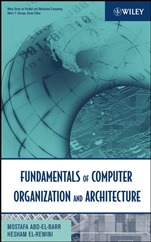
Fundamentals of Computer Organization and Architecture
ISBN 9780471467410
Autor: Mostafa Abd–El–Barr, Hesham El–Rewini
Wydawca: Wiley
Dostępność: 3-6 tygodni
Cena: 763,35 zł
Przed złożeniem zamówienia prosimy o kontakt mailowy celem potwierdzenia ceny.
ISBN13: |
9780471467410 |
ISBN10: |
0471467413 |
Autor: |
Mostafa Abd–El–Barr, Hesham El–Rewini |
Oprawa: |
Hardback |
Rok Wydania: |
2005-01-07 |
Ilość stron: |
288 |
Wymiary: |
242x161 |
Tematy: |
TJ |
An invaluable and comprehensive resource on computer organization and architecture
Typically, instructors of computer organization and architecture courses have had to resort to multiple textbooks as well as supplementary notes to provide students with adequate learning material. Fundamentals of Computer Organization and Architecture provides a more coherent approach by covering all the necessary topics in one single textbook, including:Instruction set architecture and designAssembly language programmingComputer arithmeticProcessing unit designMemory system designInput–output design and organizationPipeline design techniquesReduced Instruction Set Computers (RISCs)Introduction to multiprocessors
This comprehensive and didactic resource provides an introduction to computer systems, including historical background, to provide a context and framework for concepts and applications developed in subsequent chapters; case examples of real–world computer systems that illuminate key concepts and demonstrate practical applications; and exercises, summaries, references, and further reading recommendations at the end of each chapter.
Fundamentals of Computer Organization and Architecture simplifies course material development for instructors with its comprehensive coverage and helps the readers learn faster thanks to its logical organization, clear style, and practical examples. In addition to being an excellent teaching tool for students, this is a thorough and dependable reference for engineers and programmers.
Spis treści:
Preface.
1. Introduction to Computer Systems.
1.1. Historical Background.
1.2. Architectural Development & Styles.
1.3. Technological Development.
1.4. Performance Measures.
1.5. Summary.
Exercises.
References and Further Reading.
2. Instruction Set Architecture & Design.
2.1.
Memory Locations and Operations.
2.2. Addressing Modes.
2.3. Instruction Types.
2.4. Programming Examples.
2.5. Summary.
Exercises.
References and Further Reading.
3. Assembly Language Programming.
3.1. A Simple Machine.
3.2. Instructions Mnemonics and Syntax.
3.3. Assembler Directives and Commands.
3.4. Assembly and Execution of Programs.
3.5. Example: The X 86 Family.
3.6. Summary.
Exercises.
References and Further Reading.
4. Computer Arithmetic.
4.1. Number Systems.
4.2. Integer Arithmetic.
4.3. Floating Point Arithmetic.
4.4. Summary.
Exercises.
References and Further Readings.
5. Processing Unit Design.
5.1. CPU Basics.
5.2. Register Set.
5.3. Data Path.
5.4. The CPU Instruction Cycle.
5.5. Control Unit.
5.6. Summary.
Exercises.
References.
6. Memory System Design I.
6.1. Basic Concepts.
6.2. Cache Memory.
6.3. Summary.
Exercises.
References and Further Readings.
7. Memory System Design II.
7.1. Main Memory.
7.2. Virtual Memory.
7.3. Read–Only Memory.
7.4. Summary.
Exercises.
References and Further Readings.
8. Input–Output Design and Organization.
8.1. Basic Concepts.
8.2. Programmed I/O.
8.3. Interrupt–Driven I/O.
8.4. Direct Memory Access (DMA).
8.5. Busses.
8.6. Input–Output Interfaces.
8.7. Summary.
Exercises.
References and Further Readings.
9. Pipelining Design Techniques.
9.1. General Concepts.
9.2. Instruction Pipeline.
9.3. Arithmetic pipeline.
9.4. Summary.
Exercises.
References and Further Reading.
10. Reduced Instruction Set Computers (RISCs).
10.1. RISC/CISC Evolution Cycle.
10.2. RISCs Design Principles.
10.3. Overlapped Register Windows.
10.4. RISCs Versus CISCs.
10.5. Pioneer (University) RISC Machines.
10.6. Example of Advanced RISC Machines.
10.7. Summary.
Exercises.
References and Further Readings.
11.
Introduction to Multiprocessors.
11.1. Introduction.
11.2. Classification of Computer Architectures.
11.3. SIMD Schemes.
11.4. MIMD Schemes.
11.5. Interconnection Networks.
11.6. Analysis and Performance Metrics.
11. 7. Summary.
Exercises.
References and Further Readings.
Index.
Nota biograficzna:
MOSTAFA ABD–EL–BARR, PhD, is currently a professor and chairman of the Department of Information Science at Kuwait University. He has co–authored two other books, published more than 120 papers, and served as chair for a number of international conferences and symposia.
HESHAM EL–REWINI, PhD, PE, is a full professor and chairman of the Department of Computer Sciences and Engineering at Southern Methodist University (SMU). He has co–authored several books, published numerous research papers in journals and conference proceedings, and chaired many international conferences.
Okładka tylna:
An invaluable and comprehensive resource on computer organization and architecture
Typically, instructors of computer organization and architecture courses have had to resort to multiple textbooks as well as supplementary notes to provide students with adequate learning material. Fundamentals of Computer Organization and Architecture provides a more coherent approach by covering all the necessary topics in one single textbook, including:Instruction set architecture and designAssembly language programmingComputer arithmeticProcessing unit designMemory system designInput–output design and organizationPipeline design techniquesReduced Instruction Set Computers (RISCs)Introduction to multiprocessors
This comprehensive and didactic resource provides an introduction to computer systems, including historical background, to provide a context and framework for concepts and applications dev
eloped in subsequent chapters; case examples of real–world computer systems that illuminate key concepts and demonstrate practical applications; and exercises, summaries, references, and further reading recommendations at the end of each chapter.
Fundamentals of Computer Organization and Architecture simplifies course material development for instructors with its comprehensive coverage and helps the readers learn faster thanks to its logical organization, clear style, and practical examples. In addition to being an excellent teaching tool for students, this is a thorough and dependable reference for engineers and programmers.
Koszyk
Książek w koszyku: 0 szt.
Wartość zakupów: 0,00 zł
Informacje


Kontakt
Gambit
Centrum Oprogramowania
i Szkoleń Sp. z o.o.
Al. Pokoju 29b/22-24
31-564 Kraków
Siedziba Księgarni
ul. Kordylewskiego 1
31-542 Kraków
+48 12 410 5991
+48 12 410 5987
+48 12 410 5989
Subskrypcje
Administratorem danych osobowych jest firma Gambit COiS Sp. z o.o. Na podany adres będzie wysyłany wyłącznie biuletyn informacyjny.
Autoryzacja płatności

Informacje na temat autoryzacji płatności poprzez PayU.

© Copyright 2012: GAMBIT COiS Sp. z o.o. Wszelkie prawa zastrzeżone.
Projekt i wykonanie: Alchemia Studio Reklamy