


Wydawcy
Katalog tematyczny
- Archeologia (109)
- Ekonomia, finanse, business (13704)
- Filozofia (1445)
- Historia (3040)
- Języki i językoznawstwo (2356)
- Lifestyle, hobby i rozrywka (475)
- Medycyna (9704)
- Chirurgia (272)
- Inne gałęzie medycyny (1871)
- Medycyna kliniczna (4187)
- Choroby wewnętrzne (514)
- Dermatologia (51)
- Diagnostyka medyczna (3)
- Endokrynologia (144)
- Gastroenterologia (27)
- Geriatria (50)
- Ginekologia i położnictwo (134)
- Hematologia (46)
- Hepatologia (10)
- Kardiologia (71)
- Laryngologia (12)
- Nefrologia (10)
- Neurologia (500)
- Oftalmologia (50)
- Pediatria (33)
- Pulmunologia (32)
- Reumatologia (14)
- Terapia genowa (1)
- Układ mięśniowo-szkieletowy (1)
- Urologia (14)
- Medycyna niekonwencjonalna (14)
- Medycyna przedkliniczna (269)
- Medycyna, ogólnie (1740)
- Medyczne służby pomocnicze (745)
- Studia medyczne (16)
- Weterynaria (548)
- Nauki humanistyczne (4)
- Nauki o Ziemi i środowisku (2638)
- Nauki ścisłe (20412)
- Nauki społeczne (8486)
- Nauki techniczne (13450)
- Prawo (1696)
- Publikacje informacyjne i interdyscyplinarne (1288)
- Religia i wierzenia (917)
- Technika komputerowa (4067)
- Zdrowie, relacje międzyludzkie i rozwój osobisty (657)





Informacje szczegółowe o książce
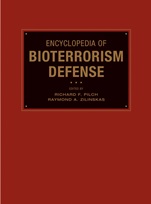
Encyclopedia of Bioterrorism Defense
ISBN 9780471467175
Autor: Richard F. Pilch, Raymond A. Zilinskas
Wydawca: Wiley
Dostępność: 3-6 tygodni
Cena: 2 520,00 zł
Przed złożeniem zamówienia prosimy o kontakt mailowy celem potwierdzenia ceny.
ISBN13: |
9780471467175 |
ISBN10: |
0471467170 |
Autor: |
Richard F. Pilch, Raymond A. Zilinskas |
Oprawa: |
Hardback |
Rok Wydania: |
2005-07-22 |
Ilość stron: |
556 |
Wymiary: |
281x220 |
Tematy: |
MJ |
This groundbreaking reference marks the first time a publication has attempted to provide complete coverage in the field of bioterrorism. Articles review current knowledge across various disciplines within the context of bioterrorism, covering the most recent developments in areas including bioterrorism agents, biodefense infrastructure, biotechnology, preparedness, threats, threat analysis, and legislation. Relevant biological warfare events are included with a through analysis.
This one–of–a–kind volume:Includes detailed coverage of such topics as: Biotechnology and Bioterrorism, Bioterrorist Attack––Stages & Aftermath, Detection of Agents, and Psychological & Social SequelaeOffers a user friendly style, with biological agents covered consistently across entriesContains over 125 articlesProvides case studies, with discussion of lessons learnedComprehensively covers the field of bioterrorism, including related science, technology, medicine, politics, law and history
Written by an international panel of experts in the field, this landmark reference supplies essential information to a wide audience of scientists, researchers, physicians, health care professionals, policymakers, historians, journalists, and students.
Spis treści:
Preface.
Contributors.
Acknowledgment.
Abu Sayyaf Group.
Aerosol.
Agricultural Bioterrorism.
Aliens of America: A Case Study.
Al–Quida.
Animal Aid Association: A Case Study.
Anthrax (Bacillus anthracis).
Anthrax Hoaxes: Case Studies and Discussion.
Anti–Material Agents.
Armed Islamic Group: A Case Study.
Army of God.
Army Technical Escort Unit.
Assassinations.
Aum Shinrikyo and the Aleph.
Baader–Meinhof Gang.
Biological Simulants.
Bioregulators.
Biosecurity: Protecting High Consequence Pathogens and Toxins Against Theft and Diversion.
Biotech
nology and Bioterrorism.
Bioterrorist Attack, Stages, and Aftermath.
Botulinum Toxin.
Breeders: A Case Study.
Brucellosis (Brucella spp.).
Camelpox.
CDC Category C Agents.
Centers for Disease Control and Prevention’s Bioterrorism Preparedness Program.
Central Intelligence Agency.
Characteristics of Future Bioterrorists.
Chechen Separatists.
Christian Identity.
Consequence Management.
Cost–Effectiveness of Biological Weapons.
Crisis Management.
Cuba.
Dark Harvest.
Dark Winter.
Defense Threat Reduction Agency.
Defense Research and Development Canada–Suffield.
Delivery Methodologies.
Department of Defense.
Department of Health and Human Services.
Department of Homeland Security.
Department of Justice.
Department of State.
Detection of Biological Agents.
Diane Thompson: A case Study.
Director of Central Intelligence Counterterrorist Center.
DoD Policies on Force Health Protection: Medical Defense Against Biological Warfare Agents.
Dual–Use Equipment and Technology.
Dugway Proving Ground.
Edgewood Chemical Biological Center (Formerly Edgewood Arsenal), Aberdeen Proving Ground.
Education for Biodefense.
Epidemiology in Bioterrorism.
Equine Encephalitis, Venezuelen, and Related Alphaviruses.
Ethnic Weapons.
Fatality Management.
Federal Bureau of Investigation.
Food and Beverage Sabotage.
Food and Drug Administration.
Food and Waterborne Pathogens.
Fort Detrick and USAMRIID.
Glanders (Burkholderia mallei).
HAMAS.
Hemorrhagic Fever Viruses.
Hizballah.
Homeland Defense.
Human Immunodeficiency Virus.
Influenza.
Intelligence Collection and Analysis.
International Cooperation and Bioterrorism Preparedness.
International Regulations and Agreements Pertaining to Bioterrorism.
Iran.
Iraq.
Islam, Shi’a and Sunna.
Islamism.
Israel.
Joint Task Force Civil Support.
Korea, Democrati
c People’s Republic of Kurdistan.
Laboratory Response to Bioterrorism.
Larry Wayne Harris.
Lawrence Livermore National Laboratory.
Liberation Tigers of Tamil Eelam.
Libya.
Los Alamos National Laboratory.
Marine Algal Toxins.
Marine Corps Chemical and Biological Incident Response Force.
Mau–Mau.
Media and Bioterrorism.
Metropolitan Medical Response System.
Minnesota Patriots Council.
Minutemen: Case Studies.
Modeling the Public Health Response to Bioterrorism.
National Institutes of Health and National Institute of Allergy and Infectious Diseases.
NATO and Bioterrorism Defense.
North American Militia.
NORTHCOM (U.S. Northern Command).
Office International des Epizooties: World Organization for Animal Health.
Orange October: A Case Study.
Palestine Liberation Organization.
Palestinian Islamic Jihad.
Pharmaceutical Industry.
Pine Bluff Arsenal.
Plague (Yersinia pestis).
POLISARIO.
Prevention and Treatment of Biological Weapons–Related Infection and Disease.
Prion Diseases.
Psychological and Social Sequelae of Bioterrorism.
Public Health Preparedness in the United States.
Rajneesjees.
Republic of Texas: A Case Study.
Ricin and Abrin.
RISE: A Case Study.
Risk Assessment in Bioterrorism.
Sandia National Alboratories.
Scientists, Societies, and Bioterrorism Defense in the United States.
Smallpox.
Staphylococcal Enterotoxins.
Sudan, Republic of.
Suicide Terrorism.
Syndromic Surveillance.
Syria.
Terrorist Group Identification.
Threat Reduction in the Former Soviet Union.
TOPOFF.
TOPOFF 2.
Toxins: Overview and General Principles.
Tularemia (Francisella tularensis).
Typhus, Epidemic (Rickettsia prowazekii).
United Kingdom: Bioterrorism Defense.
United States Department of Agriculture.
United States Legislation and Presidential Directives.
Water Supply: Vulnerability and Attack Specifics.
Weapons
of Mass Destruction Civil Support Teams.
Weather Underground: A Case Study.
Index.
Nota biograficzna:
A graduate of the University of Miami School of Medicine, Richard Pilch, M.D., joined the Center for Nonproliferation Studies at the Monterey Institute of International Studies in January 2002, where he now serves as the Scientist–in–Residence of the Chemical and Biological Weapons Nonproliferation Program. Dr. Pilch is a project manager for the Cooperative Biological Research program in Russia, and is co–writing a book on the dichotomous use of toxins as both therapeutic agents and weapons of war. He also maintains an interest in the medical and healthcare aspects of chemical, biological, and radiological threats, as well as the monitoring of biotechnological advances for possible offensive or defensive application.
Raymond A. Zilinskas, Ph.D. is director of the Chemical and Biological Weapons Nonproliferation Program, Center for Nonproliferation Studies, Monterey Institute of International Studies. In 1993, Dr. Zilinskas was a William Foster Fellow at the U.S. Arms Control and Disarmament Agency, which seconded him to the United Nations Special Commission to work as a biological analyst; as such, he participated in two biological warfare–related inspections in Iraq. He has since then worked for the University of Maryland Biotechnology Institute and a consultant to the U.S. Department of State and Department of Defense. He currently focuses on developing effective biological arms control, assessing the proliferation potential of the former Soviet Union’s biological warfare program, and meeting the threat of bioterrorism. He edited the book Biological Warfare: Modern Offense and Defense (1999)
Koszyk
Książek w koszyku: 0 szt.
Wartość zakupów: 0,00 zł
Informacje


Kontakt
Gambit
Centrum Oprogramowania
i Szkoleń Sp. z o.o.
Al. Pokoju 29b/22-24
31-564 Kraków
Siedziba Księgarni
ul. Kordylewskiego 1
31-542 Kraków
+48 12 410 5991
+48 12 410 5987
+48 12 410 5989
Subskrypcje
Administratorem danych osobowych jest firma Gambit COiS Sp. z o.o. Na podany adres będzie wysyłany wyłącznie biuletyn informacyjny.
Autoryzacja płatności

Informacje na temat autoryzacji płatności poprzez PayU.

© Copyright 2012: GAMBIT COiS Sp. z o.o. Wszelkie prawa zastrzeżone.
Projekt i wykonanie: Alchemia Studio Reklamy