


Wydawcy
Katalog tematyczny
- Archeologia (109)
- Ekonomia, finanse, business (13704)
- Filozofia (1445)
- Historia (3040)
- Języki i językoznawstwo (2356)
- Lifestyle, hobby i rozrywka (475)
- Medycyna (9704)
- Chirurgia (272)
- Inne gałęzie medycyny (1871)
- Medycyna kliniczna (4187)
- Medycyna niekonwencjonalna (14)
- Medycyna przedkliniczna (269)
- Medycyna, ogólnie (1740)
- Historia medycyny (3)
- Lekarze, sprawy zawodowe (8)
- Medycyna, aspekty prawne (10)
- Służba zdrowia (36)
- Wyposażenie medyczne (157)
- Zdrowie publiczne (460)
- Medyczne służby pomocnicze (745)
- Studia medyczne (16)
- Weterynaria (548)
- Nauki humanistyczne (4)
- Nauki o Ziemi i środowisku (2638)
- Nauki ścisłe (20412)
- Nauki społeczne (8486)
- Nauki techniczne (13450)
- Prawo (1696)
- Publikacje informacyjne i interdyscyplinarne (1288)
- Religia i wierzenia (917)
- Technika komputerowa (4067)
- Zdrowie, relacje międzyludzkie i rozwój osobisty (657)





Informacje szczegółowe o książce
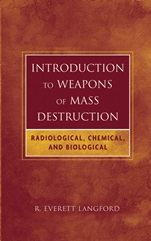
Introduction to Weapons of Mass Destruction: Radiological, Chemical, and Biological
ISBN 9780471465607
Autor: R. Everett Langford
Wydawca: Wiley
Dostępność: 3-6 tygodni
Cena: 849,45 zł
Przed złożeniem zamówienia prosimy o kontakt mailowy celem potwierdzenia ceny.
ISBN13: |
9780471465607 |
ISBN10: |
0471465607 |
Autor: |
R. Everett Langford |
Oprawa: |
Hardback |
Rok Wydania: |
2004-03-05 |
Ilość stron: |
424 |
Wymiary: |
238x162 |
Tematy: |
MB |
Crucial information on nuclear, chemical, and biological weapons
From the diseased animal carcass hurled over the wall of a besieged castle to the nuclear suitcase bomb carried by a clandestine operative, the threat of unconventional weapons has always been a feature of warfare. Today’s danger comes mainly from the potential use of nuclear, biological, and chemical (NBC) weapons of mass destruction (WMD) by international terrorists or rogue states. False alarms and misinformation about these weapons have abounded in the jittery post–9/11 atmosphere. To understand and deal with the actual threat posed requires basing response plans, policy, and reporting on actual facts.
Introduction to Weapons of Mass Destruction separates fact from fiction about NBC weaponry by providing clear, technically precise information. For each family of weapon, coverage in this handbook includes:History and background informationAgent types and delivery mechanismsEffects of exposureProtection Safe storage and handling DecontaminationMedical treatments
Drawing from a broad array of military, scientific, and safety resources, this text offers both accessibility to the general public and accuracy and depth for professional emergency responders. Additional resources include a bibliography of references and a list of addresses and telephone numbers of federal and military agencies and professional organizations of interest. With full coverage of WMDs, from high–tech, genetically modified organisms to rudimentary radiological "dirty bombs," Introduction to Weapons of Mass Destruction is an essential reference for understanding and responding to these dangerous warfare agents.
Spis treści:
1. Weapons of Mass Destruction (WMD).
Introduction to WMD.
Nuclear Weapons.
Biological Weapons.
Chemical Weapons.
Similarities of Nuclear, Biological, and Chem
ical Weapons.
Differences Among Nuclear, Biological, and Chemical Weapons.
Aerosols.
Dispersion.
Exposure versus Dose.
Toxicity, Dose, and Effects.
Effects of Nuclear, Biological, and Chemical Weapons on People.
Human Anatomy and Physiology.
The Skin.
Ocular System.
Digestive System.
Nervous System.
Reproductive System.
Endocrine System.
Blood and Circulatory System.
Lymphatic System.
Urinary System.
The Liver.
Summary.
PART 1: RADIOLOGICAL WEAPONS.
2. Nuclear Radiation.
Atoms and Elements.
Introduction to Nuclear Radiation.
Process of Alpha Radiation.
Process of Beta Radiation.
Process of Gamma Radiation.
Process of Neutron Radiation.
Linear Energy Transfer (LET), Stopping Power , and Effects.
Fission Fragments.
Physiological Effects of Alpha Radiation.
Physiological Effects of Beta Radiation.
Physiological Effects of Gamma Radiation.
Physiological Effects of Neutron Radiation.
Time–Distance Shielding.
Radiation Shielding.
Summary.
3. Brief History of Nuclear Weapons.
Introduction.
Pre–World War Two.
World War Two Efforts.
British and Commonwealth World War Two Developments.
British and Commonwealth Post–War Developments.
Russian Nuclear Weapons.
French, Chinese, Indian, Pakistan, Israeli, and South African Nuclear Weapons.
People’s Republic of China.
India.
Pakistan.
Israel.
South Africa.
Post–War U.S. Developments.
Modern Weapons.
Arms Limitations.
Test Ban Treatise.
Nuclear Nonproliferation Treaty.
Weapons Accidents and Missing Weapons.
Today.
Terrorism.
World War II Dirty Bomb Operation.
4. Types of Nuclear Weapons.
Early Nuclear Weapons Designs.
Second Generation Nuclear Weapons.
The Hydrogen Bomb.
Modern Nuclear Weapons.
Delivery Systems.
Weapons Detonator.
Fission Initiator.
Nuclear Power Reactor.
Nucle
ar Reactor Waste.
“Dirty” Bomb.
Dull Sword.
Broken Arrow.
5. Effects of Nuclear Weapons.
Introduction to Nuclear Weapons Effects.
Blast and Thermal Effects.
Fallout.
Radiation Isopleths.
Radiation Effects.
Electromagnetic Pulse (EMP).
Prompt Radiation.
Induced Radiation.
Burns, Trauma, and Wounds.
Radiation Effects.
Hematological Effects.
Radiation–Induced Neurological Effects.
Other Effects.
Summary of Nuclear Bomb Effects.
Consequences of a Dirty Bomb Explosion.
6. Nuclear Weapons Detection, Protection, and Decontamination.
Radiac Instrumentation.
Ionization Chambers.
Proportional Counters.
Geiger–Mueller Detectors.
Scintillation Detectors.
Semiconductor Diode Detectors.
Neutron Detection.
Types of Field Radiac Instruments.
Field Survey Meters.
Alpha Meters.
Gamma and X–ray Survey Meters.
Dosimeters.
Limitation of Radiac Instruments.
Radiation Surveys.
Radiation Monitoring Procedures.
Prior to Entering the Radiation Area.
Gamma Monitoring.
Area Gamma–Exposure Monitoring Survey.
Rapid Interior Gamma–Monitoring Survey.
Rapid Contamination Survey.
Personal Exposure Survey.
Rapid Alpha–Monitoring Survey.
Detailed Monitoring Survey.
Air Sampling.
Fallout Samples.
Radiation–Monitoring and Decontamination Teams.
Decontamination.
7. Medical Treatment of Wounds from Nuclear Weapons.
General Medical Aspects of Radiation.
Flash Injury.
Blast Injury.
Thermal Injury.
Radiation Injury.
Management of Nuclear Patients.
Mass Casualties.
Handling and Managing Radioactively Contaminated Patients.
Radiation Injuries.
Loss of Medical Personnel.
Transient Psychological Incapacitation.
Radioprotectants.
Summary.
PART 2: BIOLOGICAL WEAPONS.
8. Brief History of Biological Weapons.
Use of Biological Weapons in An
cient Times.
Modern History of Bioweapons.
Advantages and Drawbacks for the Use of Biological Weapons.
U.S. Bioweapons Programs.
U.S.S.R. Bioweapons Programs.
Chinese Bioweapons Program.
Geneva Protocol of 1925.
Biological Weapons Convention of 1972.
Future Use of Bioweapons in War.
Use of Biological Weapons in Terrorism.
9. Bioweapons Disease and Medical Treatments.
Introduction to Bioweapons.
Aflatoxin.
African Hemorrhagic Fever.
Anthrax.
Botulism.
Bolivian Hemorrhagic Fever (BHF) or Machupo Hemorrhagic Fever.
Brucellosis.
Chikungunya.
Cholera.
Coccidioidomycosis.
Crimean–Congo Hemorrhagic Fever.
Dengue Fever.
Ebola Hemorrhagic Fever (EHF).
Epidemic Typhus.
Hantaviral Diseases.
Influenza.
Marburg Hemorrhagic Fever.
Murine Typhus.
O’nyong–nyong.
Plague.
Q Fever.
Ricin Introxification.
Rift Valley Fever.
Rocky Mountain Spotted Fever.
Shigellosis.
Staphyloccocal Enterotoxin B (SEB) Intoxification.
Smallpox.
Tularemia.
Trichothecene Intoxification.
Typhoid Fever.
Venezuelan Equine Encephalitis (VEE).
Genetically Modified Organisms.
Fungi as Anti–crop Weapons.
Wheat Stem Rust.
Rye Stem Rust.
Rice Blast.
Zoonotic Diseases.
Glanders.
Psittacosis.
Toxins.
Saxitoxin.
Tetrodotoxin.
Prions.
General Comments on Medical Treatment.
Aerosol Particles.
Management of Biological Warfare Patients.
Summary.
10. Delivery Systems for Bioweapons.
Problems with Use of Bioweapons.
Biological Organism Dissemination.
Particle Size.
Natural Vectors.
Artillery Shells.
Land Mines.
Rockets.
Bombs.
Dispersal of Biological Agents.
Exposure versus Dose.
Toxicity, Dose, and Effects.
Summary.
11. Biological Weapon Detection, Protection, and Decontamination.
Viability of Organisms.
Laboratory Analyses.
Surety.
Laboratory Detection of
Koszyk
Książek w koszyku: 0 szt.
Wartość zakupów: 0,00 zł
Informacje


Kontakt
Gambit
Centrum Oprogramowania
i Szkoleń Sp. z o.o.
Al. Pokoju 29b/22-24
31-564 Kraków
Siedziba Księgarni
ul. Kordylewskiego 1
31-542 Kraków
+48 12 410 5991
+48 12 410 5987
+48 12 410 5989
Subskrypcje
Administratorem danych osobowych jest firma Gambit COiS Sp. z o.o. Na podany adres będzie wysyłany wyłącznie biuletyn informacyjny.
Autoryzacja płatności

Informacje na temat autoryzacji płatności poprzez PayU.

© Copyright 2012: GAMBIT COiS Sp. z o.o. Wszelkie prawa zastrzeżone.
Projekt i wykonanie: Alchemia Studio Reklamy