


Wydawcy
Katalog tematyczny
- Archeologia (109)
- Ekonomia, finanse, business (13704)
- Filozofia (1445)
- Historia (3040)
- Języki i językoznawstwo (2356)
- Lifestyle, hobby i rozrywka (475)
- Medycyna (9704)
- Nauki humanistyczne (4)
- Nauki o Ziemi i środowisku (2638)
- Nauki ścisłe (20412)
- Nauki społeczne (8486)
- Edukacja (229)
- Kryminologia, opieka spełeczna (284)
- Obronność (10)
- Polityka (1389)
- Psychologia (777)
- Socjologia (410)
- Społeczeństwo i kultura (187)
- Nauki techniczne (13450)
- Prawo (1696)
- Publikacje informacyjne i interdyscyplinarne (1288)
- Religia i wierzenia (917)
- Technika komputerowa (4067)
- Zdrowie, relacje międzyludzkie i rozwój osobisty (657)





Informacje szczegółowe o książce
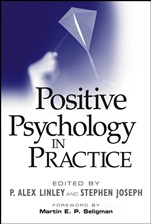
Positive Psychology in Practice
ISBN 9780471459064
Autor: P. Alex Linley, Stephen Joseph, Martin E. P. Seligman
Wydawca: Wiley
Dostępność: 3-6 tygodni
Cena: 564,90 zł
Przed złożeniem zamówienia prosimy o kontakt mailowy celem potwierdzenia ceny.
ISBN13: |
9780471459064 |
ISBN10: |
0471459062 |
Autor: |
P. Alex Linley, Stephen Joseph, Martin E. P. Seligman |
Oprawa: |
Hardback |
Rok Wydania: |
2004-10-12 |
Ilość stron: |
792 |
Wymiary: |
265x180 |
Tematy: |
JC |
A thorough and up–to–date guide to putting positive psychology into practice
From the Foreword: "This volume is the cutting edge of positive psychology and the emblem of its future."
–Martin E. P. Seligman, Ph.D., Fox Leadership Professor of Psychology, University of Pennsylvania, and author of Authentic Happiness
Positive psychology is an exciting new orientation in the field, going beyond psychology’s traditional focus on illness and pathology to look at areas like well–being and fulfillment. While the larger question of optimal human functioning is hardly new–Aristotle addressed it in his treatises on eudaimonia–positive psychology offers a common language on this subject to professionals working in a variety of subdisciplines and practices. Applicable in many settings and relevant for individuals, groups, organizations, communities, and societies, positive psychology is a genuinely integrative approach to professional practice.
Positive Psychology in Practice fills the need for a broad, comprehensive, and state–of–the–art reference for this burgeoning new perspective. Cutting across traditional lines of thinking in psychology, this resource bridges theory, research, and applications to offer valuable information to a wide range of professionals and students in the social and behavioral sciences.
A group of major international contributors covers:The applied positive psychology perspectiveHistorical and philosophical foundationsValues and choices in pursuit of the good lifeLifestyle practices for health and well–beingMethods and processes for teaching and learningPositive psychology at work
The best and most thorough treatment of this cutting–edge discipline, Positive Psychology in Practice is an essential resource for understanding this important new theory and applying its principles to all areas of prof
essional practice.
Spis treści:
Foreword (Martin E. P. Seligman).
Preface.
Acknowledgments.
Contributors.
PART I: THE APPLIED POSITIVE PSYCHOLOGY PERSPECTIVE.
1. Applied Positive Psychology: A New Perspective for Professional Practice (P. Alex Linley and Stephen Joseph).
PART II: HISTORICAL AND PHILOSOPHICAL FOUNDATIONS.
2. Positive Psychology: Historical, Philosophical, and Epistemological Perspectives (Ingvild S. Jørgensen and Hilde Eileen Nafstad).
3. The Good Life, Broadly and Narrowly Considered (Laura A. King, Jennifer Emilia Eells, and Chad M. Burton).
PART III: VALUES AND CHOICES IN PURSUIT OF THE GOOD LIFE.
4. The Good Life or the Goods Life? Positive Psychology and Personal Well–Being in the Culture of Consumption (Tim Kasser).
5. Value Pathways to Well–Being: Healthy Values, Valued Goal Attainment, and Environmental Congruence (Lilach Sagiv, Sonia Roccas, and Osnat Hazan).
6. Doing Better but Feeling Worse: The Paradox of Choice (Barry Schwartz and Andrew Ward).
7. Fostering Healthy Self–Regulation from Within and Without: A Self–Determination Theory Perspective (Kirk Warren Brown and Richard M. Ryan).
PART IV: LIFESTYLE PRACTICES FOR HEALTH AND WELL–BEING.
8. Achieving Sustainable New Happiness: Prospects, Practices, and Prescriptions (Kennon M. Sheldon and Sonja Lyubomirsky).
9. Physical Activity: Positive Psychology in Motion (Nanette Mutrie and Guy Faulkner).
10. Balancing Time Perspective in Pursuit of Optimal Functioning (Ilona Boniwell and Philip G. Zimbardo).
PARTV: TEACHING AND LEARNING: METHODS AND PROCESSES.
11. Teaching Students to Make Wise Judgments: The “Teaching for Wisdom” Program (Alina Reznitskaya and Robert J. Sternberg).
12. Introducing Positive Psychology to the Introductory Psychology Student (Amy C. Fineburg).
1
3. Teaching Positive Psychology (Nick Baylis).
14. Rescuing Our Heroes: Positive Perspectives on Upward Comparisons in Relationships, Education, and Work (Michael A. Cohn).
PART VI: POSITIVE PSYCHOLOGY AT WORK.
15. Leading Well: Transformational Leadership and Well–Being (Niro Sivanathan, Kara A. Arnold, Nick Turner, and Julian Barling).
16 Strengths–Based Development in Practice (Timothy D. Hodges and Donald O. Clifton).
17. Positive and Creative Organization (Jane Henry).
18. Toward a Positive Psychology of Executive Coaching (Carol Kauffman and Anne Scoular).
PART VII: HEALTH PSYCHOLOGY, CLINICAL PSYCHOLOGY, AND PSYCHOTHERAPY: A POSITIVE PSYCHOLOGICAL PERSPECTIVE.
19. Positive Psychology and Health Psychology: A Fruitful Liaison (Shelley E. Taylor and David K. Sherman).
20. Toward a Positive Clinical Psychology: Deconstructing the Illness Ideology and Constructing an Ideology of Human Strengths and Potential (James E. Maddux, C. R. Snyder, and Shane J. Lopez).
21. The Client: Psychotherapy’s Missing Link for Promoting a Positive Psychology (Mark A. Hubble and Scott D. Miller).
22. Positive Therapy: A Positive Psychological Theory of Therapeutic Practice (Stephen Joseph and P. Alex Linley).
PART VIII: POSITIVE PSYCHOLOGY IN THE CONSULTING ROOM.
23. Clinical Applications of Well–Being Therapy (Chiara Ruini and Giovanni A. Fava).
24. Strategies for Accentuating Hope (Shane J. Lopez, C. R. Snyder, Jeana L. Magyar–Moe, Lisa M. Edwards, Jennifer Teramoto Pedrotti, Kelly Janowski, Jerri L. Turner, and Cindy Pressgrove).
25. A Clinical Approach to Posttraumatic Growth (Richard G. Tedeschi and Lawrence G. Calhoun).
26 Positive Psychology and Psychotherapy: An Existential Approach (Roger Bretherton and Roderick J. Ørner).
PART IX: STRENGTHS OF CHARACTER IN PRACTICE.
27. Classification and
Measurement of Character Strengths: Implications for Practice (Christopher Peterson and Nansook Park).
28. Emotional Intelligence in Practice (Peter Salovey, David Caruso, and John D. Mayer).
29. Gratitude in Practice and the Practice of Gratitude (Giacomo Bono, Robert A. Emmons, and Michael E. McCullough).
30. Facilitating Curiosity: A Social and Self–Regulatory Perspective for Scientifically Based Interventions (Todd B. Kashdan and Frank D. Fincham).
31. Approaches to a Good Life: The Emotional–Motivational Side to Wisdom (Ute Kunzmann).
PARTX: POSITIVE DEVELOPMENT ACROSS THE LIFE SPAN.
32. Fostering the Future: Resilience Theory and the Practice of Positive Psychology (Tuppett M. Yates and Ann S. Masten).
33. Organized Youth Activities as Contexts for Positive Development (Reed Larson, Robin Jarrett, David Hansen, Nickki Pearce, Patrick Sullivan, Kathrin Walker, Natasha Watkins, and Dustin Wood).
34. Positive Aging (George E. Vaillant).
PART XI: BUILDING COMMUNITY THROUGH INTEGRATION AND REGENERATION.
35. Bringing Subjectivity into Focus: Optimal Experiences, Life Themes, and Person–Centered Rehabilitation (Antonella Delle Fave and Fausto Massimini).
36. Good Lives and the Rehabilitation of Offenders: A Positive Approach to Sex Offender Treatment (Tony Ward and Ruth Mann).
37. Facilitating Forgiveness: Developing Group and Community Interventions (Frank D. Fincham and Todd B. Kashdan).
PART XII: PUBLIC POLICY INITIATIVES: GOOD GOVERNANCE AND THE GOOD LIFE.
38. Human Connections and the Good Life: Balancing Individuality and Community in Public Policy (David G. Myers).
39. Happiness as a Public Policy Aim: The Greatest Happiness Principle (Ruut Veenhoven).
40. Findings on Subjective Well–Being: Applications to Public Policy, Clinical Interventions, and Education (William Pavot and Ed Diener).
Koszyk
Książek w koszyku: 0 szt.
Wartość zakupów: 0,00 zł
Informacje


Kontakt
Gambit
Centrum Oprogramowania
i Szkoleń Sp. z o.o.
Al. Pokoju 29b/22-24
31-564 Kraków
Siedziba Księgarni
ul. Kordylewskiego 1
31-542 Kraków
+48 12 410 5991
+48 12 410 5987
+48 12 410 5989
Subskrypcje
Administratorem danych osobowych jest firma Gambit COiS Sp. z o.o. Na podany adres będzie wysyłany wyłącznie biuletyn informacyjny.
Autoryzacja płatności

Informacje na temat autoryzacji płatności poprzez PayU.

© Copyright 2012: GAMBIT COiS Sp. z o.o. Wszelkie prawa zastrzeżone.
Projekt i wykonanie: Alchemia Studio Reklamy