


Wydawcy
Katalog tematyczny
- Archeologia (109)
- Ekonomia, finanse, business (13704)
- Filozofia (1445)
- Historia (3040)
- Języki i językoznawstwo (2356)
- Lifestyle, hobby i rozrywka (475)
- Medycyna (9704)
- Nauki humanistyczne (4)
- Nauki o Ziemi i środowisku (2638)
- Nauki ścisłe (20412)
- Nauki społeczne (8486)
- Nauki techniczne (13450)
- Prawo (1696)
- Publikacje informacyjne i interdyscyplinarne (1288)
- Religia i wierzenia (917)
- Technika komputerowa (4067)
- Zdrowie, relacje międzyludzkie i rozwój osobisty (657)





Informacje szczegółowe o książce
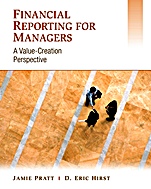
Financial Reporting for Managers: A Value–Creation Perspective
ISBN 9780471457497
Autor: Jamie Pratt, D. Eric Hirst
Wydawca: Wiley
Dostępność: 3-6 tygodni
Cena: 844,20 zł
Przed złożeniem zamówienia prosimy o kontakt mailowy celem potwierdzenia ceny.
ISBN13: |
9780471457497 |
ISBN10: |
0471457493 |
Autor: |
Jamie Pratt, D. Eric Hirst |
Oprawa: |
Paperback |
Rok Wydania: |
2008-04-21 |
Numer Wydania: |
1st Edition |
Ilość stron: |
440 |
Wymiary: |
257x213 |
Tematy: |
KF |
How to use financial reporting to create shareholder value.
Creating shareholder value is fundamental to management performance and performance evaluation. Speaking to current and future executives, this is the first text to combine this essential concept with the financial reporting process—the primary provider of the measures of shareholder value creation and its determinants.
Thoughtful, creative, and easy to understand. Financial Reporting for Managers: A Value–Creation Perspective links shareholder value creation and the financial accounting statements to the market value of the firm in a way that can easily be understood by beginners and professionals alike. In simple, powerful terms, the book lays out the pathways leading from good decisions by management to strong financial statements, and higher shareholder value and stock prices.
With this book, you will learn about:Shareholder value and its importance to a company’s long–term successFinancial statements and how to use them to measure, identify, and encourage value creationROE (Return on Equity), its determinants, and its relationship to the market value of the firmEarnings managementRevenues, expenses, and working capitalLong–term producing assets and investments in equity securities
With real–world cases illustrating each chapter and integrated global coverage, Financial Reporting for Managers ensures that you not only master the fundamentals of financial reporting, but then apply your knowledge to build strong long–term value for your organization.
Spis treści:
1. Value Creation, Financial Statements, And The Environment Of Financial Reporting.
Value Creation and Successful Management.
Value Creation Through Operating, Investing and Financial Activities.
Return on Equity (ROE).
A Caution about Measures of Value Creation.
Estimating the Cost
of Equity – An Intuitive Approach.
The Financial Statements – An Introduction.
The Balance Sheet.
Statement of Cash Flows.
Income Statement.
Statement of Changes in Shareholders Equity.
Did Lowe′s Create Value in 2007?
The Economic Context in which Financial Reports are Prepared and Used.
Reporting Entities and Industries.
Corporate Governance.
Financial Information Users and Capital Markets.
Contracts: Debt Covenants and Management Compensation.
Financial Reporting Regulations and Standards.
Generally Accepted Accounting Principles.
Independent Auditors.
Board of Directors and Audit Committee.
Legal Liability.
Professional Reputation and Ethics.
Sarbanes–Oxley Act and Internal Controls.
Global Perspective: Accounting Practices Outside the U.S.
Summary.
Appendix 1A. Estimating the Cost of Equity.
Case and Review Questions.
2. The Financial Statements – A Closer Look.
Operating Activities, the Financial Statements, and Value Creation.
Operating Performance and the Income Statement.
Operating Performance and Cash Provided by Operating Activities.
Investing Activities, Asset Management, and Financial Statement and Value Creation.
Working Capital Management.
Long–term (Producing) Assets.
Financing Activities, the Financial Statements, and Value Creation.
Transactions with Debt Holders.
Transactions with Equity Holders.
Financial Statement Differences Across Industries.
Global Perspective: Financial Statements and Analyses in Other Countries.
Summary.
Case and Review Questions.
3. Measurement Framework And Mechanics Of Financial Accounting.
Part 1: Measurement Framework for the Financial Statements.
Objectives of Financial Reporting.
Elements and Their Qualitative Characteristics.
Assumptions, Valuation Principles, and Exceptions.
Assumptions of Financial Accounting.
Markets and Va
luations Bases.
Valuation Principles of Financial Accounting.
Exceptions of Financial Accounting.
Part 2: Mechanics of Financial Accounting.
Basic Accounting Equation and Financial Statements.
Transactions, Accounts, and the Accounting Equation.
Mechanics of Financial Accounting: An Illustration.
Global Perspective: Measurement Fundamentals and International Reporting Standards.
Case and Review Questions.
Appendix 3A. Debits, Credits, and Journal Entries.
Journal Entries and the Accounting Equation.
Permanent, Temporary Accounts, and the Closing Process.
4. Using Financial Statements To Analyze Value Creation.
Determinants of Value Creation: Analyzing Return of Equity.
Return on Assets (ROA).
Measures of Effective Sales and Expense Management.
Measures of Effective Assets Management.
Asset Turnover Ratios.
Solvency Ratios.
Measures of Effective Capital Structure Management.
Using Financial Ratios to Analyze Value Creation Structure – Summary.
Analyzing the Statement of Cash Flows.
Financial Statement Analysis – A Wrap–Up and Industry Comparison.
Global Perspective: Working Capital Management.
Case and Review Questions.
5. Return On Equity, Value Creation, And Firm Value.
A Model of Firm Value Based on ROE and Value Creation.
Market–to–Book Ratios.
Using the ROE Valuation Model to Estimate Firm Market Value.
Predicting Future ROE.
Incorporating ROE Predictions into the Valuation Model.
Using the Valuation Model to Estimate Nordstrom′s Market Value.
Implications of Differences Between Actual and Estimated Market Values.
Using Financial Statements to Assess the Value of Non–US Firms.
Summary.
Case and Review Questions.
6. Earnings Management.
Incentives to Manage Earnings.
Common Forms of Earnings Management.
Overstating Operating Performance.
Understating Operating Performance.
Off–Balance Sheet Financing.
How Managers Use Accounting Judgments to Manage Earnings.
Materiality Judgments.
Recognition versus Disclosure Judgments.
Classification Judgments.
Measurement Judgments.
Measurement Judgments: Summary.
“Real” Earnings Management.
Earnings Management and Value Creation.
A Global Perspective on Earnings Management.
Case and Review Questions.
7. Operating Transactions – Revenues, Expenses And Working Capital.
Income Statement: Disclosure and Presentation.
Operating Revenues and Expenses.
Other Revenues and Expenses.
Interest Expense, net.
Disposal of a Business Segment – Discontinued Operations.
Extraordinary Items.
Changes in Accounting Methods.
Disclosure of Income Taxes.
Earnings–Per–Share Disclosure.
Working Capital.
Cash.
Cash Restrictions.
Cash Management.
Cash Control.
Revenue Recognition.
Managing Receivables.
Valuing Receivables on the Balance Sheet.
Accounting for Bad Debts (Uncollectibles).
Accounts Receivable Control and Aging Schedules.
Inventory.
Accounting for Inventory: Four Important Issues.
Acquiring Inventory: What Costs to Capitalize.
Carry Inventory: Perpetual Method.
Balance Sheet.
Income Statement.
Which Cost Flow Assumption.
Inventory Cost Flow Assumptions: Effects on the Financial Statement.
Observations about LIFO: Liquidations and LIFO Reserves.
Inventory Cost Flow Assumptions: Tradeoffs.
Ending Inventory: Applying the Lower–of–Cost–or–Market Rule.
Current Liabilities.
Determinable Liabilities.
Contingent Liabilities.
Statement of Cash Flows: Operating Section.
Direct Method.
Indirect Method.
Summary.
Cases and Review Questions.
8. Long–Term Producing Assets And Investments In Equity Securities.
Investments in Long–Term Producing Assets.
Accounting for Producing Asset
s: An Overview.
Acquisition: What Costs to Capitalize.
Post–acquisition Expenditures.
Cost Allocation.
Estimating Useful Life and Salvage Value.
Cost Allocation Methods
Disposal: Retirement, Sales, and Trade–In
Investments in Equity Securities.
Cost Method.
Mark–to–Market Method.
Equity Method.
Consolidated Financial Statements.
Investing Activities and Statement of Cash Flows.
Summary.
Cases and Review Questions.
Appendix A. Time Value Of Money.
Interest: The Price of Money.
Time Value.
Size of Time Value.
Time Value Computations.
Future Value.
Present Value.
An Illustration.
Equivalent Value.
Computing Implicit Rates of Return.
Time Value of Money and Financial Reporting.
Cases and Review Questions.
Glossary.
Nota biograficzna:
Jamie Pratt is Professor of Accounting at Indiana University, and has taught both around the U.S. and internationally. In 1993, he was the program chair for the American Accounting Association. He has been on the Educational Advisory Committee since 1990, and has also been the secretary of the board for the Pratt Corporation for 17 years. He has published extensively in research journals and has penned several texts.
D. Eric Hurst is Associate Dean and Professor in the Department of Accounting at the Red McCombs School of Business at The University of Texas at Austin. His research has been published in Journal of Accounting Research, The Accounting Review, Contemporary Accounting Research, Auditing: A Journal of Practice & Theory, and Organizational Behavior and Human Decision Processes.
Okładka tylna:
How to use financial reporting to create shareholder value.
Creating shareholder value is fundamental to management performance and performance evaluation. Speaking to current and future executives, this is the first text to combine this essential
concept with the financial reporting process—the primary provider of the measures of shareholder value creation and its determinants.
Thoughtful, creative, and easy to understand. Financial Reporting for Managers: A Value–Creation Perspective links shareholder value creation and the financial accounting statements to the market value of the firm in a way that can easily be understood by beginners and professionals alike. In simple, powerful terms, the book lays out the pathways leading from good decisions by management to strong financial statements, and higher shareholder value and stock prices.
With this book, you will learn about:Shareholder value and its importance to a company’s long–term successFinancial statements and how to use them to measure, identify, and encourage value creationROE (Return on Equity), its determinants, and its relationship to the market value of the firmEarnings managementRevenues, expenses, and working capitalLong–term producing assets and investments in equity securities
With real–world cases illustrating each chapter and integrated global coverage, Financial Reporting for Managers ensures that you not only master the fundamentals of financial reporting, but then apply your knowledge to build strong long–term value for your organization.
Koszyk
Książek w koszyku: 0 szt.
Wartość zakupów: 0,00 zł
Informacje


Kontakt
Gambit
Centrum Oprogramowania
i Szkoleń Sp. z o.o.
Al. Pokoju 29b/22-24
31-564 Kraków
Siedziba Księgarni
ul. Kordylewskiego 1
31-542 Kraków
+48 12 410 5991
+48 12 410 5987
+48 12 410 5989
Subskrypcje
Administratorem danych osobowych jest firma Gambit COiS Sp. z o.o. Na podany adres będzie wysyłany wyłącznie biuletyn informacyjny.
Autoryzacja płatności

Informacje na temat autoryzacji płatności poprzez PayU.

© Copyright 2012: GAMBIT COiS Sp. z o.o. Wszelkie prawa zastrzeżone.
Projekt i wykonanie: Alchemia Studio Reklamy