


Wydawcy
Katalog tematyczny
- Archeologia (109)
- Ekonomia, finanse, business (13704)
- Filozofia (1445)
- Historia (3040)
- Języki i językoznawstwo (2356)
- Lifestyle, hobby i rozrywka (475)
- Medycyna (9704)
- Nauki humanistyczne (4)
- Nauki o Ziemi i środowisku (2638)
- Nauki ścisłe (20412)
- Astronomia (294)
- Biologia (5119)
- Chemia (6540)
- Chemia analityczna (361)
- Chemia fizyczna (346)
- Chemia nieorganiczna (137)
- Chemia organiczna (535)
- Krystalografia (27)
- Minerologia (46)
- Fizyka (3309)
- Matematyka (4574)
- Nauki ścisłe, ogólnie (503)
- Nauki społeczne (8486)
- Nauki techniczne (13450)
- Prawo (1696)
- Publikacje informacyjne i interdyscyplinarne (1288)
- Religia i wierzenia (917)
- Technika komputerowa (4067)
- Zdrowie, relacje międzyludzkie i rozwój osobisty (657)





Informacje szczegółowe o książce
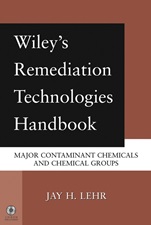
Wileys Remediation Technologies Handbook: Major Contaminant Chemicals and Chemical Groups
ISBN 9780471455998
Autor: Jay H. Lehr, John Wiley & Sons Ltd
Wydawca: Wiley
Dostępność: 3-6 tygodni
Cena: 1 189,65 zł
Przed złożeniem zamówienia prosimy o kontakt mailowy celem potwierdzenia ceny.
ISBN13: |
9780471455998 |
ISBN10: |
0471455997 |
Autor: |
Jay H. Lehr, John Wiley & Sons Ltd |
Oprawa: |
Hardback |
Rok Wydania: |
2004-06-22 |
Ilość stron: |
1288 |
Wymiary: |
258x181 |
Tematy: |
PN |
The world’s first authoritative, all–in–one collection of remediation technologies–a vital reference when time is of the essence
Our world has experienced unprecedented industrial and social progress over the past century. This progress, unfortunately, has often led to new types of environmental pollution, requiring remediation professionals to come up with fast, effective programs to counter their impact. The absence of a one–stop compendium of authoritative information has often hampered those efforts.
Wiley’s Remediation Technologies Handbook fills that void, providing scientists and regulators with the most thoroughly researched, up–to–date collection of general, patented, and trademarked remediation technologies ever published. This one–of–a–kind resource:Lists the 368 chemicals and chemical groups that pose the greatest environmental risks, along with brief summaries and case studies of proven remediation technologiesOrganizes technologies in terms of related chemical or chemical group, with references grouped by total costs, technology costs, general studies, and technology descriptionsDraws on the EnviroGlobe database, as well as peer–reviewed journals, government–issued reports, related conference proceedings, commercial publications–virtually every imaginable source
Wiley’s Remediation Technologies Handbook compiles today’s top remediation technologies and techniques into one well–organized, trustworthy reference. Concise yet comprehensive, it ensures that remediation professionals will always have the best available answer at their fingertips–and is the new standard for professional remediation information and guidance.
Spis treści:
Preface.
Chemicals Sorted by Chemical Groups.
Technologies Applicable to Specific Chemicals.
Alcohols.
Aldehydes.
Aldehydes and
Ketones.
Aldehydes or Ketones with Other Functional Groups.
Aliphatic Hydrocarbons.
Aliphatic Nitriles and Cyanates.
Aliphatic Nitrosamines.
Aliphatic Organophosphorous Compounds.
Alkanes and Cyclic Alkanes.
Alkenes, Cyclic Alkenes, and Dienes.
Alkyl Halides.
Alkynes.
Aluminum.
Americium.
Amides.
Amines.
Antimony.
Aromatic Amines and Diamines.
Aromatic Nitriles and Cyanates.
Aromatic Nitro Compounds.
Aromatic Nitro Compounds with Other Functional Groups.
Aromatic Organophosphorous Compounds.
Aromatics with Halogenated Side Chain.
Arsenic.
Azo Compounds.
Azo Compounds, Hydrazine Derivatives.
Barium.
Benzene and Monosubstituted Benzene Hydrocarbons.
Benzene and Substituted Benzene Hydrocarbons.
Benzene, Toluene, Ethylbenzene, and Xylene (BTEX).
Beryllium.
Bismuth.
Bromide Ion.
Cadmium.
Calcium.
Carbon Compounds.
Carboxylic Acids.
Carboxylic Acids and Derivatives.
Carboxylic Acids with Other Functional Groups.
Cesium.
Chlorine and Chlorine Compounds.
Chlorine Compounds.
Chlorine, Ionic Species.
Chromium.
Chromium–Containing Ionic Species.
Cobalt.
Copper.
Cyclic Ethers.
Dihalogenated and Polyhalogenated Ethers.
Dioxin and Related Compounds.
Disubstituted and Polysubstituted Benzene Hydrocarbons.
Elemental Sulfur.
Esters.
Ethers.
Fluoride Ion.
Glycols.
Glycols, Epoxides.
Gold.
Halogenated Aromatic Compounds.
Halogenated Ethers and Epoxides.
Halogenated Phenolic Compounds.
Halophenols.
Heterocyclic Nitrogen Compounds.
Heterocyclic Oxygen Compounds.
Heterocyclic Oxygen Compounds with Three or More Rings.
Hydrazine Derivatives.
Iodine.
Ionic Species Containing Iron.
Ions Containing Phosphorus.
Ions Containing Sulfur.
Ions with Nitrogen.
Iron.
Ketones.
Lanthanides.
Lead.
Lead Compounds.
Lithium.
Magnesium.
Manganese.
Mercury.
Molybdenum.<
br>Monohydric Phenols.
Nickel.
Nitrogen Compounds.
Nitrophenolic Compounds.
Nitrophenols.
Nitrosamines.
Noncyclic Aliphatic or Aromatic Ethers.
Organophosphonates.
Organophosphorus Compounds.
Organosulfur Compounds with Other Functional Groups.
Other Nitrophenols.
Pesticides.
Phenols.
Platinum.
Plutonium.
Polycyclic Aromatic Hydrocarbons with More Than Five Fused Rings.
Polycyclic Aromatic Hydrocarbons, Four–Ring Compounds.
Polycyclic Aromatic Hydrocarbons, Two– or Three–Ring Compounds.
Polycyclic Aromatic Hydrocarbons; PAH; PNA; POM.
Polycyclic Hydrocarbons, Nonalternant Compounds with Four Fused Rings.
Polycyclic Hydrocarbons, Nonalternant Compounds with Five Fused Rings.
Polycyclic Hydrocarbons, Nonalternant Compounds with Fused Rings.
Polycyclic Hydrocarbons, Nonalternant Compounds with More Than Five Fused Rings.
Polycyclic Hydrocarbons, Nonalternant Compounds with Two or Three Fused Rings.
Polycyclic Aromatic Hydrocarbons, Five–Ring Compounds.
Potassium.
Primary Alcohols.
Primary Aliphatic Amines and Diamines.
Pyridine and Substituted Pyridines.
Pyrrole and Fused–Ring Derivatives of Pyrrole.
Radionuclides.
Radium.
Ring–Substituted Aromatics.
Saturated Alkyl Halides.
Secondary Alcohols.
Secondary Aliphatic Amines.
Selenium.
Silicon Compounds—Other Significant.
Silver.
Simple Aromatic Nitro Compounds.
Single–Ring Heterocyclic Sulfur Compounds.
Sodium.
Strontium.
Sulfides, Disulfides.
Sulfur.
Sulfur Compounds.
Sulfur Compounds—Other Significant.
Technetium.
Tertiary Alcohols.
Thallium.
Thiols.
Thiols, Sulfides, and Disulfides.
Thorium.
Tin.
Titanium.
Total Petroleum Hydrocarbons (TPH).
Tungsten.
Unsaturated Alkyl Halides.
Uranium.
Vanadium.
Volatile Organic Compounds.
Zinc.
Zirconium.
Technologies with Abstracts and Tech
nology Costs.
[Based on the Remediation Information Management System (RIMS)].
References.
Specific Chemical Index.
Nota biograficzna:
Jay H. Lehr, PhD, is the senior scientist at AR Environmental Services Inc. and Science Director at The Heartland Institute. The author of twelve books and over 400 articles on groundwater science, Dr. Lehr has worked extensively with the federal government to develop key environmental regulations regarding surface and groundwater.
Okładka tylna:
The world’s first authoritative, all–in–one collection of remediation technologies–a vital reference when time is of the essence
Our world has experienced unprecedented industrial and social progress over the past century. This progress, unfortunately, has often led to new types of environmental pollution, requiring remediation professionals to come up with fast, effective programs to counter their impact. The absence of a one–stop compendium of authoritative information has often hampered those efforts.
Wiley’s Remediation Technologies Handbook fills that void, providing scientists and regulators with the most thoroughly researched, up–to–date collection of general, patented, and trademarked remediation technologies ever published. This one–of–a–kind resource:Lists the 368 chemicals and chemical groups that pose the greatest environmental risks, along with brief summaries and case studies of proven remediation technologiesOrganizes technologies in terms of related chemical or chemical group, with references grouped by total costs, technology costs, general studies, and technology descriptionsDraws on the EnviroGlobe database, as well as peer–reviewed journals, government–issued reports, related conference proceedings, commercial publications–virtually every imaginable source
Wiley’s Remediation Te
Koszyk
Książek w koszyku: 0 szt.
Wartość zakupów: 0,00 zł
Informacje


Kontakt
Gambit
Centrum Oprogramowania
i Szkoleń Sp. z o.o.
Al. Pokoju 29b/22-24
31-564 Kraków
Siedziba Księgarni
ul. Kordylewskiego 1
31-542 Kraków
+48 12 410 5991
+48 12 410 5987
+48 12 410 5989
Subskrypcje
Administratorem danych osobowych jest firma Gambit COiS Sp. z o.o. Na podany adres będzie wysyłany wyłącznie biuletyn informacyjny.
Autoryzacja płatności

Informacje na temat autoryzacji płatności poprzez PayU.

© Copyright 2012: GAMBIT COiS Sp. z o.o. Wszelkie prawa zastrzeżone.
Projekt i wykonanie: Alchemia Studio Reklamy