


Wydawcy
Katalog tematyczny
- Archeologia (109)
- Ekonomia, finanse, business (13704)
- Filozofia (1445)
- Historia (3040)
- Języki i językoznawstwo (2356)
- Lifestyle, hobby i rozrywka (475)
- Medycyna (9704)
- Chirurgia (272)
- Inne gałęzie medycyny (1871)
- Medycyna kliniczna (4187)
- Choroby wewnętrzne (514)
- Dermatologia (51)
- Diagnostyka medyczna (3)
- Endokrynologia (144)
- Gastroenterologia (27)
- Geriatria (50)
- Ginekologia i położnictwo (134)
- Hematologia (46)
- Hepatologia (10)
- Kardiologia (71)
- Laryngologia (12)
- Nefrologia (10)
- Neurologia (500)
- Oftalmologia (50)
- Pediatria (33)
- Pulmunologia (32)
- Reumatologia (14)
- Terapia genowa (1)
- Układ mięśniowo-szkieletowy (1)
- Urologia (14)
- Medycyna niekonwencjonalna (14)
- Medycyna przedkliniczna (269)
- Medycyna, ogólnie (1740)
- Medyczne służby pomocnicze (745)
- Studia medyczne (16)
- Weterynaria (548)
- Nauki humanistyczne (4)
- Nauki o Ziemi i środowisku (2638)
- Nauki ścisłe (20412)
- Nauki społeczne (8486)
- Nauki techniczne (13450)
- Prawo (1696)
- Publikacje informacyjne i interdyscyplinarne (1288)
- Religia i wierzenia (917)
- Technika komputerowa (4067)
- Zdrowie, relacje międzyludzkie i rozwój osobisty (657)





Informacje szczegółowe o książce
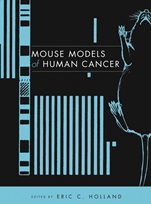
Mouse Models of Human Cancer
ISBN 9780471444602
Autor: Eric C. Holland
Wydawca: Wiley
Dostępność: 3-6 tygodni
Cena: 1 493,10 zł
Przed złożeniem zamówienia prosimy o kontakt mailowy celem potwierdzenia ceny.
ISBN13: |
9780471444602 |
ISBN10: |
047144460X |
Autor: |
Eric C. Holland |
Oprawa: |
Hardback |
Rok Wydania: |
2004-09-10 |
Ilość stron: |
488 |
Wymiary: |
285x220 |
Tematy: |
MJ |
Mice have become the species of choice for modeling the complex interactions between tumor cells and the host environment. Mouse genetics are easily manipulated, and a growing array of technology exists for this purpose. Mouse models allow investigators to better understand causal relationships between specific genetic alterations and tumors, utilize new imaging techniques, and test novel therapies. Recent developments along these lines show great promise for the development of new anti–cancer treatments.
Mouse Models of Human Cancer provides researchers and students with a complete resource on the subject, systematically presenting the principles, methodologies, applications, and challenges associated with this exciting field. Offering a survey of the latest research and a description of future areas of interest, this text:Presents real experimental dataDescribes organ site–specific mouse modelsClearly identifies suitable models for further drug testingCritically analyzes current methodologies and their limitationsFeatures numerous recognizable expert contributorsLists key Web sites, reagents, and companies
From mouse handling and genetic engineering to preclinical trials, Mouse Models of Human Cancer is a comprehensive guide to using these models and relating them to human disease. Its uniform presentation describes organ–specific models in clinical, imaging, and molecular terms, and lays out the relevant genetics, experimental approaches, histological comparisons with human disease, and conclusions.
Combining stellar chapter authors, rich illustrations, and clear, up–to–date coverage, Mouse Models of Human Cancer is an invaluable resource for advanced students and cutting–edge researchers.
Spis treści:
Preface.
Contributors.
PART I: MOUSE HANDLING AND ENGINEERING.
1. Approaches to Handling, Breeding, Strain Preser
vation, Genotyping, and Drug Administration for Mouse Models of Cancer (Dawnalyn Boggess, Kathleen A. Silva, Carlisle P. Landel, Larry Mobraaten, and John P. Sundberg).
2. Pathology of Mouse Models of Cancer (Robert D. Cardiff).
3. Intercurrent Infections in Genetically Engineered Mice (Stephen W. Barthold).
4. Germline Modification Strategies (Silvia Grisendi and Pier Paolo Pandolfi).
5. Somatic Cell Gene Transfer (Lene Uhrbom and Eric C. Holland).
PART II: ORGAN SITE–SPECIFIC MOUSE MODELS OF HUMAN CANCER.
6. Lung Cancer (Jonathan M. Kurie, Parviz Minoo, Stephen S. Hecht, Alexander Nikitin, and Franco J. DeMayo).
7. Mammary Gland Cancer (Dalit Barkan, Cristina Montagna, Thomas Ried, and Jeffrey E. Green).
8. Prostate Cancer (Katharine Ellwood–Yen and Charles Sawyers).
9. Skin Cancer (Marcus Bosenberg).
10. Ovarian Cancer (Sandra Orsulic).
11. Peripheral Nervous System Tumors (David H. Gutmann, Arie Perry, Reshma Rangwala, and Larry S. Sherman).
12. Central Nervous System Tumors (Andrew B. Lassman and Eric C. Holland).
13. Myeloid Malignancies (Scott C. Kogan).
14. Lymphoid Malignancies (Michael Teitell and Pier Paolo Pandolfi).
PART III: GENERAL ISSUES IN CANCER BIOLOGY.
15. Genetic Modifiers (David W. Threadgill, Kent W. Hunter, Fei Zou, and Kenneth F. Manly).
16. Modeling Blood Vessel Formation in the Mouse (Robert Benezra, Shahin Rafii, and David Lyden).
17. Metastasis (Dawn S. Chandler and Guillermina Lozano).
18. Immunologic Study of Tumors in Mouse Models (Taha Merghoub and Alan N. Houghton).
PART IV: IMAGING TECHNOLOGIES.
19. Micro–Computed Tomography of Mouse Cancer Models (Jamey P. Weichert).
20 .Magnetic Resonance Imaging in Mouse Cancer Models (Manickam Muruganandham and Jason A. Koutcher).
21. Bioluminescent Imaging of Mouse Cancer Models (Christopher H. Contag).
PART V: PRECLINICAL TRIALS.
22 .Use of Magnetic Resonance Imaging for Evaluation of Treatment Respo
nse (Brian D. Ross, Thomas L. Chenevert, Bradford A. Moffat, Alnawaz Rehemtulla, Daniel E. Hall, Patrick McConville, and Jonathan Moody).
23. Physiologically Based Pharmacokinetic and Pharmacodynamic Modeling (Raymond S. H. Yang, James E. Dennison, Melvin E. Andersen, Ying C. Ou, Kai H. Liao, and Brad Reisfeld).
24. Trial Design and Biostatistics (Michael F. W. Festing).
25. Cancer Drug Development in the Modern Era (William R. Sellers and Alex Matter).
26. Preclinical Trials in Mouse Cancer Models (Brian Weiss and Kevin Shannon).
Index.
Nota biograficzna:
Eric Holland received his Ph.D. from the University of Chicago in 1985 and M.D. from Stanford University in 1990. He completed his residency in neurosurgery at UCLA and did postdoctoral work at Stanford and the NIH. He holds appointments at Memorial Sloan–Kettering Cancer Center and Cornell University. He is a clinically active neurosurgeon and heads a laboratory at the Sloan–Kettering Institute focused primarily on understanding the molecular mechanisms underlying the pathogenesis of CNS tumors and in modeling these cancers in the mouse. Dr. Holland is the recipient of the Searle Scholars Award, the American Brain Tumor Association Research Award, the Peter Steck Memorial Award, the Bressler Scholars Award and the Seroussi Award. He has served on the NIH Brain Tumor Process Review Group, is a member of the Mouse Models of Human Cancer Consortium and is the Principal Investigator of the Brain Tumor SPORE program at MSKCC
Okładka tylna:
Mice have become the species of choice for modeling the complex interactions between tumor cells and the host environment. Mouse genetics are easily manipulated, and a growing array of technology exists for this purpose. Mouse models allow investigators to better understand causal relationships between specific genetic alterations and tumors, utilize new imaging techniques, and test nov
el therapies. Recent developments along these lines show great promise for the development of new anti–cancer treatments.
Mouse Models of Human Cancer provides researchers and students with a complete resource on the subject, systematically presenting the principles, methodologies, applications, and challenges associated with this exciting field. Offering a survey of the latest research and a description of future areas of interest, this text:Presents real experimental dataDescribes organ site–specific mouse modelsClearly identifies suitable models for further drug testingCritically analyzes current methodologies and their limitationsFeatures numerous recognizable expert contributorsLists key Web sites, reagents, and companies
From mouse handling and genetic engineering to preclinical trials, Mouse Models of Human Cancer is a comprehensive guide to using these models and relating them to human disease. Its uniform presentation describes organ–specific models in clinical, imaging, and molecular terms, and lays out the relevant genetics, experimental approaches, histological comparisons with human disease, and conclusions.
Combining stellar chapter authors, rich illustrations, and clear, up–to–date coverage, Mouse Models of Human Cancer is an invaluable resource for advanced students and cutting–edge researchers.
Koszyk
Książek w koszyku: 0 szt.
Wartość zakupów: 0,00 zł
Informacje


Kontakt
Gambit
Centrum Oprogramowania
i Szkoleń Sp. z o.o.
Al. Pokoju 29b/22-24
31-564 Kraków
Siedziba Księgarni
ul. Kordylewskiego 1
31-542 Kraków
+48 12 410 5991
+48 12 410 5987
+48 12 410 5989
Subskrypcje
Administratorem danych osobowych jest firma Gambit COiS Sp. z o.o. Na podany adres będzie wysyłany wyłącznie biuletyn informacyjny.
Autoryzacja płatności

Informacje na temat autoryzacji płatności poprzez PayU.

© Copyright 2012: GAMBIT COiS Sp. z o.o. Wszelkie prawa zastrzeżone.
Projekt i wykonanie: Alchemia Studio Reklamy