


Wydawcy
Katalog tematyczny
- Archeologia (109)
- Ekonomia, finanse, business (13704)
- Filozofia (1445)
- Historia (3040)
- Języki i językoznawstwo (2356)
- Lifestyle, hobby i rozrywka (475)
- Medycyna (9704)
- Nauki humanistyczne (4)
- Nauki o Ziemi i środowisku (2638)
- Nauki ścisłe (20412)
- Nauki społeczne (8486)
- Nauki techniczne (13450)
- Budownictwo lądowe (1045)
- Chemia przemysłowa (2258)
- Elektronika i telekomunikacja (3287)
- Energetyka (1122)
- Inne nauki stosowane (363)
- Inżynieria biochemiczna (507)
- Inżynieria transportu (232)
- Mechanika i materiały (3316)
- Nauka o środowisku (321)
- Rolnictwo (507)
- Technika, ogólnie (475)
- Prawo (1696)
- Publikacje informacyjne i interdyscyplinarne (1288)
- Religia i wierzenia (917)
- Technika komputerowa (4067)
- Zdrowie, relacje międzyludzkie i rozwój osobisty (657)





Informacje szczegółowe o książce
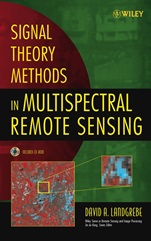
Signal Theory Methods in Multispectral Remote Sensing
ISBN 9780471420286
Autor: David A Landgrebe
Wydawca: Wiley
Dostępność: 3-6 tygodni
Cena: 1 063,65 zł
Przed złożeniem zamówienia prosimy o kontakt mailowy celem potwierdzenia ceny.
ISBN13: |
9780471420286 |
ISBN10: |
047142028X |
Autor: |
David A Landgrebe |
Oprawa: |
Hardback |
Rok Wydania: |
2003-02-14 |
Ilość stron: |
528 |
Wymiary: |
254x165 |
Tematy: |
TJ |
Practical methods for the optimal analysis of multispectral and hyperspectral image data
The field of remote sensing is a cross–disciplinary one, involving professionals ranging from signal processing engineers to earth science researchers to private and public sector practitioners, in nearly every region of the globe. The Signal Theory Approach offers powerful methods for analyzing the complex data involved in this field–methods which may not be familiar to many in non–engineering fields. In contrast to previous broad surveys of the subject, Signal Theory Methods in Multispectral Remote Sensing focuses on the practical knowledge data users of all types must have to optimally analyze multispectral and hyperspectral image data.
Both a textbook and self–teaching reference for professionals in the field, this book covers the fundamentals of the analysis of multispectral and hyperspectral image data from the point of view of signal processing engineering. Avoiding topics common to general treatments of remote sensing but not germane to practical applications, it offers concise discussions of:Pattern recognition methods as applied to the analysis of multivariate remotely sensed dataThe scene and sensor parts of a passive optical remote sensing systemThe statistical approach, including first–and second–order decision boundaries, error estimation, feature selection, and clusteringSpectral feature design, the incorporation of spatial variations, noise in remote sensing systems, and other methods necessary for hyperspectral analysis
As hyperspectral data becomes more widely available, the need for practical ways to analyze the very large volume of hyperspectral data on a personal computer makes this an extremely timely and useful reference for all professionals and researchers involved in remote sensing.
Spis treści:
Preface.
PART I: INTRODUCTION.
Chapter 1.
Introduction and Background.
PART II: THE BASICS FOR CONVENTIONAL MULTISPECTRAL DATA.
Chapter 2. Radiation and Sensor Systems in Remote Sensing.
Chapter 3. Pattern Recognition in Remote Sensing.
PART III: ADDITIONAL DETAILS.
Chapter 4. Training a Classifier.
Chapter 5. Hyperspectral Data Characteristics.
Chapter 6. Feature Definition.
Chapter 7. A Data Analysis Paradigm and Examples.
Chapter 8. Use of Spatial Variations.
Chapter 9. Noise in Remote Sensing Systems.
Chapter 10. Multispectral Image Data Preprocessing.
Appendix. An Outline of Probability Theory.
Exercises.
Index.
Nota biograficzna:
DAVID A. LANDGREBE, PhD, is Professor Emeritus of Electrical Computer Engineering in the School of Electrical and Computer Engineering at Purdue University. Dr. Landgrebe is a former president of the IEEE Geoscience and Remote Sensing Society and recipient of the Society’s Distinguished Achievement Award. He is the coauthor of Remote Sensing: The Quantitative Approach and a contributor to numerous other publications.
Okładka tylna:
Practical methods for the optimal analysis of multispectral and hyperspectral image data
The field of remote sensing is a cross–disciplinary one, involving professionals ranging from signal processing engineers to earth science researchers to private and public sector practitioners, in nearly every region of the globe. The Signal Theory Approach offers powerful methods for analyzing the complex data involved in this field–methods which may not be familiar to many in non–engineering fields. In contrast to previous broad surveys of the subject, Signal Theory Methods in Multispectral Remote Sensing focuses on the practical knowledge data users of all types must have to optimally analyze multispectral and hyperspectral image data.
Both a textbook and self–teaching reference for professionals in the field, this book covers the fund
amentals of the analysis of multispectral and hyperspectral image data from the point of view of signal processing engineering. Avoiding topics common to general treatments of remote sensing but not germane to practical applications, it offers concise discussions of:Pattern recognition methods as applied to the analysis of multivariate remotely sensed dataThe scene and sensor parts of a passive optical remote sensing systemThe statistical approach, including first–and second–order decision boundaries, error estimation, feature selection, and clusteringSpectral feature design, the incorporation of spatial variations, noise in remote sensing systems, and other methods necessary for hyperspectral analysis
As hyperspectral data becomes more widely available, the need for practical ways to analyze the very large volume of hyperspectral data on a personal computer makes this an extremely timely and useful reference for all professionals and researchers involved in remote sensing.
Koszyk
Książek w koszyku: 0 szt.
Wartość zakupów: 0,00 zł
Informacje


Kontakt
Gambit
Centrum Oprogramowania
i Szkoleń Sp. z o.o.
Al. Pokoju 29b/22-24
31-564 Kraków
Siedziba Księgarni
ul. Kordylewskiego 1
31-542 Kraków
+48 12 410 5991
+48 12 410 5987
+48 12 410 5989
Subskrypcje
Administratorem danych osobowych jest firma Gambit COiS Sp. z o.o. Na podany adres będzie wysyłany wyłącznie biuletyn informacyjny.
Autoryzacja płatności

Informacje na temat autoryzacji płatności poprzez PayU.

© Copyright 2012: GAMBIT COiS Sp. z o.o. Wszelkie prawa zastrzeżone.
Projekt i wykonanie: Alchemia Studio Reklamy