


Wydawcy
Katalog tematyczny
- Archeologia (109)
- Ekonomia, finanse, business (13704)
- Filozofia (1445)
- Historia (3040)
- Języki i językoznawstwo (2356)
- Lifestyle, hobby i rozrywka (475)
- Medycyna (9704)
- Nauki humanistyczne (4)
- Nauki o Ziemi i środowisku (2638)
- Nauki ścisłe (20412)
- Nauki społeczne (8486)
- Nauki techniczne (13450)
- Budownictwo lądowe (1045)
- Chemia przemysłowa (2258)
- Elektronika i telekomunikacja (3287)
- Energetyka (1122)
- Inne nauki stosowane (363)
- Inżynieria biochemiczna (507)
- Inżynieria transportu (232)
- Mechanika i materiały (3316)
- Nauka o środowisku (321)
- Rolnictwo (507)
- Technika, ogólnie (475)
- Prawo (1696)
- Publikacje informacyjne i interdyscyplinarne (1288)
- Religia i wierzenia (917)
- Technika komputerowa (4067)
- Zdrowie, relacje międzyludzkie i rozwój osobisty (657)





Informacje szczegółowe o książce
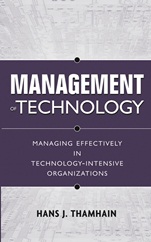
Management of Technology: Managing Effectively in Technology–Intensive Organizations
ISBN 9780471415510
Autor: Hans J. Thamhain
Wydawca: Wiley
Dostępność: 3-6 tygodni
Cena: 675,15 zł
Przed złożeniem zamówienia prosimy o kontakt mailowy celem potwierdzenia ceny.
ISBN13: |
9780471415510 |
ISBN10: |
0471415510 |
Autor: |
Hans J. Thamhain |
Oprawa: |
Hardback |
Rok Wydania: |
2005-07-01 |
Ilość stron: |
400 |
Wymiary: |
232x170 |
Tematy: |
TG |
An updated revision of the bestselling leadership book for engineering and technology managers
Knowledge of modern technology management concepts and best practices provides the foundation for effective job performance in technology–driven business environments. Management of Technology discusses cutting–edge management concepts, tools, and techniques that effectively work in today′s technology–intensive organizations.
New management tools and techniques play an increasingly important role in every organization for creating quality products, services, and content faster, cheaper, and at a higher quality. Technology crosses virtually all levels and all disciplines of an enterprise. Therefore, the principles of managing technology are relevant not only to people in the traditional engineering–scientific community, but also apply to any organization and business that must effectively deal with the application, integration, and transfer of technology. Financial institutions, government agencies, architectural firms, and healthcare providers are just a few examples of the vast array of organizations that must function effectively in technology–based environments, and therefore be able to manage technology. Specifically, this book features:Methods for assessing the effectiveness and performance of the organization and its management processesInsight into the functioning of contemporary work processes, such as concurrent engineering, design–build, integrated product development, and phase–gate processesSpecial tools and techniques for effectively managing technology–based projects, including dealing with organizational interfaces from R&D to marketsDiscussion of real–world field studies, cases, and best practicesEmphasis on people issues, such as leadership, teamwork, communications, and commitment, throughout the book
Management of Technology is
a complete reference book, invaluable for managers and professionals in technology–intensive business environments.
Spis treści:
Preface.
1 Challenges of Managing in High–Technology.
1.1 Managing in Today’s High–Tech Business Environment.
1.2 MoT Scope and Focus.
1.3 Developing a Formal Definition.
1.4 The Special Role of Engineering Management.
1.5 Global Dimensions.
1.6 Impact of Internet and e–Commerce.
1.7 Technology and Society.
1.8 Future Trends.
1.9 Summary of Key Points and Conclusions.
1.10 Critical Thinking: Questions for Discussion.
1.11 References and Additional Readings.
2 Managing in an e–Business World.
2.1 A Changing Environment.
2.2 The Unique Nature of Managing Technology–Based Businesses.
2.3 History of Managing Technology.
2.4 Forces That Drive Technology Companies Today.
2.5 Measuring Technology Content and Intensity.
2.6 Case Study: Reprogramming Amazon.
2.7 Summary of Key Points and Conclusions.
2.8 Critical Thinking: Questions for Discussion.
2.9 References and Additional Readings.
3 Organizing the High–Technology Enterprise.
3.1 Today’s Business Processes Require Flexibility, Speed, and Efficiency.
3.2 Organization Designs for Technology–Based Enterprises.
3.3 Organizational Layers and Subsystems.
3.4 Organizational Choices.
3.5 Real–World Hybrids.
3.6 Understanding the Working Environment.
3.7 Summary of Key Points and Conclusions.
3.8 Critical Thinking: Questions for Discussion.
3.9 References and Additional Readings.
4 Concurrent Engineering and Integrated Product Development.
4.1 The Need for Effective Management Processes.
4.2 A Spectrum of Contemporary Management Systems.
4.3 Concurrent Engineering—A Unique Project Management Concept.
4.4 Criteria for Success.
4.5 Defining the Process to the Team
.
4.6 Understanding the Challenges.
4.7 Understanding the Organizational Components.
4.8 Recommendations for Effective Management.
4.9 Conclusion.
4.10 Summary of Key Points and Conclusions.
4.11 Critical Thinking: Questions for Discussion.
4.12 References and Additional Readings.
5 Managing People and Organizations.
5.1 Changing Roles of Managerial Leadership.
5.2 Motivation and Technology Performance.
5.3 Formal Models of Motivation.
5.4 Leadership in Technology.
5.5 The Power Spectrum in Technology Management.
5.6 How to Make It Work: Suggestions for Increasing Effectiveness.
5.7 Summary of Key Points and Conclusions.
5.8 Critical Thinking: Questions for Discussion.
5.9 References and Additional Readings.
6 Managing Technology–Based Projects.
6.1 Management of Technology Is Project–Oriented.
6.2 Modern Project Management: A Continuously Evolving System.
6.3 The Formal Project Management System.
6.4 Framing the Project.
6.5 Defining the Work.
6.6 Managing Time and Resources.
6.7 Defining the Project Organization.
6.8 Using Project Management Tools Properly.
6.9 A Model for Project Performance.
6.10 Summary of Key Points and Conclusions.
6.11 Critical Thinking: Questions for Discussion.
6.12 References and Additional Readings.
7 Measuring and Controlling the Work.
7.1 The Challenges of Managerial Control in Technology.
7.2 What We Know About Managerial Controls in Complex Work Environments.
7.3 Characteristics of Effective Controls.
7.4 How Do Managers Control Technology–Intensive Work?
7.5 Recommendations for Using Management Controls Effectively.
7.6 Conclusion.
7.7 Summary of Key Points and Conclusions.
7.8 Critical Thinking: Questions for Discussion.
7.9 References and Additional Readings.
Appendix: Project Complexity Metrics.
8 Project Evaluation and Selection.
8.1 Making the Right Decis
ions Up Front.
8.2 Quantitative Approaches to Project Evaluation and Selection.
8.3 Qualitative Approaches to Project Evaluation and Selection.
8.4 Recommendations for Effective Project Evaluation and Selection.
8.5 Summary of Key Points and Conclusions.
8.6 Critical Thinking: Questions for Discussion.
8.7 References and Additional Readings.
Appendix: Summary Description of Terms, Variables, and Abbreviations Used in This Chapter.
9 Leading Technology Teams.
9.1 Challenges of Technical Teamwork.
9.2 What We Know About Technology–Oriented Teams.
9.3 Toward Self–Direction and Virtual Teams.
9.4 Measuring Project Team Performance.
9.5 A Model for Team Building.
9.6 Building High–Performing Teams.
9.7 Recommendations for Effective Team Management.
9.8 Summary of Key Points and Conclusions.
9.9 Critical Thinking: Questions for Discussion.
9.10 References and Additional Readings.
Appendix: Field Research Summary on Team Leadership.
10 Managing R&D and Innovation.
10.1 The Need for Innovation in Business: Changes and Challenges.
10.2 What We Know About Management of Technical Innovation.
10.3 Measuring Innovative Performance.
10.4 Characteristics of an Innovative Work Environment.
10.5 Managing for Innovative Performance.
10.6 Conclusions.
10.7 Summary of Key Points and Conclusions.
10.8 Critical Thinking: Questions for Discussion.
10.9 References and Additional Readings.
Appendix: Voices from the Field: Some Applied Research.
11 Managing Environmental Quality.
11.1 New Standards and Policies toward Environmental Quality.
11.2 Importance of Cost Accountability to Environmental Quality.
11.3 The Established Environmental Cost Accounting System.
11.4 New Concepts of Environmental Quality Management in Technology Firms.
11.5 Benefits and Challenges of the New Approach.
11.6 Criteria for Managing Environmental Quality Ef
Koszyk
Książek w koszyku: 0 szt.
Wartość zakupów: 0,00 zł
Informacje


Kontakt
Gambit
Centrum Oprogramowania
i Szkoleń Sp. z o.o.
Al. Pokoju 29b/22-24
31-564 Kraków
Siedziba Księgarni
ul. Kordylewskiego 1
31-542 Kraków
+48 12 410 5991
+48 12 410 5987
+48 12 410 5989
Subskrypcje
Administratorem danych osobowych jest firma Gambit COiS Sp. z o.o. Na podany adres będzie wysyłany wyłącznie biuletyn informacyjny.
Autoryzacja płatności

Informacje na temat autoryzacji płatności poprzez PayU.

© Copyright 2012: GAMBIT COiS Sp. z o.o. Wszelkie prawa zastrzeżone.
Projekt i wykonanie: Alchemia Studio Reklamy