


Wydawcy
Katalog tematyczny
- Archeologia (109)
- Ekonomia, finanse, business (13704)
- Filozofia (1445)
- Historia (3040)
- Języki i językoznawstwo (2356)
- Lifestyle, hobby i rozrywka (475)
- Medycyna (9704)
- Nauki humanistyczne (4)
- Nauki o Ziemi i środowisku (2638)
- Nauki ścisłe (20412)
- Astronomia (294)
- Biologia (5119)
- Chemia (6540)
- Chemia analityczna (361)
- Chemia fizyczna (346)
- Chemia nieorganiczna (137)
- Chemia organiczna (535)
- Krystalografia (27)
- Minerologia (46)
- Fizyka (3309)
- Matematyka (4574)
- Nauki ścisłe, ogólnie (503)
- Nauki społeczne (8486)
- Nauki techniczne (13450)
- Prawo (1696)
- Publikacje informacyjne i interdyscyplinarne (1288)
- Religia i wierzenia (917)
- Technika komputerowa (4067)
- Zdrowie, relacje międzyludzkie i rozwój osobisty (657)





Informacje szczegółowe o książce
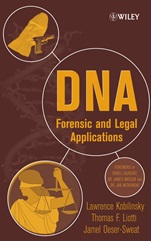
Dna: Forensic and Legal Applications
ISBN 9780471414780
Autor: Lawrence Kobilinsky, Thomas Liotti, Jamel L. Oeser–Sweat, James D. Watson, Jan A. Witkowski
Wydawca: Wiley
Dostępność: 3-6 tygodni
Cena: 730,80 zł
Przed złożeniem zamówienia prosimy o kontakt mailowy celem potwierdzenia ceny.
ISBN13: |
9780471414780 |
ISBN10: |
0471414786 |
Autor: |
Lawrence Kobilinsky, Thomas Liotti, Jamel L. Oeser–Sweat, James D. Watson, Jan A. Witkowski |
Oprawa: |
Hardback |
Rok Wydania: |
2004-10-29 |
Ilość stron: |
384 |
Wymiary: |
242x161 |
Tematy: |
PN |
"We are sure that DNA: Forensic and Legal Applications will play its part in promoting this most powerful tool in the forensic scientist’s armamentarium."
–James Watson, PhD
–Jan Witkowski. PhD
Because it consists of a number of complex steps and procedures subject to both scientific and legal standards, the collection, analysis, presentation, and interpretation of DNA evidence remains a complex process. Any procedural or documentary misstep can potentially render key evidence or testimony useless. To avoid such costly errors, scientists, law enforcement personnel, attorneys, and judges all must possess a detailed knowledge of how forensic DNA works, from the crime scene to the laboratory to the courtroom and beyond.
DNA: Forensic and Legal Applications provides the most comprehensive and up–to–date guide to this important and increasingly prevalent legal tool. Designed to reach readers in both legal and scientific fields, this text gives a global view of the practical issues involved in the forensic use of DNA. In clear, nontechnical language, the text covers:A scientific overview of DNA and common DNA testsTechniques used by criminalists on the path from crime scene to final laboratory analysisProcedures used to analyze biological evidenceHuman genetics, population genetics, and statistics in the context of DNA testing and genetic profilingUnderstanding and interpreting DNA evidence with respect to past and present lawConcepts and procedures used in challenging or defending DNA evidencePostconviction appeals based on analysis of existing DNA evidence, including a discussion of The Innocence ProjectThe future of DNA technology with respect to legal evidence gathering and analysis
In a unique combination of legal practice and scientific analysis, DNA: Forensic and Legal Applications provides forensic scientists, potential expert witn
esses, and professionals in the criminal justice system with the definitive resource on the methods of DNA analysis as well as the handling, potential, and limitations of DNA evidence.
Spis treści:
Foreword.
Preface.
Acknowledgements.
1. Biochemistry, Genetics, and Replication of DNA.
1.1 Evolution of Identification: From Faces to Fingerprints to DNA.
1.2 DNA and Heredity.
1.2.1 A Look at DNA from the Outside In.
1.2.2 DNA—The Chemistry.
1.2.3 Unique Sequence and Repetitious DNA.
1.3 DNA Replication.
1.3.1 Replication in the Cell.
1.3.2 Cloning (Gene Amplification).
2. Biological Evidence—Science and Criminal Investigation.
2.1 Crime Scene Investigation—Biological Evidence.
2.1.1 Help the Victim.
2.1.2 Protect the Scene.
2.1.3 Document the Scene.
2.1.4 Search the Scene.
2.1.5 Schematic Drawing Showing Location and Photography of Items of Evidence.
2.1.6 Packaging and Preserving Evidence.
2.1.7 Transport to Laboratory.
2.1.8 Sexual Assault Evidence.
2.1.9 Evidence Handling in the Laboratory.
2.1.10 Report Writing.
2.2 Serology.
2.2.1 Blood.
2.2.2 Semen.
2.2.3 Saliva.
2.2.4 Urine.
2.2.5 Hair.
2.3 Chain of Custody.
3. Forensic DNA Analysis Methods.
3.1 Associative Evidence and Polymorphism.
3.2 Restriction Fragment–Length Polymorphism.
3.2.1 Isolation of DNA.
3.2.2 Quantification.
3.2.3 Restriction Enzymes: DNA Scissors.
3.2.4 Gel Electrophoresis.
3.2.5 Southern Blotting.
3.2.6 Hybridization.
3.2.7 Autoradiography and Visualization of DNA Banding Pattern.
3.2.8 Analysis of RFLP Results.
3.2.9 Probe Stripping from Membrane.
3.2.10 Match Criteria.
3.2.11 Statistics and the Product Rule.
3.3 Polymerase Chain Reaction.
3.3.1 Development and Theory.
3.3.2 Isolation of DNA.
3.3.3 Quantification
3.3.4 Techniques.
3.4 Analysis of Y–Chromosome STRS.
3.4.1
Y–Chromosome Single–Nucleotide Polymorphism Analysis.
3.5 Analysis of Mitochondrial DNA.
3.5.1 The Mitochondrial Genome.
3.5.2 Quantification.
3.5.3 Sequencing.
3.5.4 Interpretation of Sequence Data.
3.5.5 Heteroplasmy.
3.5.6 Statistics.
3.5.7 SNP Analysis of Mitochondrial DNA.
3.6 Problems with PCR.
3.6.1 Contamination.
3.6.2 Degradation.
3.6.3 Sunlight.
3.6.4 Inhibitors.
3.6.5 Allelic Dropout—Null Alleles.
3.6.6 Human Error.
3.7 Underlying Facts and Assumptions in Forensic DNA Testing.
4. Genetics, Statistics, and Databases.
4.1 Human Genetics, Population Genetics, and Statistics.
4.1.1 Power of Forensic DNA Analysis: How Significant Is the Match?
4.1.2 Genetics and Statistics.
4.1.3 Mendel’s Laws of Genetics.
4.1.4 Meiosis.
4.2 Population Genetics.
4.2.1 Hardy–Weinberg Equilibrium.
4.2.2 Subpopulations and Substructure.
4.3 Need for Quality Control and Quality Assurance.
4.4 SWGDAM (Formerly Known as TWGDAM) Standards.
4.5 DNA Advisory Board.
4.6 Mitochondrial DNA and Y–Chromosome STR Analysis and Statistical Calculations.
4.7 Experimental Controls.
4.8 Validation of New DNA Methods.
4.9 Single–Nucleotide Polymorphism Analysis.
4.10 Database Size and Composition.
4.11 DNA Databases.
4.12 Power of Discrimination.
4.13 Mixtures and Statistics.
4.14 Probability of Exclusion.
4.15 Likelihood Ratio (LR).
4.16 Paternity Determinations.
4.16.1 Exclusion of the Alleged Father as the Biological Father.
4.16.2 Inclusion of the Alleged Father as the Biological Father.
4.17 Lab Accreditation, Certification, Reputation, and Facilities.
4.17.1 Quality Control.
4.17.2 Quality Assurance.
4.17.3 Proficiency Testing.
4.17.4 Certification.
4.17.5 Laboratory Accreditation.
4.18 Reviewing a DNA Report—A Sample RFLP Analysis.
4.19 Reviewing a DNA Report—A PCR–Based DNA Exa
mination (HLADQA1, PM, D1S80, and CTT–CSF1PO, TPOX, THO1).
4.20 Reviewing a DNA Report—A PCR–STR–Based DNA Examination (CODIS Loci).
4.21 Reviewing a Paternity Report Based on Analysis of DNA.
5. Litigating a DNA Case.
5.1 Legal Theory.
5.1.1 Admissibility of Scientific Evidence: A Primer.
5.1.2 Common Law and The Creation of a Judicial Gatekeeping Function.
5.1.3 Federal Rules of Evidence and the Expansion of the Judicial Gatekeeping Function.
5.1.4 Daubert: The Supreme Court Sets Forth a Standard.
5.1.5 General Electric Company et al. v. Joiner et ux.
5.1.6 Kumho Tire: The Court Continues Its Expansion of the Judicial Gatekeeping Function.
5.1.7 Judicial Gatekeeping Function and Its Evolution in New York State.
5.2 Admissibility of DNA Evidence.
5.2.1 PCR–STR DNA Evidence.
5.2.2 Mitochondrial DNA.
5.2.3 Animal DNA.
5.2.4 Plant and Viral DNA.
5.2.5 Statistics.
5.2.6 Paternity.
5.3 Legal Practice.
5.3.1 Different Stages of a Trial.
5.4 DNA for Defense Attorneys—Contesting DNA Evidence.
5.5 DNA for Prosecutors.
5.6 DNA for Judges.
6. DNA Evidence at Trial.
6.1 Attacking and Defending DNA Evidence.
6.1.1 Theory of the Case/Plan of Attack.
6.1.2 What is Required for DNA Test Results to be Admitted into Evidence?
6.2 DNA for the Prosecutor or Those Who Seek to Admit DNA Evidence.
6.2.1 Effective Admission of DNA Evidence Takes Place in Three Stages.
6.3 DNA for the Defense or Those Who Seek to Mitigate the Effect of DNA Evidence.
6.3.1 Preventing the Admission of DNA Evidence in Part or in Its Entirety.
7. Exonerating the Innocent through DNA.
7.1 Postconviction Appeals Based upon DNA Evidence.
7.2 Postconviction DNA Testing: Recommendations for Handling Requests.
7.2.1 Role and Response of the Prosecutor.
7.2.2 Role and Response of the Defense Attorney.
7.3 Legal Standards Governing Postconviction Testi
Koszyk
Książek w koszyku: 0 szt.
Wartość zakupów: 0,00 zł
Informacje


Kontakt
Gambit
Centrum Oprogramowania
i Szkoleń Sp. z o.o.
Al. Pokoju 29b/22-24
31-564 Kraków
Siedziba Księgarni
ul. Kordylewskiego 1
31-542 Kraków
+48 12 410 5991
+48 12 410 5987
+48 12 410 5989
Subskrypcje
Administratorem danych osobowych jest firma Gambit COiS Sp. z o.o. Na podany adres będzie wysyłany wyłącznie biuletyn informacyjny.
Autoryzacja płatności

Informacje na temat autoryzacji płatności poprzez PayU.

© Copyright 2012: GAMBIT COiS Sp. z o.o. Wszelkie prawa zastrzeżone.
Projekt i wykonanie: Alchemia Studio Reklamy