


Wydawcy
Katalog tematyczny
- Archeologia (109)
- Ekonomia, finanse, business (13704)
- Filozofia (1445)
- Historia (3040)
- Języki i językoznawstwo (2356)
- Lifestyle, hobby i rozrywka (475)
- Medycyna (9704)
- Nauki humanistyczne (4)
- Nauki o Ziemi i środowisku (2638)
- Nauki ścisłe (20412)
- Nauki społeczne (8486)
- Nauki techniczne (13450)
- Budownictwo lądowe (1045)
- Chemia przemysłowa (2258)
- Elektronika i telekomunikacja (3287)
- Energetyka (1122)
- Inne nauki stosowane (363)
- Inżynieria biochemiczna (507)
- Inżynieria transportu (232)
- Mechanika i materiały (3316)
- Nauka o środowisku (321)
- Rolnictwo (507)
- Technika, ogólnie (475)
- Prawo (1696)
- Publikacje informacyjne i interdyscyplinarne (1288)
- Religia i wierzenia (917)
- Technika komputerowa (4067)
- Zdrowie, relacje międzyludzkie i rozwój osobisty (657)





Informacje szczegółowe o książce
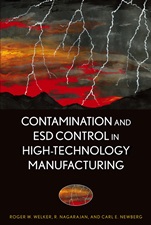
Contamination and ESD Control in High–Technology Manufacturing
ISBN 9780471414520
Autor: Roger W. Welker, R. Nagarajan, Carl E. Newberg
Wydawca: Wiley
Dostępność: 3-6 tygodni
Cena: 1 098,30 zł
Przed złożeniem zamówienia prosimy o kontakt mailowy celem potwierdzenia ceny.
ISBN13: |
9780471414520 |
ISBN10: |
0471414522 |
Autor: |
Roger W. Welker, R. Nagarajan, Carl E. Newberg |
Oprawa: |
Hardback |
Rok Wydania: |
2006-10-03 |
Ilość stron: |
514 |
Wymiary: |
260x188 |
Tematy: |
TJ |
A practical "how to" guide that effectively deals with the control of both contamination and ESD
This book offers effective strategies and techniques for contamination and electrostatic discharge (ESD) control that can be implemented in a wide range of high–technology industries, including semiconductor, disk drive, aerospace, pharmaceutical, medical device, automobile, and food production manufacturing. The authors set forth a new and innovative methodology that can manage both contamination and ESD, often considered to be mutually exclusive challenges requiring distinct strategies.
Beginning with two general chapters on the fundamentals of contamination and ESD control, the book presents a logical progression of topics that collectively build the necessary skills and knowledge:Analysis methods for solving contamination and ESD problemsBuilding the contamination and ESD control environment, including design and construction of cleanrooms and ESD protected environmentsCleaning processes and the equipment needed to support these processesTooling design and certificationContinuous monitoringConsumable supplies and packaging materialsControlling contamination and ESD originating from peopleManagement of cleanrooms and ESD protected workplace environments
Contamination and ESD Control in High–Technology Manufacturing conveys a practical, working knowledge of contamination and ESD control strategies and techniques, and it is filled with case studies that illustrate key principles and the benefits of contamination and ESD control. Moreover, its straightforward style makes the material, which integrates many disciplines of engineering and science, clear and accessible.
Written by three leading industry experts, this book is an essential guide for engineers and designers across the many industries where contamination and ESD control is a concern.
Spis treś
;ci:
PREFACE.
1 FUNDAMENTALS OF CONTAMINATION CONTROL.
1.1 Introduction.
1.2 Glossary of Contamination Control Terms.
1.3 Specifying Contamination in Air and on Surfaces.
1.4 Sources of Contamination.
1.5 Contamination Control Requirements.
1.6 Pertinent Standards.
References and Notes.
Additional Reading.
2 FUNDAMENTALS OF ESD CONTROL.
2.1 Introduction and Historical Perspective.
2.2 Glossary of Electrostatic Charge Control Terms.
2.3 Sources of Electrostatic Charge.
2.4 Requirements of ESD Control.
2.5 Building the ESD–Safe Workplace.
2.6 ESD Controls for People.
2.7 Consumables and Accessories.
2.8 Personnel Equipment and Procedures for Its Use.
2.9 Transportation of ESD–Sensitive Products.
2.10 Inspections and Record Keeping.
2.11 ESD Control Program.
2.12 ESD and Contamination Control.
2.13 Useful Reference Standards.
References and Notes.
3 SAMPLING AND ANALYSIS METHODS.
3.1 Introduction.
3.2 Classification of Analysis Methods.
3.4 Organic Contamination Analysis Methods.
3.5 Ionic and Inorganic Contamination Analysis Methods.
3.6 Electrostatic Discharge Methods.
3.7 Numerical Simulation.
3.8 Algebraic Predictive Modeling.
3.9 Statistical Analysis Methods.
Additional Reading.
References and Notes.
4 FACILITIES DESIGN: CONTAMINATION– AND ESD–SAFE WORK AREAS.
4.1 Introduction.
4.2 Basics of Cleanroom Design.
4.3 Cleanrooms.
4.4 Cleanroom Construction and Operating Costs.
4.5 Modern Energy–Saving Approaches.
4.6 Other Design Considerations.
References and Notes.
5 GETTING CLEAN PARTS AND GETTING PARTS CLEAN.
5.1 Introduction.
5.2 Historical Perspective.
5.3 Gross and Precision Cleanliness Protocols.
5.4 Design for Manufacturability and Cleanability.
5.5 Process Design Guidelines.
5.6 Cleaning Processes.
5.7 Drying Processes.
5.8 Cos
t of Cleaning.
5.9 Vendor Process Contamination Checklist.
5.10 Case Studies: Cleaning Equipment and Cleaning Process Design.
5.11 Details on the Clean–Then Assemble and Assemble–Then Clean Procedures.
5.12 Particle Size Distributions.
5.13 Tool Part Cleanliness.
References and Notes.
6 TOOLING DESIGN AND CERTIFICATION.
6.1 Introduction.
6.2 Contamination and ESD Control Requirements.
6.3 Maintenance Requirements.
6.4 General Design Alternatives.
6.5 Materials.
6.6 Surface Treatments.
6.7 Selection and Evaluation of Components.
6.8 Tool and Workstation Layout.
6.9 Cleanroom Certification of Automated Tooling.
References and Notes.
Additional Reading.
7 CONTINUOUS MONITORING.
7.1 Introduction.
7.2 Continuous Contamination Monitoring.
7.3 Continuous Monitoring of Manufacturing.
7.4 Evaluation of In Situ Monitoring in an Aqueous Cleaning Application.
7.5 Antennas for Electrostatic Charge Monitoring.
References and Notes.
8 CONSUMABLE SUPPLIES AND PACKAGING MATERIALS.
8.1 Introduction.
8.2 Cleanroom and ESD Gloves.
8.3 Functional vs. Nonfunctional Testing.
8.4 Glove Use Strategies.
8.5 Initial Qualification vs. the Need for Ongoing Lot Certification.
8.6 Glove Washing.
8.7 ESD Performance of Gloves.
8.8 Glove Laundering.
8.9 Wipers and Swabs.
8.10 Reusable and Disposable Packaging Materials.
8.11 Facial Coverings.
References and Notes.
9 CONTROLLING CONTAMINATION AND ESD FROM PEOPLE.
9.1 Introduction.
9.2 People as a Source of Contamination.
9.3 Typical Gowning Protocols.
9.4 Procedures for Entering a Cleanroom.
9.5 Behavior in a Cleanroom.
9.6 Procedures for Exiting a Cleanroom.
9.7 Relationship between Attire and Class Achieved.
9.8 Procedures for Entering an ESD–Safe Work Area.
9.9 Garments and Laundry Services.
References and Notes.
10 LAYOUT OF CHANGE ROOMS.
10.
1 Principles of Efficient Change Room Design.
10.2 Case Studies: Change Rooms.
10.3 Entering the Cleanroom.
10.4 Exiting the Cleanroom.
10.5 Other Considerations.
References and Notes.
11 PROCEDURES AND DOCUMENTATION.
11.1 Hierarchy of Documents and Audits.
11.2 Operator Self–Check.
11.3 Noninstrument Audits.
11.4 Instrument Audits.
11.5 Independent Audits.
11.6 Managing Use of the Audit Scorecard.
11.7 Typical Survey.
11.8 Case Study: Broken Magnet Procedure.
Reference.
INDEX.
Nota biograficzna:
ROGER W. WELKER is founder and Principal Scientist at R. W. Welker Associates, an independent consulting firm specializing in complex contamination, electrostatic discharge, and quality control issues. His technical expertise is in manufacturing technology, cleanroom and ESD protected workplace management, cleaning process development, analysis, and statistics.
R. NAGARAJAN, PhD, is Professor in the Department of Chemical Engineering at the Indian Institute of Technology, Madras. He has fifteen years′ R&D experience in contamination control and chemical integration with IBM′s Storage Systems Division inSan Jose, California.
CARL E. NEWBERG is President and Director of Laboratory Operations for River′s Edge Technical Service/MicroStat Laboratories.
Okładka tylna:
A practical "how to" guide that effectively deals with the control of both contamination and ESD
This book offers effective strategies and techniques for contamination and electrostatic discharge (ESD) control that can be implemented in a wide range of high–technology industries, including semiconductor, disk drive, aerospace, pharmaceutical, medical device, automobile, and food production manufacturing. The authors set forth a new and innovative methodology that can manage both contamination and ESD, often considered to be mutually exclusive challe
Koszyk
Książek w koszyku: 0 szt.
Wartość zakupów: 0,00 zł
Informacje


Kontakt
Gambit
Centrum Oprogramowania
i Szkoleń Sp. z o.o.
Al. Pokoju 29b/22-24
31-564 Kraków
Siedziba Księgarni
ul. Kordylewskiego 1
31-542 Kraków
+48 12 410 5991
+48 12 410 5987
+48 12 410 5989
Subskrypcje
Administratorem danych osobowych jest firma Gambit COiS Sp. z o.o. Na podany adres będzie wysyłany wyłącznie biuletyn informacyjny.
Autoryzacja płatności

Informacje na temat autoryzacji płatności poprzez PayU.

© Copyright 2012: GAMBIT COiS Sp. z o.o. Wszelkie prawa zastrzeżone.
Projekt i wykonanie: Alchemia Studio Reklamy