


Wydawcy
Katalog tematyczny
- Archeologia (109)
- Ekonomia, finanse, business (13704)
- Filozofia (1445)
- Historia (3040)
- Języki i językoznawstwo (2356)
- Lifestyle, hobby i rozrywka (475)
- Medycyna (9704)
- Nauki humanistyczne (4)
- Nauki o Ziemi i środowisku (2638)
- Nauki ścisłe (20412)
- Nauki społeczne (8486)
- Nauki techniczne (13450)
- Prawo (1696)
- Publikacje informacyjne i interdyscyplinarne (1288)
- Religia i wierzenia (917)
- Technika komputerowa (4067)
- Zdrowie, relacje międzyludzkie i rozwój osobisty (657)





Informacje szczegółowe o książce
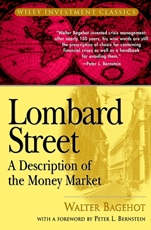
Lombard Street: A Description of the Money Market
ISBN 9780471345367
Autor: Walter Bagehot
Wydawca: Wiley
Dostępność: 3-6 tygodni
Cena: 132,30 zł
Przed złożeniem zamówienia prosimy o kontakt mailowy celem potwierdzenia ceny.
ISBN13: |
9780471345367 |
ISBN10: |
0471345369 |
Autor: |
Walter Bagehot |
Oprawa: |
Paperback |
Rok Wydania: |
1999-04-14 |
Ilość stron: |
384 |
Wymiary: |
224x138 |
Tematy: |
CTKF |
"I have lost track of how many times over the years I have either reread this book in its entirety or dipped into it to refresh my memory of its wisdom."–From the Foreword by Peter L. Bernstein author of Against the Gods. First published in 1873, this classic book is a timeless excursion through Lombard Street, the original district of finance and the birthplace of the money market. Written by esteemed British economist and historian Walter Bagehot, it delivers observations, insights, and truths that ring as true today as they did more than a century ago. Acclaim for Lombard Street. "Walter Bagehot was a great economist and a great writer–though there is a question as to which was the greater. Lombard Street, first published in 1873, is more than ever timely in the age of Asian financial flu, Long–Term Capital Management, problems in Russia, Brazil, and on the horizon elsewhere. Central bankers and finance ministers such as Alan Greenspan and Robert Rubin in the U.S., along with leading IMF officials should each sleep with a copy under his or her pillow."–Charles P. Kindleberger author of Manias, Panics and Crashes "The briefest and truest way of describing Lombard Street is to say that it is by far the greatest combination of economical power and economical delicacy that the world has ever seen."–Walter Bagehot The English precursor to Wall Street, London′s Lombard Street is the original district of finance and the birthplace of the money market. Fast–paced and highly–charged, it is a hotbed of financial activity whose impact is felt not just nationally, but globally. Though similar in many ways to its American counterpart, this "unequalled fund of floating money" nevertheless possesses a character all its own, the essence of which was brilliantly captured more than a century ago in Lombard Street. The chef d′oeuvre of Walter Bagehot, Lombard Street began as a series of articles the esteemed essayist and financial advisor had written for the Economist during the 1850s. First published in book form in 1873, it is a vivid description of the money market that seamlessly brings together theoretical analyses, historical anecdotes, and incisive commentary on sociology, politics, and the Street′s various personalities. Sharing his invaluable insights and unique observations, Bagehot touches on everything from the mechanics of deposit banking within a fractional reserve system to the nature of foreign deposits in Britain. Along with a clear explanation of why economic growth and rising living standards are dependent upon a well–managed financial system, he offers straightforward guidelines for the function of lender–of–last resort; a penetrating look at the consequences of uncontrolled credit and speculation; and an in–depth examination of the role of the exchequer in the money market that includes a stimulating analysis of the interaction between the government′s fiscal operations and the functioning of the Bank of England, the commercial banks, and the money market. Perhaps most importantly, Lombard Street features Bagehot′s prescription for crisis management, which after nearly 150 years, remains the formula of choice for containing–and curtailing–financial crises. Filled with descriptions of Lombard Street that still ring true today, this jewel of a book has withstood the test of time to become a true investment classic–one that will appeal as much to the readers of today as it did to those of years ago.
A General View of Lombard Street. How Lombard Street Came to Exist, and Why it Assumed Its Present Form. The Position of the Chancellor of the Exchequer in the Money Market. The Mode in Which the Value of Money is Settled in Lombard Street. Why Lombard Street is Often Very Dull, and Sometimes Extremely Excited. A More Exact Account of the Mode in Which the Bank of England has Discharged Its Duty of Retaining a Good Bank Reserve, and of Administering it Effectually. The Government of the Bank of England. The Joint Stock Banks. The Private Banks. The Bill–Brokers. The Principles Which Should Regulate the Amount of the Banking Reserve to be Kept by the Bank of England. Conclusion. Appendices.
WALTER BAGEHOT is one of the most celebrated finance writers ever. One of the most lucid and discerning critics of his time, Bagehot was editor of the highly regarded Economist. Widely acknowledged as an expert on banking and finance, he was frequently consulted by Parliament.
Koszyk
Książek w koszyku: 0 szt.
Wartość zakupów: 0,00 zł
Informacje


Kontakt
Gambit
Centrum Oprogramowania
i Szkoleń Sp. z o.o.
Al. Pokoju 29b/22-24
31-564 Kraków
Siedziba Księgarni
ul. Kordylewskiego 1
31-542 Kraków
+48 12 410 5991
+48 12 410 5987
+48 12 410 5989
Subskrypcje
Administratorem danych osobowych jest firma Gambit COiS Sp. z o.o. Na podany adres będzie wysyłany wyłącznie biuletyn informacyjny.
Autoryzacja płatności

Informacje na temat autoryzacji płatności poprzez PayU.

© Copyright 2012: GAMBIT COiS Sp. z o.o. Wszelkie prawa zastrzeżone.
Projekt i wykonanie: Alchemia Studio Reklamy