


Wydawcy
Katalog tematyczny
- Archeologia (109)
- Ekonomia, finanse, business (13704)
- Filozofia (1445)
- Historia (3040)
- Języki i językoznawstwo (2356)
- Lifestyle, hobby i rozrywka (475)
- Medycyna (9704)
- Nauki humanistyczne (4)
- Nauki o Ziemi i środowisku (2638)
- Nauki ścisłe (20412)
- Astronomia (294)
- Biologia (5119)
- Chemia (6540)
- Chemia analityczna (361)
- Chemia fizyczna (346)
- Chemia nieorganiczna (137)
- Chemia organiczna (535)
- Krystalografia (27)
- Minerologia (46)
- Fizyka (3309)
- Matematyka (4574)
- Nauki ścisłe, ogólnie (503)
- Nauki społeczne (8486)
- Nauki techniczne (13450)
- Prawo (1696)
- Publikacje informacyjne i interdyscyplinarne (1288)
- Religia i wierzenia (917)
- Technika komputerowa (4067)
- Zdrowie, relacje międzyludzkie i rozwój osobisty (657)





Informacje szczegółowe o książce
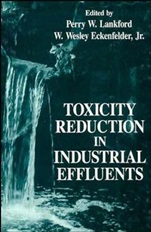
Toxicity Reduction in Industrial Effluents
ISBN 9780471283973
Autor: Perry W. Lankford, W. Wesley Eckenfelder
Wydawca: Wiley
Dostępność: 3-6 tygodni
Cena: 947,10 zł
Przed złożeniem zamówienia prosimy o kontakt mailowy celem potwierdzenia ceny.
ISBN13: |
9780471283973 |
ISBN10: |
0471283975 |
Autor: |
Perry W. Lankford, W. Wesley Eckenfelder |
Oprawa: |
Hardback |
Rok Wydania: |
1990-09-01 |
Ilość stron: |
368 |
Wymiary: |
236x162 |
Tematy: |
PN |
Books of Related Interest from Van Nostrand Reinhold Air Pollution Control and Waste Incineration for Hospitals and Other Medical Facilities By Louis Theodore, 276 pages, 6 × 9 ISBN 0–442–00398–6 Here is virtually everything hospital professionals need to gain a complete understanding of hospital air pollution control and waste incineration technology. Taking a logical, step–by–step approach, the book provides readers with a thorough overview of the field, up–to–the–minute information on waste incineration and air pollution regulations, as well as general background and specific information on such important matters as incinerator operation and maintenance calculations. Where Did That Chemical Go? A Practical Guide to Chemical Fate and Transport in the Environment By Ronald E. Ney, Jr., 256 pages, 6 × 9 ISBN 0–442–00457–5 How to predict the possibility of exposure of humans and animals to chemicals released in the environment is explained in this guide. It covers more than 100 organic and inorganic chemicals of major concern in the environment, and provides 200 examples of how to interpret and predict hazardous contact. Several tracing techniques for chemicals released or intentionally placed in the air, water, soil, plants, or animals are discussed. Tables that demonstrate how to plug in data make it easier to predict exposure possibilities. Included is a glossary that clarifies scientific terms. Industrial Emergency Preparedness By Robert B. Kelly, 328 pages, 6 × 9 ISBN 0–442–20483–3 This invaluable guide provides safety engineers and managers, loss prevention managers, and police and fire fighters with easily accomplished techniques for developing a comprehensive industrial program to handle major emergencies, such as fires, chemical spills, gas leaks, and explosions. It discusses all the requirements for developing a workable emergency program, from assessing resp
onse capabilities and conducting drills, to improving community planning and dealing with the media during emergencies. Natural Resource Management of Water and Land By Edward O. Gangstad, 210 pages, 6 × 9 ISBN 0–442–00481–8 Covering such diverse areas as arid lands, the prairies, and the eastern U.S., the book details those areas and conditions where stresses on water and land resources have occurred—and are most likely to occur—and examines the pros and cons of the different biological and chemical control technologies used to mitigate those problems. In addition, the book evaluates major natural resource management strategies that have been employed to rectify water and land problems involving industrial and domestic water supply, irrigation, pollution control, fish and wildlife enhancement, hydroelectric power development, recreational use, flood control, and navigation.
Spis treści:
Toxicity in Industrial Wastewater (P. Lankford).
Aquatic Toxicity Testing (B. Isom).
Toxicity Identification Evalutions (W. Hall & R. Mirenda).
Source Identification, Testing, and Treatment (P. Lankford).
Removal of Metals to Nontoxic Levels (P. Lankford).
Aerobic Biological Treatment (W. Eckenfelder).
Anaerobic Biological Treatment (R. Speece).
Stripping of Volatile Organics (Y. Argaman).
Granular Carbon Adsorption of Toxics (W. Eckenfelder).
Powdered Activated Carbon Treatment (PACT) (P. Lankford).
Chemical Oxidation of Toxic, Inhibitory, and Refractory Organics (A. Bowers).
Management o f Sludges from Treatment of Toxic Wastewaters (J. Pintenich).
Economics of Toxicity Reduction (K. Torrens).
Glossary.
Index.
Nota biograficzna:
PERRY W. LANKFORD, P.E., is Executive Vice President of Eckenfelder, Inc., Nashville, Tennessee, serving as Principal–In–Charge on major projects in industrial wastewater treatment, groundwater treatment, and toxicity reduction
. He also serves as a lecturer and course director at Vanderbilt University in Nashville and at The Center for Professional Advancement in East Brunswick, New Jersey. The author of numerous technical papers and manuals, Mr. Lankford is a member of the American Society of Civil Engineers, Water Pollution Control Federation, International Association of Water Pollution Research and Control, and the American Institute of Chemical Engineers. W. WESLEY ECKENFELDER, JR., P.E., is Chairman Emeritus and Senior Technical Director of Eckenfelder, Inc., Nashville, Tennessee, overseeing projects for industrial treatment facilities and municipal and industrial waste treatment. Recognized as one of the foremost authorities on industrial water quality management, he is the author of Industrial Water Pollution Control (Revised Edition, 1989), Principles of Water Quality Management (1980), Water Quality Engineering for the Practicing Engineer (1970), and many other books. Mr. Eckenfelder served as president and founding member of the International Association of Water Pollution Research and Control, and is a Fellow of the Institution of Public Health Engineers, American Association for the Advancement of Science, and American Institute of Chemists.
Okładka tylna:
Books of Related Interest from Van Nostrand Reinhold Air Pollution Control and Waste Incineration for Hospitals and Other Medical Facilities By Louis Theodore, 276 pages, 6 × 9 ISBN 0–442–00398–6 Here is virtually everything hospital professionals need to gain a complete understanding of hospital air pollution control and waste incineration technology. Taking a logical, step–by–step approach, the book provides readers with a thorough overview of the field, up–to–the–minute information on waste incineration and air pollution regulations, as well as general background and specific information on such important matters as incinerator operation and main
tenance calculations. Where Did That Chemical Go? A Practical Guide to Chemical Fate and Transport in the Environment By Ronald E. Ney, Jr., 256 pages, 6 × 9 ISBN 0–442–00457–5 How to predict the possibility of exposure of humans and animals to chemicals released in the environment is explained in this guide. It covers more than 100 organic and inorganic chemicals of major concern in the environment, and provides 200 examples of how to interpret and predict hazardous contact. Several tracing techniques for chemicals released or intentionally placed in the air, water, soil, plants, or animals are discussed. Tables that demonstrate how to plug in data make it easier to predict exposure possibilities. Included is a glossary that clarifies scientific terms. Industrial Emergency Preparedness By Robert B. Kelly, 328 pages, 6 × 9 ISBN 0–442–20483–3 This invaluable guide provides safety engineers and managers, loss prevention managers, and police and fire fighters with easily accomplished techniques for developing a comprehensive industrial program to handle major emergencies, such as fires, chemical spills, gas leaks, and explosions. It discusses all the requirements for developing a workable emergency program, from assessing response capabilities and conducting drills, to improving community planning and dealing with the media during emergencies. Natural Resource Management of Water and Land By Edward O. Gangstad, 210 pages, 6 × 9 ISBN 0–442–00481–8 Covering such diverse areas as arid lands, the prairies, and the eastern U.S., the book details those areas and conditions where stresses on water and land resources have occurred—and are most likely to occur—and examines the pros and cons of the different biological and chemical control technologies used to mitigate those problems. In addition, the book evaluates major natural resource management strategies that have been employed to rectify water
and land problems involving industrial and domestic water supply, irrigation, pollution control, fish and wildlife enhancement, hydroelectric power development, recreational use, flood control, and navigation.
Koszyk
Książek w koszyku: 0 szt.
Wartość zakupów: 0,00 zł
Informacje


Kontakt
Gambit
Centrum Oprogramowania
i Szkoleń Sp. z o.o.
Al. Pokoju 29b/22-24
31-564 Kraków
Siedziba Księgarni
ul. Kordylewskiego 1
31-542 Kraków
+48 12 410 5991
+48 12 410 5987
+48 12 410 5989
Subskrypcje
Administratorem danych osobowych jest firma Gambit COiS Sp. z o.o. Na podany adres będzie wysyłany wyłącznie biuletyn informacyjny.
Autoryzacja płatności

Informacje na temat autoryzacji płatności poprzez PayU.

© Copyright 2012: GAMBIT COiS Sp. z o.o. Wszelkie prawa zastrzeżone.
Projekt i wykonanie: Alchemia Studio Reklamy