


Wydawcy
Katalog tematyczny
- Archeologia (109)
- Ekonomia, finanse, business (13704)
- Filozofia (1445)
- Historia (3040)
- Języki i językoznawstwo (2356)
- Lifestyle, hobby i rozrywka (475)
- Medycyna (9704)
- Nauki humanistyczne (4)
- Nauki o Ziemi i środowisku (2638)
- Nauki ścisłe (20412)
- Astronomia (294)
- Biologia (5119)
- Chemia (6540)
- Chemia analityczna (361)
- Chemia fizyczna (346)
- Chemia nieorganiczna (137)
- Chemia organiczna (535)
- Krystalografia (27)
- Minerologia (46)
- Fizyka (3309)
- Matematyka (4574)
- Nauki ścisłe, ogólnie (503)
- Nauki społeczne (8486)
- Nauki techniczne (13450)
- Prawo (1696)
- Publikacje informacyjne i interdyscyplinarne (1288)
- Religia i wierzenia (917)
- Technika komputerowa (4067)
- Zdrowie, relacje międzyludzkie i rozwój osobisty (657)





Informacje szczegółowe o książce
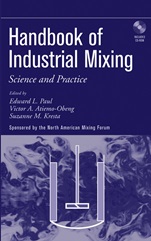
Handbook of Industrial Mixing: Science and Practice
ISBN 9780471269199
Autor: Edward L. Paul, Victor A. Atiemo–Obeng, Suzanne M. Kresta
Wydawca: Wiley
Dostępność: 3-6 tygodni
Cena: 1 189,65 zł
Przed złożeniem zamówienia prosimy o kontakt mailowy celem potwierdzenia ceny.
ISBN13: |
9780471269199 |
ISBN10: |
0471269190 |
Autor: |
Edward L. Paul, Victor A. Atiemo–Obeng, Suzanne M. Kresta |
Oprawa: |
Hardback |
Rok Wydania: |
2003-12-19 |
Ilość stron: |
1440 |
Wymiary: |
243x166 |
Tematy: |
PN |
Practical insights from the leading professionals in the field
While process objectives are critical to the successful manufacturing of a product, if the mixing scale–up fails to produce the required results, the costs of manufacturing can increase significantly. Although there are several industrial operations in which mixing requirements are readily scaled up from established correlations, many operations require a more thorough evaluation. This comprehensive handbook presents the latest methods for recognizing these more complex operations and offers alternative mixing designs for critical applications. The core mixing design topics discussed are:Homogeneous blending in tanks and in–line mixersDispersion of gases in liquids with subsequent mass transferSuspension and distribution of solids in liquidsLiquid–liquid dispersionsHeat transferReactions, both homogeneous and heterogeneous
Along with focusing on industrial design and the operation of mixing equipment, the Handbook of Industrial Mixing contains summaries of the foundations on which these applications are based. In order to accomplish this, most chapters are written by both an industrialist and an academic. Intended for the practicing engineer who needs to both identify and solve mixing problems, this book also provides concise discussions on theoretical background and uses many illustrative examples when covering applications, and it includes a CD–ROM that contains over fifty video clips and animations of mixing processes. These clips are accompanied by explanatory text.
Spis treści:
Contributors.
Introduction (E. Paul, et al.).
1. Residence Time Distributons (E. Nauman).
1.1 Introduction.
1.2 Measurements and Distribution Functions.
1.3 Residence Time Models of Flow Systems.
1.4 Uses of Residence Time Distributions.
1.5 Extensions of Residence Time Theory. <
br>2. Turbulence in Mixing Applications (S. Kresta and R. Brodkey).
2.1 Introduction.
2.2 Background.
2.3 Classical Measures of Turbulence.
2.4 Dynamics and Averages: Reducing the Dimensionality of the Problem.
2.5 Modeling the Turbulent Transport.
2.6 What Have We Learned?
3. Laminar Mixing: A Dynamical Systems Approach (E. Szalai, et al.).
3.1 Introduction.
3.2 Background.
3.3 How to Evaluate Mixing Performance.
3.4 Physics of Chaotic Flows Applied to Laminar Mixing.
3.5 Applications to Physically Realizable Chaotic Flows.
3.6 Reactive Chaotic Flows.
3.7 Summary.
3.8 Conclusions.
4. Experimental Methods.
Part A: Measuring Tools and Techniques for Mixing and Flow Visualization Studies (D. Brown, et al.).
4.1 Introduction.
4.2 Mixing Laboratory.
4.3 Power Draw or Torque Measurement.
4.4 Sincle–Phase Blending.
4.5 Solid–Liquid Mixing.
4.6 Liquid–Liquid Dispersion.
4.7 Gas–Liquid Mixing.
4.8 Other Techniques.
Part B: Fundamental Flow Measurement (G. Papadopoulos and E. Arik).
4.9 Scope of Fundamental Flow Measurement Techniques.
4.10 Laser Doppler Anemometry.
4.11 Phase Doppler Anemometry.
4.12 Particle Image Velocimetry.
5. Computational Fluid Mixing (E. Marshall and A. Bakker).
5.1 Introduction.
5.2 Computational Fluid Dynamics.
5.3 Numerical Methods.
5.4 Stirred Tank Modeling Using Experimental Data.
5.5 Stirred Tank Modeling Using the Actual Impeller Geometry.
5.6 Evaluating Mixing from Flow Field Results.
5.7 Applications.
5.8 Closing Remarks.
6. Mechanically Stirred Vessels (R. Hemrajani and G. Tatterson).
6.1 Introduction.
6.2 Key Design Parameters.
6.3 Flow Characteristics.
6.4 Scale–up.
6.5 Performance Characteristics and Ranges of Application.
6.6 Laminar Mixing in Mechanically Stirred Vessels.
7. Mixing in Pipelines (A. Etchells III and C. Meyer).
7
.1 Introduction.
7.2 Fluid Dynamic Modes: Flow Regimes.
7.3 Overview of Pipeline Device Options by Flow Regime.
7.4 Applications.
7.5 Blending and Radial Mixing in Pipeline Flow.
7.6 Tee Mixers.
7.7 Static or Motionless Mixing Equipment.
7.8 Static Mixer Design Fundamentals.
7.9 Multiphase Flow in Motionless Mixers and Pipes.
7.10 Transitional Flow.
7.11 Motionless Mixers: Other Considerations.
7.12 In–line Mechanical Mixers.
7.13 Other Process Results.
7.14 Summary and Future Developments.
8. Rotor–Stator Mixing Devices (V. Atiemo–Obeng and R. Calabrese).
8.1 Introduction.
8.2 Geometry and Design Configurations.
8.3 Hydrodynamics of Rotor–Stator Mixers.
8.4 Process Scale–up and Design Configurations.
8.5 Mechanical Design Considerations.
8.6 Rotor–Stator Mixing Equipment Suppliers.
9. Blending of Miscible Liquids (R. Grenville and A. Nienow).
9.1 Introduction.
9.2 Blending of Newtonian Fluids in the Turbulent and Transitional Regimes.
9.3 Blending of Non–Newtonian, Shear–Thinning Fluids in the Turbulent and Transitional Regimes.
9.4 Blending in the Laminar Regime.
9.5 Jet Mixing in Tanks.
10. Solid–Liquid Mixing (V. Atiemo–Obeng, et al.).
10.1 Introduction.
10.2 Hydrodynamics of Solid Suspension and Distribution.
10.3 Measurements and Correlations for Solid Suspension and Distribution.
10.4 Mass Transfer in Agitated Solid–Liquid Systems.
10.5 Selection, Scale–up, and Design Issues for Solid–Liquid Mixing Equipment.
11. Gas–Liquid Mixing in Turbulent Systems (J. Middleton and J. Smith).
11.1 Introduction.
11.2 Selection and Configuration of Gas–Liquid Equipment.
11.3 Flow Patterns and Operating Regimes.
11.4 Power.
11.5 Gas Hold–up or Retained Gas Fraction.
11.6 Gas–Liquid Mass Transfer.
11.7 Bubbl
e Size.
11.8 Consequences of Scale–up.
12. Immiscible Liquid–Liquid Systems (D. Leng and R. Calabrese).
12.1 Introduction.
12.2 Liquid–Liquid Dispersion.
12.3 Drop Coalescence.
12.4 Population Balances.
12.5 More Concentrated Systems.
12.6 Other Considerations.
12.7 Equipment Selection for Liquid–Liquid Operations.
12.8 Scale–up of Liquid–Liquid Systems.
12.9 Industrial Applications.
13. Mixing and Chemical Reactions (G. Patterson, et al.).
13.1 Introduction.
13.2 Principles of Reactor Design for Mixing–Sensitive Systems.
13.3 Mixing and Transport Effects in Heterogeneous Chemical Reactors.
13.4 Scale–up and Scale–down of Mixing–Sensitive Systems.
13.5 Simulation of Mixing and Chemical Reaction.
13.6 Conclusions.
14. Heat Transfer (W. Penney and V. Atiemo–Obeng).
14.1 Introduction.
14.2 Fundamentals.
14.3 Most Cost–Effective Heat Transfer Geometry.
14.4 Heat Transfer Coefficient Correlations.
14.5 Examples.
15. Solids Mixing.
Part A: Fundamentals of Solids Mixing (F. Muzzio, et al.).
15.1 Introduction.
15.2 Characterization of Power Mixtures.
15.3 Theoretical Treatment of Granular Mixing.
15.4 Batch Mixers and Mechanisms.
15.5 Selection and Scale–up of Solids Batch Mixing.
15.6 Conclusions.
Part B: Mixing of Particulate Solids in the Process Industries (K. Manjunath, et al.).
15.7 Introduction.
15.8 Mixture Characterization and Sampling.
15.9 Selection of Batch and Continuous Mixers.
15.10 Fundamentals and Mechancis of Mixer Operation.
15.11 Continuous Mixing of Solids.
15.12 Scale–up and Testing of Mixers.
16. Mixing of Highly Viscous Fluids, Polymers, and Pastes (D. Todd).
16.1 Introduction.
16.2 Viscuous Mixing Fundamentals.
16.3 Equipment for Viscuous Mixing.
16.4 Equipment Selection.
16.5 Summary.
17. Mix
Koszyk
Książek w koszyku: 0 szt.
Wartość zakupów: 0,00 zł
Informacje


Kontakt
Gambit
Centrum Oprogramowania
i Szkoleń Sp. z o.o.
Al. Pokoju 29b/22-24
31-564 Kraków
Siedziba Księgarni
ul. Kordylewskiego 1
31-542 Kraków
+48 12 410 5991
+48 12 410 5987
+48 12 410 5989
Subskrypcje
Administratorem danych osobowych jest firma Gambit COiS Sp. z o.o. Na podany adres będzie wysyłany wyłącznie biuletyn informacyjny.
Autoryzacja płatności

Informacje na temat autoryzacji płatności poprzez PayU.

© Copyright 2012: GAMBIT COiS Sp. z o.o. Wszelkie prawa zastrzeżone.
Projekt i wykonanie: Alchemia Studio Reklamy