


Wydawcy
Katalog tematyczny
- Archeologia (109)
- Ekonomia, finanse, business (13704)
- Filozofia (1445)
- Historia (3040)
- Języki i językoznawstwo (2356)
- Lifestyle, hobby i rozrywka (475)
- Medycyna (9704)
- Nauki humanistyczne (4)
- Nauki o Ziemi i środowisku (2638)
- Nauki ścisłe (20412)
- Nauki społeczne (8486)
- Nauki techniczne (13450)
- Prawo (1696)
- Publikacje informacyjne i interdyscyplinarne (1288)
- Religia i wierzenia (917)
- Technika komputerowa (4067)
- Zdrowie, relacje międzyludzkie i rozwój osobisty (657)





Informacje szczegółowe o książce
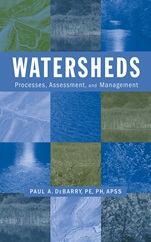
Watersheds: Processes, Assessment and Management
ISBN 9780471264231
Autor: Paul A. DeBarry
Wydawca: Wiley
Dostępność: 3-6 tygodni
Cena: 962,85 zł
Przed złożeniem zamówienia prosimy o kontakt mailowy celem potwierdzenia ceny.
ISBN13: |
9780471264231 |
ISBN10: |
0471264237 |
Autor: |
Paul A. DeBarry |
Oprawa: |
Hardback |
Rok Wydania: |
2004-08-03 |
Ilość stron: |
720 |
Wymiary: |
237x159 |
Tematy: |
AM |
The most up–to–date and comprehensive guide to watershed analysis and management Watersheds: Processes, Assessment, and Management covers aspects of watershed physical processes; assessing, classifying, and evaluating a watershed; using GIS models for watershed assessment; and effectively planning for future use and demands. Topics covered include precipitation, ecology, geology, soils, geomorphology, hydrogeology, hydrology, water quality, hydraulics, GIS, data collection, planning, and management. It provides a concise reference manual for scientists, biologists, geologists, engineers, planners, administrators, and citizens groups, and serves as an aid for the practitioner to identify what is important in the watershed being studied. Incorporating a holistic approach to watershed management that focuses on state–of–the–art technology, Watersheds offers readers a clear road map for taking a watershed assessment and management project from start to finish using the most current computer models and GIS data and tools. This comprehensive book also: Explores next–generation watershed management concepts much needed and widely applicable on an international level Compares various innovative management alternatives Provides sufficient information to understand the analysis, planning, and management process, while guiding the reader to further research Because various disciplines define or classify the same physical features and phenomenon differently, this reference illustrates the similarities and differences between numerous terms, definitions, and classifications to present interdisciplinary consistency. Watersheds: Processes, Assessment, and Management is a powerful tool for going beyond theory and applying planning, management, GIS, and hydrologic engineering principles in real–world watershed management.
PREFACE. ACKNOWLEDGMENTS. 1 INTRODUCTION: COMPREHENSIVE WATERSHED ASSESSMENT AND MANAGEMENT. 1.0 Introduction. 1.1 Sustainability. 1.2 Watershed Assessment and Management. 1.3 Comprehensive Watershed Management Concepts. 1.4 Political versus Natural Resource Management. 1.5 Summary. PART A: WATERSHED PROCESSES. 2 PHYSIOGRAPHY. 2.0 Introduction. 2.1 Physiography and Physiographic Provinces. 2.2 Geology. 2.3 Soils. 2.4 Topography. 2.5 Summary. 3 CLIMATE, PRECIPITATION, HYDROLOGIC CYCLE. 3.0 Introduction. 3.1 Climate Classification. 3.2 Precipitation. 3.3 Hydrologic Cycle, Water Balance, and Water Budget. 3.4 Anthropogenic (Man–made) Changes to the Water Balance . 3.5 Low Flow. 3.6 Summary. 4 HYDROGEOLOGY. 4.0 Introduction. 4.1 Groundwater. 4.2 Flow through Porous Media. 4.3 Fluid Movement in Unsaturated Media. 4.4 Fluid Movement in Saturated Media. 4.5 Flow Through Secondary Openings in Dense Materials. 4.6 Nitrogen Pollution. 4.7 Summary. 5 HYDROGEOMORPHOLOGY (WATERSHED AND STREAM MORPHOLOGY). 5.0 Introduction. 5.1 Hydrogeomorphology. 5.2 Watershed Classifications. 5.3 Stream Classifications. 5.4 Watershed Hydrology. 5.5 Summary. 6 LAKES, RESERVOIRS, STREAMS, AND WETLANDS. 6.0 Introduction. 6.1 Lentic Water (Ponds, Lakes, Reservoirs). 6.2 The Great Dam Debate. 6.3 Lotic Water (Streams and Rivers). 6.4 Physical Properties of Receiving Waters. 6.5 Wetlands. 6.6 Summary. 7 ECOLOGY/HABITAT. 7.0 Introduction. 7.1 Ecosystems. 7.2 Biodiversity. 7.3 Stressors. 7.4 Bioindicators. 7.5 Fisheries. 7.6 Threatened and Endangered Species. 7.7 Summary. 8 WATER QUALITY: NONPOINT SOURCE POLLUTION. 8.0 Introduction. 8.1 Water Quality. 8.2 Chemical Properties of Precipitation. 8.3 Chemical Properties of Receiving Waters. 8.4 Point versus Nonpoint Source Pollution. 8.5 Nonpoint Source (NPS) Pollutants. 8.6 Buildup and Washoff in Urban Areas. 8.7 Runoff Pollutant Sources . 8.8 Summary. PART B: WATERSHED ASSESSMENT. 9 WATERSHED ASSESSMENT: DATA COLLECTION. 9.0 Introduction. 9.1 Project Initiation. 9.2 Establish the Watershed Assessment Team. 9.3 Involve Citizenry. 9.4 Select a Consultant. 9.5 Implement Quality Assurance/Quality Control (QA/QC). 9.6 Identify General Problems in the Watershed. 9.7 Develop Goals and Objectives. 9.8 Obtain Grant(s). 9.9 Hold Public Meetings and Conduct Surveys. 9.10 Collect Data. 9.11 Check Local Ordinances. 9.12 Assimilate Data. 9.13 Proceed with Analysis: Assessment and Modeling. 9.14 Write the Plan Report. 9.15 Summary. 10 GEOGRAPHIC INFORMATION SYSTEMS. 10.0 Introduction. 10.1 Use of GIS for Watershed Assessment. 10.2 Units, Scale, and Accuracy. 10.3 Coordinate Systems, Datums, and Projections. 10.4 GIS Data Types. 10.5 Metadata. 10.6 GIS Layers and Data Sources Useful for Watershed Assessment and Analysis. 10.7 Summary. 11 PRECIPITATION AND STREAM FLOW DATA. 11.0 Introduction. 11.1 Precipitation Measurements. 11.2 Stream Flow Measurements. 11.3 Base Flow Separation. 11.4 Summary. 12 WATERSHED HYDROLOGY AND MODELING. 12.0 Introduction. 12.1 Drainage Area. 12.2 Time–of–Concentration and Watershed Lag. 12.3 Runoff. 12.4 Routing. 12.5 Modeling Process. 12.6 Sensitivity Analysis. 12.7 GIS. 12.8 Model Calibration Process. 12.9 Verification. 12.10 Calibrated Model Runs. 12.11 Summary. 13 STREAM AND RIVER MORPHOLOGIC ASSESSMENT. 13.0 Introduction. 13.1 Age Classifications. 13.2 Stream Form (Pattern). 13.3 Stream Factors. 13.4 Stream Classifications. 13.5 Performing a Fluvial Geomorphological Assessment. 13.6 Summary. 14 ECOLOGY: HABITAT CLASSIFICATION AND ASSESSMENT. 14.0 Introduction. 14.1 Longitudinal Changes in Stream Ecosystems. 14.2 Ecosystem Classifications. 14.3 Ecoregions and Watershed Management. 14.4 Rapid Bioassessment Protocol (RBP). 14.5 Species Diversity Inventory. 14.6 Aquatic Habitat. 14.7 Conducting an Aquatic Survey. 14.8 Aquatic Organism Assessment. 14.9 Summary. 15 NONPOINT SOURCE POLLUTION LOAD ASSESSMENT. 15.0 Introduction. 15.1 Existing Pollutant Loading Data (NURP). 15.2 Field Data Collection and Monitoring. 15.3 Total Maximum Daily Load (TMDL). 15.4 Pollutant Loading Equations and Methods. 15.5 Revised Universal Soil Loss Equation (RUSLE). 15.6 Computer Simulation Models. 15.7 Summary. PART C: WATERSHED MANAGEMENT. 16 AGENCY ROLES, PROGRAMS, REGULATIONS, AND POLICIES. 16.0 Introduction. 16.1 Water Quality Criteria and Standards. 16.2 Regulations. 16.3 State, Regional, and Local Regulations. 16.4 Federal Programs. 16.5 Greenways and Rivers Conservation Plans. 16.6 Land Trusts. 16.7 Summary. 17 SYSTEMATIC APPROACH TO WATERSHED ASSESSMENT: THE DIGITAL WATERSHED, WATERSHED ANALYSIS, GIS, AND MODELING. 17.0 Introduction. 17.1 GIS Applications. 17.2 Compiling the Digital Watershed. 17.3 Data Analysis. 17.4 The GIS Overlaying Procedure. 17.5 GIS in Hydrologic and Hydraulic Analyses. 17.6 GIS and Floodplain Management. 17.7 GIS and Groundwater Management. 17.8 GIS and Water Quality. 17.9 Management District Determination. 17.10 Displaying the Results. 17.11 Summary. 18 STORMWATER MANAGEMENT ON A WATERSHED BASIS: REGIONAL STORMWATER MANAGEMENT. 18.0 Introduction. 18.1 Urbanization/Land Development. 18.2 Stormwater Management and Land Development. 18.3 Watershed–Level Stormwater Runoff Control Management Philosophy. 18.4 Conventional On–Site Runoff Control versus Watershed Level Runoff Control. 18.5 Release Rate Percentage Concept. 18.6 Minimum Reasonable Release Rate Determination. 18.7 Variable Stormwater Management Districts. 18.8 Summary. 19 ON–SITE STORMWATER MANAGEMENT AND CONSERVATION DESIGN. 19.0 Introduction. 19.1 Traditional Procedure for Site Design Stormwater Management. 19.2 Best Management Practices. 19.3 Five–Phase Approach to Stormwater Management. 19.4 Nonstructural BMPs and Stormwater Management. 19.5 The Role of Soils in Low Impact Development. 19.6 Recommended Procedure for Site Design Stormwater Management: The Low Impact Development Design Planning Process. 19.7 Advantages and Benefits of LID Design. 19.8 Future Implementation. 19.9 Structural BMPs. 19.10 Summary. 20 FLOODPLAIN MANAGEMENT AND RIPARIAN BUFFERS. 20.0 Introduction. 20.1 Federal Emergency Management Agency’s Flood Insurance Program. 20.2 Land Development Process in the Floodplain. 20.3 Room for Improvement. 20.4 Floodplain and Riparian Buffer Management. 20.5 Riparian Buffers and Stream Orders. 20.6 Riparian Buffer Assessment. 20.7 Riparian Buffer Management. 20.8 Summary. 21 STREAM AND LAKE MANAGEMENT. 21.0 Introduction. 21.1 Streambank Management Using FGM Techniques. 21.2 Lake Management. 21.3 Summary. 22 GROUNDWATER AND INTEGRATED WATER RESOURCES MANAGEMENT. 22.0 Introduction. 22.1 Water Supply Plan. 22.2 Wellhead Protection Study. 22.3 Integrated Water Resources Management. 22.4 Summary. 23 SUMMARY. APPENDIX A SELECTED LIST OF GIS DATA AND RELATED SITES. APPENDIX B ACRONYMS. GLOSSARY. INDEX.
PAUL A. DeBARRY, PE, PH, APSS, is a senior engineer and head of the Storm Water Management and River/Stream Hydraulics and GIS Section of the engineering firm of Borton–Lawson, based in Wilkes–Barre, Pennsylvania, and is an instructor at the Pennsylvania State University. He has chaired and co–chaired numerous symposia and conferences related to water resources and GIS, and he is a contributing author to the Hydrology Handbook and GIS Modules and Distributed Models of the Watershed. He is a member of ASCE, where he serves on the Surface Water Hydrology Committee and the review committee for the Journal of Hydrology.
Koszyk
Książek w koszyku: 0 szt.
Wartość zakupów: 0,00 zł
Informacje


Kontakt
Gambit
Centrum Oprogramowania
i Szkoleń Sp. z o.o.
Al. Pokoju 29b/22-24
31-564 Kraków
Siedziba Księgarni
ul. Kordylewskiego 1
31-542 Kraków
+48 12 410 5991
+48 12 410 5987
+48 12 410 5989
Subskrypcje
Administratorem danych osobowych jest firma Gambit COiS Sp. z o.o. Na podany adres będzie wysyłany wyłącznie biuletyn informacyjny.
Autoryzacja płatności

Informacje na temat autoryzacji płatności poprzez PayU.

© Copyright 2012: GAMBIT COiS Sp. z o.o. Wszelkie prawa zastrzeżone.
Projekt i wykonanie: Alchemia Studio Reklamy