


Wydawcy
Katalog tematyczny
- Archeologia (109)
- Ekonomia, finanse, business (13704)
- Filozofia (1445)
- Historia (3040)
- Języki i językoznawstwo (2356)
- Lifestyle, hobby i rozrywka (475)
- Medycyna (9704)
- Nauki humanistyczne (4)
- Nauki o Ziemi i środowisku (2638)
- Nauki ścisłe (20412)
- Astronomia (294)
- Biologia (5119)
- Chemia (6540)
- Chemia analityczna (361)
- Chemia fizyczna (346)
- Chemia nieorganiczna (137)
- Chemia organiczna (535)
- Krystalografia (27)
- Minerologia (46)
- Fizyka (3309)
- Matematyka (4574)
- Nauki ścisłe, ogólnie (503)
- Nauki społeczne (8486)
- Nauki techniczne (13450)
- Prawo (1696)
- Publikacje informacyjne i interdyscyplinarne (1288)
- Religia i wierzenia (917)
- Technika komputerowa (4067)
- Zdrowie, relacje międzyludzkie i rozwój osobisty (657)





Informacje szczegółowe o książce
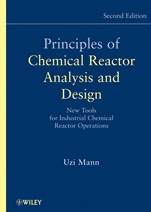
Principles of Chemical Reactor Analysis and Design: New Tools for Industrial Chemical Reactor Operations
ISBN 9780471261803
Autor: Uzi Mann
Wydawca: Wiley
Dostępność: 3-6 tygodni
Cena: 540,75 zł
Przed złożeniem zamówienia prosimy o kontakt mailowy celem potwierdzenia ceny.
ISBN13: |
9780471261803 |
ISBN10: |
0471261807 |
Autor: |
Uzi Mann |
Oprawa: |
Hardback |
Rok Wydania: |
2009-04-29 |
Numer Wydania: |
2nd Edition |
Ilość stron: |
460 |
Wymiary: |
258x181 |
Tematy: |
PN |
An innovative approach that helps students move from the classroom to professional practice
Principles of Chemical Reactor Analysis and Design offers a comprehensive, unified methodology to analyze and design chemical reactors, using a reaction–based design formulation rather than the common species–based design formulation. The book′s acclaimed approach addresses the weaknesses of current pedagogy by giving readers the knowledge and tools needed to address the technical challenges they will face in practice.
Principles of Chemical Reactor Analysis and Design prepares readers to design and operate real chemical reactors and to troubleshoot any technical problems that may arise. The text′s unified methodology is applicable to both single and multiple chemical reactions, to all reactor configurations, and to all forms of rate expression. This text also . . .
Describes reactor operations in terms of dimensionless design equations, generating dimensionless operating curves that depict the progress of individual chemical reactions, the composition of species, and the temperature.
Combines all parameters that affect heat transfer into a single dimensionless number that can be estimated a priori.
Accounts for all variations in the heat capacity of the reacting fluid.
Develops a complete framework for economic–based optimization of reactor operations.
Problems at the end of each chapter are categorized by their level of difficulty from one to four, giving readers the opportunity to test and develop their skills.
Graduate and advanced undergraduate chemical engineering students will find that this text′s unified approach better prepares them for professional practice by teaching them the actual skills needed to design and analyze chemical reactors.
Spis treści:
Preface.
Notation.
Chapter 1: Overview of Chemical Reaction Engineering.
1.1 Classification of Chemical Reactions.
1.2 Classification of Chemical Reactors.
1.3 Phenomena and Concepts.
1.4 Common Practices.
1.5 Industrial Reactors.
1.6 Summary.
Bibliography.
Chapter 2: Stoichiometry.
2.1 The Four Contexts of "Chemical Reactions".
2.2 Chemical Formula and Stoichiometic Relations.
2.3 Reaction Extent.
2.4 Independent and Dependent Chemical Reactions.
2.5 Characterization of Reactor Feed.
2.6 Characterization of Reactor Performance.
2.7 Dimensionless Extents.
2.8 Independent Species Specifications.
2.9 Summary.
Bibliography.
Problems.
Chapter 3: Chemical Kinetics.
3.1 Species Formation Rates.
3.2 Rates of Chemical Reactions.
3.3 Rate Expressions of Reaction Rates.
3.4 Effects of Transport Limitations.
3.5 Characteristic Reaction Time.
3.6 Summary.
Bibliography.
Problems.
Chapter 4: Species Balances and Design Equations.
4.1 Macroscopic Species Balances – General Species–based Design Equations.
4.2 Species–based Design Equations of Ideal Reactors.
4.3 Reaction–based Design Equations.
4.4 Dimensionless Design Equations.
4.5 Summary.
Bibliography.
Problems.
Chapter 5: Energy Balances.
5.1 Review of Thermodynamic Relations.
5.2 Energy Balances.
5.3 Summary.
Bibliography.
Problems.
Chapter 6: Ideal Batch Reactor.
6.1 Design Equations and Auxiliary Relations.
6.2 Isothermal Operations with Single Reactions.
6.3 Isothermal Operations with Multiple Reactions.
6.4 Non–Isothermal Operations.
6.5 Summary.
Problems.
Chapter 7: Plug Flow Reactor.
7.1 Design Equations and Auxiliary Relations.
7.2 Isothermal Operations with Single Reactions.
7.3 Isothermal Operations with Multiple Reactions.
7.4 Non–Isothermal Operations.
7.5 Effects of Pressure Drop.
7.6 Summary.
Problems.
Chapter 8: Continuous Stirred
Tank Reactor (CSTR).
8.1 Design Equations and Auxiliary Relations.
8.2 Isothermal Operations with Single Reactions.
8.3 Isothermal Operations with Multiple Reactions.
8.4 Non–Isothermal Operations.
8.5 Summary.
Problems.
Chapter 9: Other Reactor Configurations.
9.1 Semi–Batch Reactors.
9.2 Plug–Flow Reactor with Distributed Feed.
9.3 Distillation Reactor.
9.4 Recycle Reactor.
9.5 Summary.
Problems.
Chapter 10: Economic–Based Optimization of Reactor Operations.
10.1 Economic Objective Functions.
10.2 Batch and Semi–Batch Reactors.
10.3 Flow Reactors.
10.4 Summary.
Problems.
Appendices.
Appendix A: Summary of Key Relationships.
Appendix B: Microscopic Species Balances – Continuity Equations.
Appendix C: Summary of Numerical Methods.
Index.
Nota biograficzna:
UZI MANN, PHD, is a Professor of Chemical Engineering at Texas Tech University. Dr. Mann is a recipient of the Lockheed Martin Teaching Award and the Halliburton Excellence in Research Award. He also teaches the ASME/AIChE short course "Principles and Practices of Chemical Reactor Design and Operations."
Okładka tylna:
An innovative approach that helps students move from the classroom to professional practice
Principles of Chemical Reactor Analysis and Design offers a comprehensive, unified methodology to analyze and design chemical reactors, using a reaction–based design formulation rather than the common species–based design formulation. The book′s acclaimed approach addresses the weaknesses of current pedagogy by giving readers the knowledge and tools needed to address the technical challenges they will face in practice.
Principles of Chemical Reactor Analysis and Design prepares readers to design and operate real chemical reactors and to troubleshoot any technical problems that may arise. The text′s unified m
ethodology is applicable to both single and multiple chemical reactions, to all reactor configurations, and to all forms of rate expression. This text also . . .
Describes reactor operations in terms of dimensionless design equations, generating dimensionless operating curves that depict the progress of individual chemical reactions, the composition of species, and the temperature.
Combines all parameters that affect heat transfer into a single dimensionless number that can be estimated a priori.
Accounts for all variations in the heat capacity of the reacting fluid.
Develops a complete framework for economic–based optimization of reactor operations.
Problems at the end of each chapter are categorized by their level of difficulty from one to four, giving readers the opportunity to test and develop their skills.
Graduate and advanced undergraduate chemical engineering students will find that this text′s unified approach better prepares them for professional practice by teaching them the actual skills needed to design and analyze chemical reactors.
Koszyk
Książek w koszyku: 0 szt.
Wartość zakupów: 0,00 zł
Informacje


Kontakt
Gambit
Centrum Oprogramowania
i Szkoleń Sp. z o.o.
Al. Pokoju 29b/22-24
31-564 Kraków
Siedziba Księgarni
ul. Kordylewskiego 1
31-542 Kraków
+48 12 410 5991
+48 12 410 5987
+48 12 410 5989
Subskrypcje
Administratorem danych osobowych jest firma Gambit COiS Sp. z o.o. Na podany adres będzie wysyłany wyłącznie biuletyn informacyjny.
Autoryzacja płatności

Informacje na temat autoryzacji płatności poprzez PayU.

© Copyright 2012: GAMBIT COiS Sp. z o.o. Wszelkie prawa zastrzeżone.
Projekt i wykonanie: Alchemia Studio Reklamy