


Wydawcy
Katalog tematyczny
- Archeologia (1)
- Ekonomia, finanse, business (698)
- Filozofia (20)
- Historia (57)
- Języki i językoznawstwo (4)
- Lifestyle, hobby i rozrywka (32)
- Medycyna (1025)
- Nauki humanistyczne (2)
- Nauki o Ziemi i środowisku (430)
- Nauki ścisłe (1681)
- Nauki społeczne (1297)
- Nauki techniczne (530)
- Prawo (1437)
- Publikacje informacyjne i interdyscyplinarne (32)
- Religia i wierzenia (15)
- Technika komputerowa (237)
- Zdrowie, relacje międzyludzkie i rozwój osobisty (4)





Informacje szczegółowe o książce
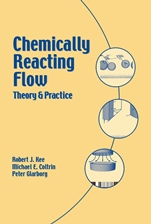
Chemically Reacting Flow: Theory and Practice
ISBN 9780471261797
Autor: Robert J. Kee, Michael E. Coltrin, Peter Glarborg
Wydawca: Wiley
Dostępność: 3-6 tygodni
Cena: 919,80 zł
Przed złożeniem zamówienia prosimy o kontakt mailowy celem potwierdzenia ceny.
ISBN13: |
9780471261797 |
ISBN10: |
0471261793 |
Autor: |
Robert J. Kee, Michael E. Coltrin, Peter Glarborg |
Oprawa: |
Hardback |
Rok Wydania: |
2003-03-14 |
Ilość stron: |
928 |
Wymiary: |
261x178 |
Tematy: |
PN |
A guide to the theoretical underpinnings and practical applications of chemically reacting flow
Complex chemically reacting flow simulations are commonly employed to develop quantitative understanding and to optimize reaction conditions in systems such as combustion, catalysis, chemical vapor deposition, and other chemical processes. Although reaction conditions, geometries, and fluid flow can vary widely among the applications of chemically reacting flows, all applications share a need for accurate, detailed descriptions of the chemical kinetics occurring in the gas–phase or on reactive surfaces. Chemically Reacting Flow: Theory and Practice combines fundamental concepts in fluid mechanics and physical chemistry, assisting the student and practicing researcher in developing analytical and simulation skills that are useful and extendable for solving real–world engineering problems.
The first several chapters introduce transport processes, primarily from a fluid–mechanics point of view, incorporating computational simulation from the outset. The middle section targets physical chemistry topics that are required to develop chemically reacting flow simulations, such as chemical thermodynamics, molecular transport, chemical rate theories, and reaction mechanisms. The final chapters deal with complex chemically reacting flow simulations, emphasizing combustion and materials processing. Among other features, Chemically Reacting Flow: Theory and Practice:Advances a comprehensive approach to interweaving the fundamentals of chemical kinetics and fluid mechanicsEmbraces computational simulation, equipping the reader with effective, practical tools for solving real–world problemsEmphasizes physical fundamentals, enabling the analyst to understand how reacting flow simulations achieve their resultsProvides a valuable resource for scientists and engineers who use Chemkin or similar software
Compute
r simulation of reactive systems is highly effective in the development, enhancement, and optimization of chemical processes. Chemically Reacting Flow helps prepare both students and professionals to take practical advantage of this powerful capability.
Spis treści:
Preface.
Acknowledgments.
Nomenclature.
Introduction.
Fluid Kinematics.
The Conservation Equations.
Parallel Flows.
Similarity and Local Similarity.
Stagnation Flows.
Channel Flow.
Statistical Thermodynamics.
Mass Action Kinetics.
Reaction Rate Theories.
Heterogeneous Chemistry.
Molecular Transport.
Reaction Mechanisms.
High–Temperature Chemistry.
Numerical Solution of Stiff Equations.
Zero– and One–Dimensional Systems.
Two–Dimensional Systems.
Appendix A. Vector and Tensor Operations.
Appendix B. Navier–Stokes Equations.
Appendix C. Boundary–Layer Behavior.
Appendix D. Solving Differential Equations in Excel.
Appendix E. The Chemkin Approach.
References.
Index.
Nota biograficzna:
ROBERT J. KEE, PhD, is the George R. Brown Distinguished Professor of Engineering at the Colorado School of Mines in Golden, Colorado.
MICHAEL E. COLTRIN, PhD, is a Distinguished Member of the Technical Staff at Sandia National Laboratories in Albuquerque, New Mexico.
PETER GLARBORG, PhD, is a Professor of Chemical Engineering at the Technical University of Denmark in Lyngby, Denmark.
Okładka tylna:
A guide to the theoretical underpinnings and practical applications of chemically reacting flow
Complex chemically reacting flow simulations are commonly employed to develop quantitative understanding and to optimize reaction conditions in systems such as combustion, catalysis, chemical vapor deposition, and other chemical processes. Although reaction conditions, geometries, and fluid flow can vary widely among the applications of
chemically reacting flows, all applications share a need for accurate, detailed descriptions of the chemical kinetics occurring in the gas–phase or on reactive surfaces. Chemically Reacting Flow: Theory and Practice combines fundamental concepts in fluid mechanics and physical chemistry, assisting the student and practicing researcher in developing analytical and simulation skills that are useful and extendable for solving real–world engineering problems.
The first several chapters introduce transport processes, primarily from a fluid–mechanics point of view, incorporating computational simulation from the outset. The middle section targets physical chemistry topics that are required to develop chemically reacting flow simulations, such as chemical thermodynamics, molecular transport, chemical rate theories, and reaction mechanisms. The final chapters deal with complex chemically reacting flow simulations, emphasizing combustion and materials processing. Among other features, Chemically Reacting Flow: Theory and Practice:Advances a comprehensive approach to interweaving the fundamentals of chemical kinetics and fluid mechanicsEmbraces computational simulation, equipping the reader with effective, practical tools for solving real–world problemsEmphasizes physical fundamentals, enabling the analyst to understand how reacting flow simulations achieve their resultsProvides a valuable resource for scientists and engineers who use Chemkin or similar software
Computer simulation of reactive systems is highly effective in the development, enhancement, and optimization of chemical processes. Chemically Reacting Flow helps prepare both students and professionals to take practical advantage of this powerful capability.
Koszyk
Książek w koszyku: 0 szt.
Wartość zakupów: 0,00 zł
Informacje


Kontakt
Gambit
Centrum Oprogramowania
i Szkoleń Sp. z o.o.
Al. Pokoju 29b/22-24
31-564 Kraków
Siedziba Księgarni
ul. Kordylewskiego 1
31-542 Kraków
+48 12 410 5991
+48 12 410 5987
+48 12 410 5989
Subskrypcje
Administratorem danych osobowych jest firma Gambit COiS Sp. z o.o. Na podany adres będzie wysyłany wyłącznie biuletyn informacyjny.
Autoryzacja płatności

Informacje na temat autoryzacji płatności poprzez PayU.

© Copyright 2012: GAMBIT COiS Sp. z o.o. Wszelkie prawa zastrzeżone.
Projekt i wykonanie: Alchemia Studio Reklamy