


Wydawcy
Katalog tematyczny
- Archeologia (109)
- Ekonomia, finanse, business (13704)
- Filozofia (1445)
- Historia (3040)
- Języki i językoznawstwo (2356)
- Lifestyle, hobby i rozrywka (475)
- Medycyna (9704)
- Nauki humanistyczne (4)
- Nauki o Ziemi i środowisku (2638)
- Nauki ścisłe (20412)
- Nauki społeczne (8486)
- Nauki techniczne (13450)
- Budownictwo lądowe (1045)
- Budownictwo komunikacyjne (9)
- Hydraulika (33)
- Konstrukcje budowlane (95)
- Mechanika konstrukcji (182)
- Przemysł budowlany (7)
- Chemia przemysłowa (2258)
- Elektronika i telekomunikacja (3287)
- Energetyka (1122)
- Inne nauki stosowane (363)
- Inżynieria biochemiczna (507)
- Inżynieria transportu (232)
- Mechanika i materiały (3316)
- Nauka o środowisku (321)
- Rolnictwo (507)
- Technika, ogólnie (475)
- Prawo (1696)
- Publikacje informacyjne i interdyscyplinarne (1288)
- Religia i wierzenia (917)
- Technika komputerowa (4067)
- Zdrowie, relacje międzyludzkie i rozwój osobisty (657)





Informacje szczegółowe o książce
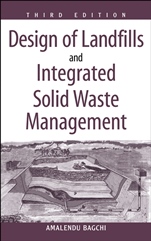
Design of Landfills and Integrated Solid Waste Management
ISBN 9780471254997
Autor: Amalendu Bagchi
Wydawca: Wiley
Dostępność: 3-6 tygodni
Cena: 976,50 zł
Przed złożeniem zamówienia prosimy o kontakt mailowy celem potwierdzenia ceny.
ISBN13: |
9780471254997 |
ISBN10: |
0471254991 |
Autor: |
Amalendu Bagchi |
Oprawa: |
Hardback |
Rok Wydania: |
2004-03-05 |
Numer Wydania: |
3rd Edition |
Ilość stron: |
712 |
Wymiary: |
239x169 |
Tematy: |
TN |
The first comprehensive guide to managing the entire solid waste cycle.
Combining integrated solid waste management (ISWM) with the traditional coverage of landfill design, construction, and monitoring, this new edition of Amalendu Bagchi’s classic guide is in response to the growing need for a comprehensive approach toward managing solid waste—from collection to recycling to eventual disposal.
This far–reaching guide provides professionals of various disciplines with fast, easy access to authoritative information on source reduction, reuse, recycling, composting, contaminated soil remediation, incineration, and medical waste management. It also presents the latest developments on bioreactor landfills, wetland mitigation, remediation of landfills, waste management–related health and safety, and financial issues affecting the industry.
Topics covered in this Third Edition include:The role of geotechnical engineering in a variety of environmental issuesPlanning, marketing, and quality con trol for reuse and recycling facilitiesHealth, safety, and economic issues related to compostingRisk assessment of contaminated landsLeachate and gas generation in landfillsMicrobiology of landfillsAnd much more
Supplemented with hundreds of helpful drawing, tables, and photos, Design of Landfills and Integrated Solid Waste Management, Third Edition is an indispensable resource for environmental engineers, hydrogeologists, and landfill operators and owners. It is also an excellent text for environmental science and engineering courses related to waste management.
Spis treści:
PREFACE.
PART I: INTEGRATED SOLID WASTE MANAGEMENT.
1 Introduction.
1.1 Basic Concepts of an Integrated Solid Waste Management Program.
1.2 Scope and Organization of Book.
2 Integrated Solid Waste Management.
2.1 Planning.
2.2 Benefits of ISWM.
2
.3 Regulatory Issues.
2.4 Public Promotion of ISWM.
2.5 Collection and Transportation of Waste.
2.6 Transfer Stations.
2.7 Waste Composition Study.
3 Source Reduction.
3.1 Role of Governmental Bodies.
3.2 Planning.
3.3 Source Reduction Ideas.
3.4 Reducing Toxicity.
4 Medical Waste Management.
4.1 Definition of Infectious Waste.
4.2 Source Separation and Management.
4.3 Storage.
4.4 Transportation.
4.5 Treatment.
4.6 Tracking.
4.7 Collection of Infectious Waste Generated from Homes.
4.8 Waste Reduction.
5 Incineration.
5.1 Incinerable Waste.
5.2 Waste Load Estimate.
5.3 Types of Incinerator.
5.4 Environmental Issues.
5.5 Incineration of Various Nonhazardous Waste Types.
5.6 Site Selection, Installation, and Financing.
6 Composting.
6.1 Fundamentals of Composting.
6.2 Influence of Various Parameters on Composting.
6.3 Facility Design.
6.4 Environmental Issues.
6.5 Health and Safety.
6.6 Marketing.
6.7 Economics.
7 Reuse and Recycling.
7.1 Planning.
7.2 Marketing.
7.3 Information on Recyclable Materials Recovered from Municipal Solid Waste.
7.4 Material Recovery Facilities.
7.5 Refuse–Derived Fuel Processing Plants.
7.6 Quality Control and Data Collection.
7.7 Land Spreading.
8 Reuse of Industrial By–Products.
8.1 Comments on Engineering Characteristics and Testing Protocols.
8.2 Reuse of Industrial By–Products in Civil Engineering Projects.
8.3 Environmental Issues.
9 Contaminated Soil Remediation.
9.1 Soil Contamination Process.
9.2 Factors Affecting Remedial Processes.
9.3 Contaminant Transport.
9.4 Maintenance of Wells.
9.5 Site Investigation.
9.6 In Situ Remediation Methods.
9.7 Ex Situ Remediation Methods.
9.8 Project Life Estimation.
9.9 Project Cost Estimation.
9.10 Comments on Remediation Method Selection.
10
Redevelopment of Contaminated Land.
10.1 Risk Assessment.
10.2 Risk–Based Corrective Action for Redevelopment of Contaminated Land.
10.3 Legal Issues.
10.4 Funding.
PART II:LANDFILL DESIGN.
11 Introduction.
11.1 Comments on Regulatory Requirements.
11.2 Scope and Organization of Part II.
12 Site Selection.
12.1 Data Collection.
12.2 Locational Criteria.
12.3 Preliminary Assessment of Public Reactions.
12.4 Development of a List of Potential Sites.
12.5 Final Site Selection.
12.6 Preparation of Feasibility Report.
13 Leachate and Gas Generation.
13.1 Factors That Influence Leachate Quality.
13.2 Factors That Influence Leachate Quantity.
13.3 Assessing Probable Quality of Leachate.
13.4 Estimation of Leachate Quantity.
13.5 Typical Leachate Quality of Various Nonhazardous Wastes.
13.6 Leachate Treatment.
13.7 Gas Generation.
14 Waste Characterization.
14.1 General Guidelines for Waste Characterization.
14.2 Identification of Hazardous Waste.
14.3 Restriction on Land Disposal of Hazardous Waste.
14.4 Identification of Nonhazardous Waste.
15 Natural Attenuation Landfills.
15.1 Natural Attenuation Process.
15.2 Mechanisms of Attenuation.
15.3 Effects of Various Factors of Attenuation Mechanisms.
15.4 Attenuation Mechanisms of Specific Pollutants.
15.5 Design Approach.
15.6 Summary and Comments.
16 Containment Landfills.
16.1 Single–Lined Landfills.
16.2 Double– or Multiple–Lined Landfills.
16.3 Liner Material Selection Criteria.
16.4 Comments on Liner Thickness.
16.5 Comments on Final Cover Design.
16.6 Leachate Apportionment Models.
16.7 Comments on Designing the Landfill Base below the Groundwater Table.
16.8 Check for Liner Blowout.
16.9 Natural Attenuation versus Containment Landfill.
17 Bioreactor Landfills.
17.1 Microbiology of Landfills.
17.2 Potential Advantages of Bioreactor Landfills.
17.3 Bioreactor Landfill Design.
17.4 Slope Stability.
17.5 Potential Obstacles to Bioreactor Landfill Development.
18 Liner Materials.
18.1 Clay.
18.2 Synthetic Membrane.
18.3 Geosynthetic Clay Liner.
18.4 Amended Soil and Other Admixtures.
18.5 Composite Liner.
19 Design of Landfill Elements.
19.1 Leachate Collection System.
19.2 Stormwater Routing.
19.3 Geosynthetic Membrane.
19.4 Berm Design.
19.5 Landfill Stability.
19.6 Comments on Seismic Design of Landfills.
19.7 Access Road Design.
19.8 Landfill Cover Design.
19.9 Gas Venting System Design.
19.10 Converting Existing Natural Attenuation Landfills to Containment Landfills.
20 Landfill Construction.
20.1 Subbase Construction.
20.2 Liner Construction.
20.3 Berm Construction.
20.4 Sand Drainage Blanket Construction.
20.5 Leachate Collection Trench Construction.
20.6 Double– or Multiple–Liner Construction.
20.7 Groundwater Dewatering System Construction.
20.8 Lysimeter Construction.
20.9 Landfill Cover Construction.
20.10 Material Procurement, Construction Scheduling, and So On.
20.11 Erosion Control during Landfill Construction.
20.12 Construction on Landfills.
21 Landfill Remediation.
21.1 Site Investigation.
21.2 Developing a Priority List.
21.3 Selection of Remedial Methods and Related Issues.
22 Performance Monitoring.
22.1 Leachate Head Monitoring.
22.2 Monitoring Head in the Groundwater Dewatering System.
22.3 Leakage Monitoring.
22.4 Groundwater Monitoring.
22.5 Gas Monitoring.
22.6 Leachate Tank Monitoring.
22.7 Final Cover Stability Monitoring.
22.8 Groundwater Data Analysis.
23 Landfill Operation.
23.1 Equipment Used for Compaction.
23.2 Phasing Plan.
23.3 Covering Waste.
23.4 Co–disposal of Nonhazardous Sludge in Municipal Landfills.
23.5
Koszyk
Książek w koszyku: 0 szt.
Wartość zakupów: 0,00 zł
Informacje


Kontakt
Gambit
Centrum Oprogramowania
i Szkoleń Sp. z o.o.
Al. Pokoju 29b/22-24
31-564 Kraków
Siedziba Księgarni
ul. Kordylewskiego 1
31-542 Kraków
+48 12 410 5991
+48 12 410 5987
+48 12 410 5989
Subskrypcje
Administratorem danych osobowych jest firma Gambit COiS Sp. z o.o. Na podany adres będzie wysyłany wyłącznie biuletyn informacyjny.
Autoryzacja płatności

Informacje na temat autoryzacji płatności poprzez PayU.

© Copyright 2012: GAMBIT COiS Sp. z o.o. Wszelkie prawa zastrzeżone.
Projekt i wykonanie: Alchemia Studio Reklamy