


Wydawcy
Katalog tematyczny
- Archeologia (109)
- Ekonomia, finanse, business (13704)
- Filozofia (1445)
- Historia (3040)
- Języki i językoznawstwo (2356)
- Lifestyle, hobby i rozrywka (475)
- Medycyna (9704)
- Nauki humanistyczne (4)
- Nauki o Ziemi i środowisku (2638)
- Nauki ścisłe (20412)
- Nauki społeczne (8486)
- Edukacja (229)
- Kryminologia, opieka spełeczna (284)
- Obronność (10)
- Polityka (1389)
- Psychologia (777)
- Socjologia (410)
- Społeczeństwo i kultura (187)
- Nauki techniczne (13450)
- Prawo (1696)
- Publikacje informacyjne i interdyscyplinarne (1288)
- Religia i wierzenia (917)
- Technika komputerowa (4067)
- Zdrowie, relacje międzyludzkie i rozwój osobisty (657)





Informacje szczegółowe o książce
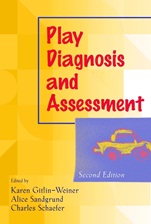
Play Diagnosis and Assessment
ISBN 9780471254577
Autor: Karen Gitlin–Weiner, Alice Sandgrund, Charles E. Schaefer
Wydawca: Wiley
Dostępność: 3-6 tygodni
Cena: 935,55 zł
Przed złożeniem zamówienia prosimy o kontakt mailowy celem potwierdzenia ceny.
ISBN13: |
9780471254577 |
ISBN10: |
0471254576 |
Autor: |
Karen Gitlin–Weiner, Alice Sandgrund, Charles E. Schaefer |
Oprawa: |
Hardback |
Rok Wydania: |
2000-03-20 |
Numer Wydania: |
2nd Edition |
Ilość stron: |
792 |
Wymiary: |
261x187 |
Tematy: |
JC |
The leading resource on identifying children’s problems through play therapy—completely revised The first edition of Play Diagnosis and Assessment was the first volume of its kind to provide a comprehensive overview of the diagnosis and assessment of children through play. Over the past several years, numerous changes within the field have encouraged the development of improved techniques that surpass traditional assessment protocols and methods, such as new scales, more focused procedures, and instruments with higher levels of reliability and validity than have been previously established. Now, this classic book has been updated to address and reflect these ongoing changes. Focusing on the needs of the clinician, this new edition presents empirically tested diagnostic tools and describes improvements to existing play therapy assessment instruments, such as new testing instruments for time–limited therapy and early intervention assessment tools for young children. The book is divided into six sections:Developmental Play AssessmentsDiagnostic Play AssessmentsParent–Child Interaction Play AssessmentsFamily Play AssessmentsPeer Interaction Play AssessmentsProjective Play AssessmentsThe procedures described in each section target a variety of ages and populations, representing some of the most valuable, informative, and sensitive contributions to the field. Integrating formal research with clinical methods, Play Diagnosis and Assessment, Second Edition is the definitive resource for clinicians dedicated to the identification of children’s problems and the best ways to intervene through the lighthearted and productive use of play therapy.
Spis treści:
DEVELOPMENTAL PLAY ASSESSMENTS.
A Scale for Assessing Development of Children′s Play (C. Westby).
Assessing the Cognitive Ability of Infants and Toddlers Through Play: The Symbolic Play Test (T. Power & J. Radcliffe).
Stand
ardized Play Assessment of Infant and Toddler Temperament (A. Matheny).
The Play History Interview (K. Taylor, et al.).
Transdisciplinary Play–Based Assessment (T. Linder).
DIAGNOSTIC PLAY ASSESSMENTS.
Kiddie Formal Thought Disorder Rating Scale and Story Game (R. Caplan & T. Sherman).
Using Anatomically Detailed Dolls in Interviewing Preschoolers (S. White).
Linking Assessment to Intervention for Children with Developmental Disabilities or At–Risk for Developmental Delay: The Developmental Play Assessment (DPA) Instrument (K. Lifter).
The Play Observation Kit (POKIT): An Observational Assessment Technique for Young Children (K. Mogford–Bevan).
PARENT–CHILD INTERACTION PLAY ASSESSMENTS.
Assessing Mother–Infant Interaction in Play (L. Roggman, et al.).
Parent–Child Interaction Play Assessment (D. Smith).
Assessing Parent–Child Interactions with the Marschak Interaction Method (MIM) (S. Lindaman, et al.).
"Going to the Store": An Observational Measure of Parent–Child Interactions for Preschoolers (J. Dumas & P. LaFreniere).
FAMILY PLAY ASSESSMENTS.
Family System Test (FAST): A Systemic Approach for Family Evaluation in Clinical Practice and Research (T. Gehring & J. Page).
Assessing Family Interaction by the Collaborative Drawing Technique (G. Smith).
Dynamic Play Approaches in the Observation of Family Relationships (S. Harvey).
Assessment of the Child and Family in Play Contexts (G. Stollak, et al.).
PEER INTERACTION PLAY ASSESSMENTS.
Play Assessment of Peer Interaction in Children (J. Welsh, et al.).
Observing for Individual Differences in the Social Interaction Styles of Preschool Children (M. Segal, et al.).
Assessing Nonsocial Play in Early Childhood: Conceptual and Methodological Approaches (R. Coplan).
Penn Interactive Peer Play Scale: A Parent and Teacher Rating System for Young Children (J. Fantuzzo & V. Hampton).
PROJECTIVE P
LAY ASSESSMENTS.
The MUG and the Teddy Bears′ Picnic: Story–telling Techniques for the Assessment of Children′s Emotional and Behavioral Problems (N. Mueller).
The Family Puppet Technique for Assessing Parent–Child and Family Interaction Patterns (P. Ross).
The Use of a Puppet Interview to Understand Children (E. Irwin).
The Puppet Sentence Completion Task (S. Knell & K. Beck).
Play Assessment of Affect: The Affect in Play Scale (S. Russ, et al.).
Indexes.
Nota biograficzna:
KAREN GITLIN–WEINER, PhD, is a licensed psychologist and the author of numerous professional articles. She maintains a private practice that focuses on children, adolescents, and their families. For the past twenty years, she has worked as a special educator, consultant, and/or psychologist in different settings for emotionally, behaviorally, and learning–handicapped youngsters of various ages. ALICE SANDGRUND, PhD, is Director of Training at the Division of Child and Adolescent Psychology at Kings County Hospital in Brooklyn, New York. She has authored a number of articles in the field of child psychology. CHARLES SCHAEFER, PhD, is founder and past president of the Center for Play Therapy; he is also the editor of several bestselling books on play therapy.
Okładka tylna:
The leading resource on identifying children’s problems through play therapy—completely revised The first edition of Play Diagnosis and Assessment was the first volume of its kind to provide a comprehensive overview of the diagnosis and assessment of children through play. Over the past several years, numerous changes within the field have encouraged the development of improved techniques that surpass traditional assessment protocols and methods, such as new scales, more focused procedures, and instruments with higher levels of reliability and validity than have been previously established. Now, this classic book has been
updated to address and reflect these ongoing changes. Focusing on the needs of the clinician, this new edition presents empirically tested diagnostic tools and describes improvements to existing play therapy assessment instruments, such as new testing instruments for time–limited therapy and early intervention assessment tools for young children. The book is divided into six sections:Developmental Play AssessmentsDiagnostic Play AssessmentsParent–Child Interaction Play AssessmentsFamily Play AssessmentsPeer Interaction Play AssessmentsProjective Play AssessmentsThe procedures described in each section target a variety of ages and populations, representing some of the most valuable, informative, and sensitive contributions to the field. Integrating formal research with clinical methods, Play Diagnosis and Assessment, Second Edition is the definitive resource for clinicians dedicated to the identification of children’s problems and the best ways to intervene through the lighthearted and productive use of play therapy.
Koszyk
Książek w koszyku: 0 szt.
Wartość zakupów: 0,00 zł
Informacje


Kontakt
Gambit
Centrum Oprogramowania
i Szkoleń Sp. z o.o.
Al. Pokoju 29b/22-24
31-564 Kraków
Siedziba Księgarni
ul. Kordylewskiego 1
31-542 Kraków
+48 12 410 5991
+48 12 410 5987
+48 12 410 5989
Subskrypcje
Administratorem danych osobowych jest firma Gambit COiS Sp. z o.o. Na podany adres będzie wysyłany wyłącznie biuletyn informacyjny.
Autoryzacja płatności

Informacje na temat autoryzacji płatności poprzez PayU.

© Copyright 2012: GAMBIT COiS Sp. z o.o. Wszelkie prawa zastrzeżone.
Projekt i wykonanie: Alchemia Studio Reklamy