


Wydawcy
Katalog tematyczny
- Archeologia (109)
- Ekonomia, finanse, business (13704)
- Filozofia (1445)
- Historia (3040)
- Języki i językoznawstwo (2356)
- Lifestyle, hobby i rozrywka (475)
- Medycyna (9704)
- Nauki humanistyczne (4)
- Nauki o Ziemi i środowisku (2638)
- Nauki ścisłe (20412)
- Astronomia (294)
- Biologia (5119)
- Chemia (6540)
- Fizyka (3309)
- Elektryczność i magnetyzm (90)
- Fizyka atomowa i molekularna (110)
- Fizyka cząstek elementarnych (36)
- Fizyka jądra atomowego (36)
- Fizyka kwantowa (210)
- Fizyka matematyczna (121)
- Fizyka relatywistyczna (36)
- Fizyka statystyczna (51)
- Fizyka stosowana (498)
- Mechanika klasyczna (186)
- Optyka i światło (133)
- Stany materii (202)
- Matematyka (4574)
- Nauki ścisłe, ogólnie (503)
- Nauki społeczne (8486)
- Nauki techniczne (13450)
- Prawo (1696)
- Publikacje informacyjne i interdyscyplinarne (1288)
- Religia i wierzenia (917)
- Technika komputerowa (4067)
- Zdrowie, relacje międzyludzkie i rozwój osobisty (657)





Informacje szczegółowe o książce
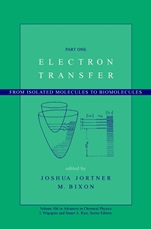
Electron Transfer: From Isolated Molecules to Biomolecules, Volume 106, Part 1
ISBN 9780471252924
Autor: Joshua Jortner, M. Bixon, Ilya Prigogine, Stuart A. Rice
Wydawca: Wiley
Dostępność: 3-6 tygodni
Cena: 2 239,65 zł
Przed złożeniem zamówienia prosimy o kontakt mailowy celem potwierdzenia ceny.
ISBN13: |
9780471252924 |
ISBN10: |
0471252921 |
Autor: |
Joshua Jortner, M. Bixon, Ilya Prigogine, Stuart A. Rice |
Oprawa: |
Hardback |
Rok Wydania: |
1999-02-18 |
Ilość stron: |
760 |
Wymiary: |
236x163 |
Tematy: |
PHM |
an integrated approach to electron transfer phenomena
This two–part stand–alone volume in the prestigious Advances in Chemical Physics series provides the most comprehensive overview of electron transfer science today. It draws on cutting–edge research from diverse areas of chemistry, physics, and biology–covering the most recent developments in the field, and pointing to important future trends. This initial volume includes:
∗ A historical perspective spanning five decades
∗ A review of concepts, problems, and ideas in current research
∗ Electron transfer in isolated molecules and in clusters
∗ General theory, including useful algorithms
∗ Spectra and electron transfer kinetics in bridged compounds
The second volume covers solvent control, ultrafast electron transfer and coherence effects, molecular electronics, electron transfer and chemistry, and biomolecules.
Electron transfer science has seen tremendous progress in recent years. Technological innovations, most notably the advent of femtosecond lasers, now permit the real–time investigation of intramolecular and intermolecular electron transfer processes on a time scale of nuclear motion. New scientific information abounds, illuminating the processes of energy acquisition, storage, and disposal in large molecules, clusters, condensed phase, and biophysical systems.
Electron Transfer: From Isolated Molecules to Biomolecules is the first book devoted to the exciting work being done in nonradiative electron transfer dynamics today. This two–part edited volume emphasizes the interdisciplinary nature of the field, bringing together the contributions of pioneers in chemistry, physics, and biology. Both theoretical and experimental topics are featured. The authors describe modern approaches to the exploration of different systems, including supersonic beam techniques, femtosecond laser spectroscopy, chemical syntheses, and met
hods in genetic and chemical engineering. They examine applications in such areas as supersonic jets, solvents, electrodes, semi– conductors, respiratory and enzymatic protein systems, photosynthesis, and more. They also relate electron transfer and radiationless transitions theory to pertinent physical phenomena, and provide a conceptual framework for the different processes.
Complete with over two hundred illustrations, Part One reviews developments in the field since its inception fifty years ago, and discusses electron transfer phenomena in both isolated molecules and in clusters. It outlines the general theory, exploring areas of the control of kinetics, structure–function relationships, fluctuations, coherence, and coupling to solvents with complex spectral density in different types of electron transfer processes.
Timely, comprehensive, and authoritative, Electron Transfer: From Isolated Molecules to Biomolecules is an essential resource for physical chemists, molecular physicists, and researchers working in nonradiative dynamics today.
Spis treści:
Electron Transfer Past and Future (R. Marcus).
Electron Transfer Reactions in Solution: A Historical Perspective (N. Sutin).
Electron Transfer–From Isolated Molecules to Biomolecules (M. Bixon & J. Jortner).
Charge Transfer in Bichromophoric Molecules in the Gas Phase (D. Levy).
Long–Range Charge Separation in Solvent–Free Donor–Bridge–Acceptor Systems (B. Wegewijs & J. Verhoeven).
Electron Transfer and Charge Separation in Clusters (C. Dessent, et al.).
Control of Electron Transfer Kinetics: Models for Medium Reorganization and Donor–Acceptor Coupling (M. Newton).
Theories of Structure–Function Relationships for Bridge–Mediated Electron Transfer Reactions (S. Skourtis & D. Beratan).
Fluctuations and Coherence in Long–Range and Multicenter Electron Transfer (G. Iversen, et al.).
Lan
czos Algorithm for Electron Transfer Rates in Solvents with Complex Spectral Densities (A. Okada, et al.).
Spectroscopic Determination of Electron Transfer Barriers and Rate Constants (K. Omberg, et al.).
Photoinduced Electron Transfer Within Donor–Spacer–Acceptor Molecular Assemblies Studied by Time–Resolved Microwave Conductivity (J. Warman, et al.).
From Close Contact to Long–Range Intramolecular Electron Transfer (J. Verhoeven).
Photoinduced Electron Transfers Through Bonds in Solution (N.–C. Yang, et al.).
Indexes.
Nota biograficzna:
JOSHUA JORTNER is Heinemann Professor of Chemistry at Tel Aviv University′s School of Chemistry, where he has been on the faculty since 1964. Professor Jortner is President of the International Union of Pure and Applied Chemistry, former President of the Israel National Academy of Sciences and Humanities, and the recipient of the Wolf Prize in Chemistry (1988).
M. BIXON is Chemistry Professor at Tel Aviv University′s School of Chemistry, where he has been on the faculty since 1966. He holds a PhD from the Weizmann Institute of Science in Rehovot, Israel.
Okładka tylna:
an integrated approach to electron transfer phenomena
This two–part stand–alone volume in the prestigious Advances in Chemical Physics series provides the most comprehensive overview of electron transfer science today. It draws on cutting–edge research from diverse areas of chemistry, physics, and biology–covering the most recent developments in the field, and pointing to important future trends. This initial volume includes:
∗ A historical perspective spanning five decades
∗ A review of concepts, problems, and ideas in current research
∗ Electron transfer in isolated molecules and in clusters
∗ General theory, including useful algorithms
∗ Spectra and electron transfer kinetics in bridged compound
s
The second volume covers solvent control, ultrafast electron transfer and coherence effects, molecular electronics, electron transfer and chemistry, and biomolecules.
Electron transfer science has seen tremendous progress in recent years. Technological innovations, most notably the advent of femtosecond lasers, now permit the real–time investigation of intramolecular and intermolecular electron transfer processes on a time scale of nuclear motion. New scientific information abounds, illuminating the processes of energy acquisition, storage, and disposal in large molecules, clusters, condensed phase, and biophysical systems.
Electron Transfer: From Isolated Molecules to Biomolecules is the first book devoted to the exciting work being done in nonradiative electron transfer dynamics today. This two–part edited volume emphasizes the interdisciplinary nature of the field, bringing together the contributions of pioneers in chemistry, physics, and biology. Both theoretical and experimental topics are featured. The authors describe modern approaches to the exploration of different systems, including supersonic beam techniques, femtosecond laser spectroscopy, chemical syntheses, and methods in genetic and chemical engineering. They examine applications in such areas as supersonic jets, solvents, electrodes, semi– conductors, respiratory and enzymatic protein systems, photosynthesis, and more. They also relate electron transfer and radiationless transitions theory to pertinent physical phenomena, and provide a conceptual framework for the different processes.
Complete with over two hundred illustrations, Part One reviews developments in the field since its inception fifty years ago, and discusses electron transfer phenomena in both isolated molecules and in clusters. It outlines the general theory, exploring areas of the control of kinetics, structure–function relationships, fluctuations, coherence, and coupling to solvents with complex
Koszyk
Książek w koszyku: 0 szt.
Wartość zakupów: 0,00 zł
Informacje


Kontakt
Gambit
Centrum Oprogramowania
i Szkoleń Sp. z o.o.
Al. Pokoju 29b/22-24
31-564 Kraków
Siedziba Księgarni
ul. Kordylewskiego 1
31-542 Kraków
+48 12 410 5991
+48 12 410 5987
+48 12 410 5989
Subskrypcje
Administratorem danych osobowych jest firma Gambit COiS Sp. z o.o. Na podany adres będzie wysyłany wyłącznie biuletyn informacyjny.
Autoryzacja płatności

Informacje na temat autoryzacji płatności poprzez PayU.

© Copyright 2012: GAMBIT COiS Sp. z o.o. Wszelkie prawa zastrzeżone.
Projekt i wykonanie: Alchemia Studio Reklamy