


Wydawcy
Katalog tematyczny
- Archeologia (109)
- Ekonomia, finanse, business (13704)
- Filozofia (1445)
- Historia (3040)
- Języki i językoznawstwo (2356)
- Lifestyle, hobby i rozrywka (475)
- Medycyna (9704)
- Nauki humanistyczne (4)
- Nauki o Ziemi i środowisku (2638)
- Nauki ścisłe (20412)
- Nauki społeczne (8486)
- Nauki techniczne (13450)
- Budownictwo lądowe (1045)
- Chemia przemysłowa (2258)
- Elektronika i telekomunikacja (3287)
- Energetyka (1122)
- Inne nauki stosowane (363)
- Inżynieria biochemiczna (507)
- Inżynieria transportu (232)
- Mechanika i materiały (3316)
- Nauka o środowisku (321)
- Rolnictwo (507)
- Technika, ogólnie (475)
- Prawo (1696)
- Publikacje informacyjne i interdyscyplinarne (1288)
- Religia i wierzenia (917)
- Technika komputerowa (4067)
- Zdrowie, relacje międzyludzkie i rozwój osobisty (657)





Informacje szczegółowe o książce
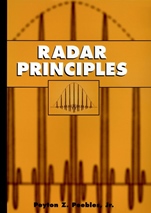
Radar Principles
ISBN 9780471252054
Autor: Peyton Z. Peebles
Wydawca: Wiley
Dostępność: 3-6 tygodni
Cena: 1 080,45 zł
Przed złożeniem zamówienia prosimy o kontakt mailowy celem potwierdzenia ceny.
ISBN13: |
9780471252054 |
ISBN10: |
0471252050 |
Autor: |
Peyton Z. Peebles |
Oprawa: |
Hardback |
Rok Wydania: |
1998-10-14 |
Ilość stron: |
794 |
Wymiary: |
263x187 |
Tematy: |
TJ |
A comprehensive introduction to radar principles
This volume fills a need in industry and universities for a comprehensive introductory text on radar principles. Well–organized and pedagogically driven, this book focuses on basic and optimum methods of realizing radar operations, covers modern applications, and provides a detailed, sophisticated mathematical treatment. Author Peyton Z. Peebles, Jr., draws on an extensive review of existing radar literature to present a selection of the most fundamental topics. He clearly explains general principles, such as wave propagation and signal theory, before advancing to more complex topics involving aspects of measurement and tracking. The last chapter provides a self–contained treatment of digital signal processing, which can be explored independently. Ample teaching and self–study help is incorporated throughout, including:
∗ Numerous worked–out examples illustrating radar theory
∗ Many end–of–chapter problems
∗ Hundreds of illustrations, including system block diagrams, demonstrating how radar functions are achieved
∗ Appended review material and useful mathematical formulas
∗ An extensive bibliography and references.
Radar Principles is destined to become the standard text on radar for graduate and senior–level courses in electrical engineering departments as well as industrial courses. It is also an excellent reference for engineers who are typically required to learn radar principles on the job, and for anyone working in radar–related industries as well as in aerospace and naval research.
Spis treści:
Elementary Concepts.
Elements of Wave Propagation.
Antennas.
Radar Equation.
Radar Cross Section.
Radar Signals and Networks.
Pulse Compression with Radar Signals.
Radar Resolution.
Radar Detection.
Radar Measurements–Limiting Accuracy.
Range Measurement and Trackin
g in Radar.
Frequency (Doppler) Measurement and Tracking.
Angle Measurement and Tracking by Conical Scan.
Angle Measurement and Tracking by Monopulse.
Digital Signal Processing in Radar.
Appendices.
Bibliography.
Index.
Nota biograficzna:
PEYTON Z. PEEBLES, JR., is Professor Emeritus of Electrical and Computer Engineering at the University of Florida. His teaching, research, and industrial experience span three decades. Dr. Peebles has written more than fifty papers, mainly on radar–related topics, and a number of well–received textbooks, including Principles of Electrical Engineering; Digital Communication Systems; Probability, Random Variables, and Random Signal Principles; and Communication System Principles.
Okładka tylna:
A comprehensive introduction to radar principles
This volume fills a need in industry and universities for a comprehensive introductory text on radar principles. Well–organized and pedagogically driven, this book focuses on basic and optimum methods of realizing radar operations, covers modern applications, and provides a detailed, sophisticated mathematical treatment. Author Peyton Z. Peebles, Jr., draws on an extensive review of existing radar literature to present a selection of the most fundamental topics. He clearly explains general principles, such as wave propagation and signal theory, before advancing to more complex topics involving aspects of measurement and tracking. The last chapter provides a self–contained treatment of digital signal processing, which can be explored independently. Ample teaching and self–study help is incorporated throughout, including:
∗ Numerous worked–out examples illustrating radar theory
∗ Many end–of–chapter problems
∗ Hundreds of illustrations, including system block diagrams, demonstrating how radar functions are achieved
∗ Appended review material and useful
mathematical formulas
∗ An extensive bibliography and references.
Radar Principles is destined to become the standard text on radar for graduate and senior–level courses in electrical engineering departments as well as industrial courses. It is also an excellent reference for engineers who are typically required to learn radar principles on the job, and for anyone working in radar–related industries as well as in aerospace and naval research.
Koszyk
Książek w koszyku: 0 szt.
Wartość zakupów: 0,00 zł
Informacje


Kontakt
Gambit
Centrum Oprogramowania
i Szkoleń Sp. z o.o.
Al. Pokoju 29b/22-24
31-564 Kraków
Siedziba Księgarni
ul. Kordylewskiego 1
31-542 Kraków
+48 12 410 5991
+48 12 410 5987
+48 12 410 5989
Subskrypcje
Administratorem danych osobowych jest firma Gambit COiS Sp. z o.o. Na podany adres będzie wysyłany wyłącznie biuletyn informacyjny.
Autoryzacja płatności

Informacje na temat autoryzacji płatności poprzez PayU.

© Copyright 2012: GAMBIT COiS Sp. z o.o. Wszelkie prawa zastrzeżone.
Projekt i wykonanie: Alchemia Studio Reklamy