


Wydawcy
Katalog tematyczny
- Archeologia (109)
- Ekonomia, finanse, business (13704)
- Filozofia (1445)
- Historia (3040)
- Języki i językoznawstwo (2356)
- Lifestyle, hobby i rozrywka (475)
- Medycyna (9704)
- Nauki humanistyczne (4)
- Nauki o Ziemi i środowisku (2638)
- Nauki ścisłe (20412)
- Nauki społeczne (8486)
- Nauki techniczne (13450)
- Prawo (1696)
- Publikacje informacyjne i interdyscyplinarne (1288)
- Religia i wierzenia (917)
- Technika komputerowa (4067)
- Zdrowie, relacje międzyludzkie i rozwój osobisty (657)





Informacje szczegółowe o książce
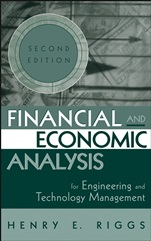
Financial and Economic Analysis for Engineering and Technology Management
ISBN 9780471227175
Autor: Henry E. Riggs
Wydawca: Wiley
Dostępność: 3-6 tygodni
Cena: 746,55 zł
Przed złożeniem zamówienia prosimy o kontakt mailowy celem potwierdzenia ceny.
ISBN13: |
9780471227175 |
ISBN10: |
047122717X |
Autor: |
Henry E. Riggs |
Oprawa: |
Hardback |
Rok Wydania: |
2004-03-16 |
Numer Wydania: |
2nd Edition |
Ilość stron: |
432 |
Wymiary: |
245x165 |
Tematy: |
KF |
Expert guidance for fiscally responsible engineering and technology managers
Written for practicing project engineers, students, and technical managers with no previous background in accounting or finance, Financial and Economic Analysis for Engineering and Technology Management, Second Edition provides a thorough grounding in accounting and introductory finance to help make better financial decisions in the workplace.
This thoroughly updated Second Edition is an accessible self–study guide and text that helps engineers extract important meaning from financial statements and accounting records, ask insightful questions, engage in thoughtful debate about accounting and financial issues, and make informed decisions that benefit their companies. Offering a rigorous background in accounting–including balance sheets, income statements, and cash flow statements–this valuable guide builds on this foundation to address financial markets and corporate finance, including capital investment analysis, and managerial and cost accounting.
Financial and Economic Analysis for Engineering and Technology Management, Second Edition features:New material on NPV, IRR, and the link between financial accounting and financial managementKey accounting procedures and analytical techniques explained in jargon–free languageDozens of discussion questions and practice problemsReal–life case studies with an available solutions manual
Spis treści:
1. INTRODUCTION: WHY KEEP SCORE?
Users of this Book.
Scorekeeping.
Definition of Accounting.
Limitations of Accounting Information.
Audiences for Accounting Information.
Different Messages for Different Audiences.
Accounting in the World of Business.
Accounting in Nonprofit and Governmental Organizations.
Useful Nonaccounting Information.
Importance of Personal Motivations.
Summary.
New Terms.
Exercises.2. Accounting Framework: The Concept of Value.
Accounting Equation.
How Is Owners’ Equity Created?
Valuation Methods.
Valuing a Loan or Note.
Valuing Common Stock Securities.
Calculating Time–Adjusted Values.
Valuing Personal and Company Assets.
Choosing Among Valuation Methods.
Challenge of Alternative Valuation Methods.
Dominance of the Cost Value Method.
Summary.
New Terms.
Appendix 2A: Interest Tables for Calculating Time–Adjusted Values (Present Worth).
Exercises.
3. Financial Position: The Balance Sheet.
Key Accounting Reports.
Features of the Balance Sheet.
More Accounting Definitions and Conventions.
Summary.
New Terms.
Exercises.
4. Financial Performance: The Income Statement.
Definition of Revenue, Sales, and Expenses.
Statement Format.
Recording Sales Transactions.
Operating Expenses.
Accounting Period.
When Is Income Earned and When Are Expenses Incurred?
Accrual Concept.
Example: Accounting for a Full Period.
Summary.
New Terms.
Exercises.
5. Cash Flow Statement.
Why a Cash Flow Statement?
Sources and Uses of Cash.
Example: Metcalfe Company.
Interpretation.
Other Examples.
Summary.
New Terms.
Exercises.
6. Principles, Rules, and Mechanics of Financial Accounting.
A Brief Review.
Principles.
Specific Rules.
Role of the CPA Auditor.
How Good Are These Principles and Rules?
Income Taxes and Accounting Rules.
Accounting Mechanics.
Chart of Accounts.
Three Key Elements of Accounting Systems.
Accounting Cycle.
Summary.
New Terms.
Exercises.
7. Further Refinements in Valuation.
Prepaids and Accruals.
Reminder: Principle of Materiality.
Liabilities Created by Today’s Operations.
Accounting for Accounts Receivable.
Accounting for Inventory.
Accounting for Price–Level Changes.
Accounting for Currency
Fluctuations.
Exceptions to the Accrual Concept and the Realization Principle.
Summary.
New Terms.
Exercises.
8. Accounting for Long–Term Assets.
Valuing Fixed Assets.
Income Tax Considerations.
Accounting for Other Long–Term Assets.
Summary.
New Terms.
Exercises.
9. What Can Financial Statements Tell Us?
Ratio Analysis.
Categories of Ratios.
Interpreting Ratios.
Linkage Among Operating Ratios.
Summary.
New Terms.
Exercises.
10. Accounting and Financial Markets.
Types of Securities.
Markets.
Investment Ratios.
Interpreting Investment Ratios.
Designing a Capital Structure.
Upside and Downside of Debt Leverage.
Introduction to the Cost of Capital.
Summary.
New Terms.
Exercises.
11. Digging Deeper.
Framework for Financial Statement Analysis.
‘‘Cooking the Books’’.
Summary.
New Terms.
Exercises.
12. Financial Markets and Capital Investment Decisions.
Concept of a ‘‘Hurdle Rate’’.
Weighted–Average Cost of Capital.
Calculating Returns.
Decision Criteria.
Some Everyday Applications of These Techniques.
Adjusting for Risk.
Adjusting for Inflation.
Summary.
New Terms.
Exercises.
13. Analyzing Manufacturing Costs: Introduction to Cost Accounting.
What Questions? Why? For Whom?
Reminder: Product and Period Expenses.
Understanding the Cost of Goods Sold.
Challenge: Accounting for Indirect Costs.
Historical Perspective.
Activity–Based Costing.
Costing Joint Products and By–products.
Cost Accounting in Other Functions and Industries.
Summary.
New Terms.
Appendix 13A: Variable and Full–Absorption Costing.
Appendix 13B: Standard Cost Accounting.
Exercises—Appendix 13A.
Exercises—Appendix 13B.
14. Analyzing Other Operating Costs and Decisions.
Example
s of Operating Decisions.
Importance of Framing Alternatives.
Differential Cash Flows.
Recap of Fixed and Variable Costs.
Pervasiveness of Fixed Costs.
Challenges in Determining Differential Cash Flows.
Interrelationships Among Volume, Price, Cost, and Profit.
Operating Leverage.
Summary.
New Terms.
Exercises.
15. Budgeting and Forecasting.
Guidelines for Budgeting.
Responsibility Accounting.
Recap of the Reasons to Budget.
Analyzing Performance: Budget Versus Actual.
Interpreting Variance Balances.
Flexible Budgeting.
Human Behavior Considerations.
Other Types of Budgets.
Pro Forma Financial Statements.
Cash Budgeting.
Summary.
New Terms.
Exercises.
INDEX.
Nota biograficzna:
HENRY E. RIGGS is the founding president of Keck Graduate Institute of Applied Life Sciences, a member of The Claremont Colleges and the nation’s first graduate school dedicated solely to preparing students for professional careers in life science—based organizations. He is the author of several books, including Managing High–Technology Companies.
Okładka tylna:
Expert guidance for fiscally responsible engineering and technology managers
Written for practicing project engineers, students, and technical managers with no previous background in accounting or finance, Financial and Economic Analysis for Engineering and Technology Management, Second Edition provides a thorough grounding in accounting and introductory finance to help make better financial decisions in the workplace.
This thoroughly updated Second Edition is an accessible self–study guide and text that helps engineers extract important meaning from financial statements and accounting records, ask insightful questions, engage in thoughtful debate about accounting and financial issues, and make informed decisions that benefit their companies. Offering a rigorous background
Koszyk
Książek w koszyku: 0 szt.
Wartość zakupów: 0,00 zł
Informacje


Kontakt
Gambit
Centrum Oprogramowania
i Szkoleń Sp. z o.o.
Al. Pokoju 29b/22-24
31-564 Kraków
Siedziba Księgarni
ul. Kordylewskiego 1
31-542 Kraków
+48 12 410 5991
+48 12 410 5987
+48 12 410 5989
Subskrypcje
Administratorem danych osobowych jest firma Gambit COiS Sp. z o.o. Na podany adres będzie wysyłany wyłącznie biuletyn informacyjny.
Autoryzacja płatności

Informacje na temat autoryzacji płatności poprzez PayU.

© Copyright 2012: GAMBIT COiS Sp. z o.o. Wszelkie prawa zastrzeżone.
Projekt i wykonanie: Alchemia Studio Reklamy