


Wydawcy
Katalog tematyczny
- Archeologia (109)
- Ekonomia, finanse, business (13704)
- Filozofia (1445)
- Historia (3040)
- Języki i językoznawstwo (2356)
- Lifestyle, hobby i rozrywka (475)
- Medycyna (9704)
- Nauki humanistyczne (4)
- Nauki o Ziemi i środowisku (2638)
- Nauki ścisłe (20412)
- Nauki społeczne (8486)
- Nauki techniczne (13450)
- Budownictwo lądowe (1045)
- Chemia przemysłowa (2258)
- Elektronika i telekomunikacja (3287)
- Energetyka (1122)
- Inne nauki stosowane (363)
- Inżynieria biochemiczna (507)
- Inżynieria transportu (232)
- Mechanika i materiały (3316)
- Nauka o środowisku (321)
- Rolnictwo (507)
- Technika, ogólnie (475)
- Prawo (1696)
- Publikacje informacyjne i interdyscyplinarne (1288)
- Religia i wierzenia (917)
- Technika komputerowa (4067)
- Zdrowie, relacje międzyludzkie i rozwój osobisty (657)





Informacje szczegółowe o książce
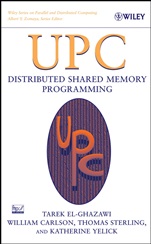
Upc: Distributed Shared Memory Programming
ISBN 9780471220480
Autor: Tarek El–Ghazawi, William Carlson, Thomas Sterling, Katherine Yelick
Wydawca: Wiley
Dostępność: 3-6 tygodni
Cena: 718,20 zł
Przed złożeniem zamówienia prosimy o kontakt mailowy celem potwierdzenia ceny.
ISBN13: |
9780471220480 |
ISBN10: |
0471220485 |
Autor: |
Tarek El–Ghazawi, William Carlson, Thomas Sterling, Katherine Yelick |
Oprawa: |
Hardback |
Rok Wydania: |
2005-07-01 |
Ilość stron: |
252 |
Wymiary: |
240x155 |
Tematy: |
TJ |
A must–have for UPC programmers and applications developers
This publication provides an in–depth interpretation of UPC language specifications for use in highly parallel systems. With its extensive use of examples, UPC programming case studies, and illustrations, it offers new insights into developing efficient and effective UPC applications such as high–speed signal processing and pattern recognition. As an added feature, readers have access to an ftp site containing an electronic copy of the full code and can make files for all the examples given in the text.
The book provides all the information and guidance needed to use this powerful new programming language:Chapter 1 provides a quick tutorial of the major features of the UPC languageChapter 2 presents the UPC programming model and describes how shared and nonshared data are declared and usedChapter 3 covers the critically important concept of pointers in UPC, identifying the types, declarations, and usage of the various UPC pointers and how they work with arraysChapter 4 explains how data and work can be distributed in UPC such that data locality is exploited through efficient data declarations and work–sharing constructsChapter 5 provides extensive treatment of dynamic memory allocation in the shared spaceChapter 6 covers thread and data synchronization, explaining the effective mechanisms provided by UPC for mutual exclusion, barriers, and memory consistency controlChapter 7 offers programmers tools needed to write efficient applicationsChapter 8 introduces two UPC standard libraries: the collective operations library and the parallel I/O libraryAppendices feature the UPC v1.1.1 specification; UPC v1.0 collective library specifications; UPC–IO v1.0 specifications; information on how to compile and run UPC programs; and a quick UPC reference card
UPC is ubiquitous. It is support
ed on parallel computers from HP, Cray, SGI, IBM, as well as on computer clusters. This is the authoritative source for learning how to master this programming language; El–Ghazawi, Carlson, and Yelick are among the developers of UPC.
Spis treści:
Preface.
1. Introductory Tutorial.
1.1 Getting Started.
1.2 Private and Shared Data.
1.3 Shared Arrays and Affinity of Shared Data.
1.4 Synchronization and Memory Consistency.
1.5 Work Sharing.
1.6 UPC Pointers.
1.7 Summary.
Exercises.
2. Programming View and UPC Data Types.
2.1 Programming Models.
2.2 UPC Programming Model.
2.3 Shared and Private Variables.
2.4 Shared and Private Arrays.
2.5 Blocked Shared Arrays.
2.6 Compiling Environments and Shared Arrays.
2.7 Summary.
Exercises.
3. Pointers and Arrays.
3.1 UPC Pointers.
3.2 Pointer Arithmetic.
3.3 Pointer Casting and Usage Practices.
3.4 Pointer Information and Manipulation Functions.
3.5 More Pointer Examples.
3.6 Summary.
Exercises.
4. Work Sharing and Domain Decomposition.
4.1 Basic Work Distribution.
4.2 Parallel Iterations.
4.3 Multidimensional Data.
4.4 Distributing Trees.
4.5 Summary.
Exercises.
5. Dynamic Shared Memory Allocation.
5.1 Allocating a Global Shared Memory Space Collectively.
5.2 Allocating Multiple Global Spaces.
5.3 Allocating Local Shared Spaces.
5.4 Freeing Allocated Spaces.
5.5 Summary.
Exercises.
6. Synchronization and Memory Consistency.
6.1 Barriers.
6.2 Split–Phase Barriers.
6.3 Locks.
6.4 Memory Consistency.
6.5 Summary.
Exercises.
7. Performance Tuning and Optimization.
7.1 Parallel System Architectures.
7.2 Performance Issues in Parallel Programming.
7.3 Role of Compilers and Run–Time Systems.
7.4 UPC Hand Optimization.
7.5 Case Studies.
7.6 Summary.
Exercises.
8. UPC Libraries.
8.1 UPC Collective Library.
8.2 UPC–IO L
ibrary.
8.3 Summary.
References.
Appendix A: UPC Language Specifications, v1.1.1.
Appendix B: UPC Collective Operations Specifications, v1.0.
Appendix C: UPC–IO Specifications, v1.0.
Appendix D: How to Compile and Run UPC Programs.
Appendix E: Quick UPC Reference.
Index.
Nota biograficzna:
TAREK EL–GHAZAWI, PHD, is Professor, Electrical and Computer Engineering Department, The George Washington University. His research interests include high–performance computing, computer architecture, reconfigurable computing, embedded systems, and experimental performance.
WILLIAM CARLSON, PHD, is affiliated with the IDA Center for Computing Sciences. His research interests include performance evaluation of advanced computer architectures, operating systems, languages, and computers for parallel and distributed systems.
THOMAS STERLING, PHD, is a professor at Caltech and its Jet Propulsion Laboratory. His research interests include parallel computing architecture, cluster computing, petaflop computing, and systems software and evaluation.
KATHERINE YELICK, PHD, is Professor of Computer Science, University of California, Berkeley. Her research interests include parallel computing, memory hierarchy optimizations, programming languages, and compilers.
Okładka tylna:
A must–have for UPC programmers and applications developers
This publication provides an in–depth interpretation of UPC language specifications for use in highly parallel systems. With its extensive use of examples, UPC programming case studies, and illustrations, it offers new insights into developing efficient and effective UPC applications such as high–speed signal processing and pattern recognition. As an added feature, readers have access to an ftp site containing an electronic copy of the full code and can make files for all the examples given in the text.
The book provide
s all the information and guidance needed to use this powerful new programming language:Chapter 1 provides a quick tutorial of the major features of the UPC languageChapter 2 presents the UPC programming model and describes how shared and nonshared data are declared and usedChapter 3 covers the critically important concept of pointers in UPC, identifying the types, declarations, and usage of the various UPC pointers and how they work with arraysChapter 4 explains how data and work can be distributed in UPC such that data locality is exploited through efficient data declarations and work–sharing constructsChapter 5 provides extensive treatment of dynamic memory allocation in the shared spaceChapter 6 covers thread and data synchronization, explaining the effective mechanisms provided by UPC for mutual exclusion, barriers, and memory consistency controlChapter 7 offers programmers tools needed to write efficient applicationsChapter 8 introduces two UPC standard libraries: the collective operations library and the parallel I/O libraryAppendices feature the UPC v1.1.1 specification; UPC v1.0 collective library specifications; UPC–IO v1.0 specifications; information on how to compile and run UPC programs; and a quick UPC reference card
UPC is ubiquitous. It is supported on parallel computers from HP, Cray, SGI, IBM, as well as on computer clusters. This is the authoritative source for learning how to master this programming language; El–Ghazawi, Carlson, and Yelick are among the developers of UPC.
Koszyk
Książek w koszyku: 0 szt.
Wartość zakupów: 0,00 zł
Informacje


Kontakt
Gambit
Centrum Oprogramowania
i Szkoleń Sp. z o.o.
Al. Pokoju 29b/22-24
31-564 Kraków
Siedziba Księgarni
ul. Kordylewskiego 1
31-542 Kraków
+48 12 410 5991
+48 12 410 5987
+48 12 410 5989
Subskrypcje
Administratorem danych osobowych jest firma Gambit COiS Sp. z o.o. Na podany adres będzie wysyłany wyłącznie biuletyn informacyjny.
Autoryzacja płatności

Informacje na temat autoryzacji płatności poprzez PayU.

© Copyright 2012: GAMBIT COiS Sp. z o.o. Wszelkie prawa zastrzeżone.
Projekt i wykonanie: Alchemia Studio Reklamy