


Wydawcy
Katalog tematyczny
- Archeologia (109)
- Ekonomia, finanse, business (13704)
- Filozofia (1445)
- Historia (3040)
- Języki i językoznawstwo (2356)
- Lifestyle, hobby i rozrywka (475)
- Medycyna (9704)
- Chirurgia (272)
- Inne gałęzie medycyny (1871)
- Medycyna kliniczna (4187)
- Medycyna niekonwencjonalna (14)
- Medycyna przedkliniczna (269)
- Medycyna, ogólnie (1740)
- Historia medycyny (3)
- Lekarze, sprawy zawodowe (8)
- Medycyna, aspekty prawne (10)
- Służba zdrowia (36)
- Wyposażenie medyczne (157)
- Zdrowie publiczne (460)
- Medyczne służby pomocnicze (745)
- Studia medyczne (16)
- Weterynaria (548)
- Nauki humanistyczne (4)
- Nauki o Ziemi i środowisku (2638)
- Nauki ścisłe (20412)
- Nauki społeczne (8486)
- Nauki techniczne (13450)
- Prawo (1696)
- Publikacje informacyjne i interdyscyplinarne (1288)
- Religia i wierzenia (917)
- Technika komputerowa (4067)
- Zdrowie, relacje międzyludzkie i rozwój osobisty (657)





Informacje szczegółowe o książce
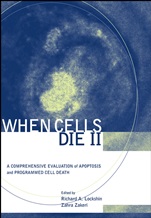
When Cells Die II: A Comprehensive Evaluation of Apoptosis and Programmed Cell Death
ISBN 9780471219477
Autor: Richard A. Lockshin, Zahra Zakeri
Wydawca: Wiley
Dostępność: 3-6 tygodni
Cena: 883,05 zł
Przed złożeniem zamówienia prosimy o kontakt mailowy celem potwierdzenia ceny.
ISBN13: |
9780471219477 |
ISBN10: |
0471219479 |
Autor: |
Richard A. Lockshin, Zahra Zakeri |
Oprawa: |
Hardback |
Rok Wydania: |
2004-01-20 |
Ilość stron: |
568 |
Wymiary: |
242x162 |
Tematy: |
MB |
Cell death is fast becoming one of the most dynamic areas of biological research–involving as it does the study of apoptosis and programmed cell death and the role these phenomena play in development and homeostasis on the one hand, and aging and disease on the other. The profound implications for medicine and agriculture from the manipulation of these processes have spawned a deluge of research papers, articles, approaches, and methods–making it difficult for scientists to get an overview of the field.
When Cells Die II: A Comprehensive Evaluation of Apoptosis and Programmed Cell Death offers the most thorough, cutting–edge coverage of this field since publication of the acclaimed first edition. Leading international researchers present an up–to–date yet accessible survey ranging from the history of cell death science to its modern methodology. Extensively revised to include major advances in research, this new edition features relevant discussion of:The impact of genomics and proteomicsGene therapy and pharmacogeneticsThe role of mitochondriaCaspase–independent and non–apoptotic cell deathEvolution of mechanisms
With the manipulation of programmed cell death in clinical situations now in the foreseeable future, When Cells Die II also addresses the role of apoptosis in specific organ systems–the immune system, nervous system, and gastrointestinal tract–as well as different disease states, including viral infection, cancer, and myocardial infarct.
Expertly edited to provide detailed cross–referencing, consistency of style, and a logical progression of topics, When Cells Die II is the definitive resource for understanding current cell death science. It will prove an invaluable text for advanced undergraduate, graduate, and medical students, postdoctoral fellows, scientists, and clinicians in cell biology, immunology, developmental biology, neuroscie
nce, and cancer research.
Spis treści:
Contributors.
Preface.
SECTION I: CELL DEATH ORIGIN AND PROGRESSION.
1. Introduction (R. Lockshin & Z. Zakeri).
SECTION II: BIOLOGICAL ROLE OF CELL DEATH IN DEVELOPMENT AND HOMEOSTASIS.
2. Cell Death: Shaping an Embryo (Z. Zakeri & R. Lockshin).
3. Cell Death in Dictyostelium: Assessing a Genetic Approach (J. Levraud, et al.).
4. Programmed Cell Death in Drosophila Melanogaster (L. Dorstyn & S. Kumar).
5. Cell Death in Plant Development and Defense (R. Mittler & A. Cheung).
6. Regulation of Apoptosis by Extracellular Matrix during Postembryonic Development in Xenopus Laevis (A. Ishizuya–Oka, et al.).
7. Apoptosis in the Immune System (A. Brás, et al.).
8. Cell Death in Neuronal Development and Maintenance (A. Tolkovsky, et al.).
9. Cell Turnover: Intestines and Other Tissues (J. Wilson & C. Potten).
10. Cell Death, Aging Phenotypes, and Models of Premature Aging (H. Warner).
SECTION III: HOW CELL DEATH IS CARRIED OUT.
11. Survival Factors (D. Vaux).
12. Caspase–Independent and Autophagic Programmed Cell Death (W. Bursch, et al.).
13. The Recognition and Engulfment of Apoptotic Cells by Phagocytes (R. Birge).
14. Cell Cycle Genes: pRb and p53 (N. Sang & A. Giordano).
15. Mitochondria and Oxidation in the Regulation of the Cell Death (J. Robertson, et al.).
SECTION IV: DEREGULATION OF CELL DEATH IN DISEASE AND FUTURE INTERVENTION.
16. The Use of Proteomics to Identify and Characterize Cell Death Proteins (X. Saelens, et al.).
17. Cell Death in Viral Infections (Y. Chen, et al.).
18. Cell Death in Cancer and Cancer Therapy (S. Fulda & K. Debatin).
19. The Role of Apoptosis in Myocardial Infrarction and Heart Failure (K. Mani, et al.).
Index.
Okładka tyln
a:
Cell death is fast becoming one of the most dynamic areas of biological research–involving as it does the study of apoptosis and programmed cell death and the role these phenomena play in development and homeostasis on the one hand, and aging and disease on the other. The profound implications for medicine and agriculture from the manipulation of these processes have spawned a deluge of research papers, articles, approaches, and methods–making it difficult for scientists to get an overview of the field.
When Cells Die II: A Comprehensive Evaluation of Apoptosis and Programmed Cell Death offers the most thorough, cutting–edge coverage of this field since publication of the acclaimed first edition. Leading international researchers present an up–to–date yet accessible survey ranging from the history of cell death science to its modern methodology. Extensively revised to include major advances in research, this new edition features relevant discussion of:The impact of genomics and proteomicsGene therapy and pharmacogeneticsThe role of mitochondriaCaspase–independent and non–apoptotic cell deathEvolution of mechanisms
With the manipulation of programmed cell death in clinical situations now in the foreseeable future, When Cells Die II also addresses the role of apoptosis in specific organ systems–the immune system, nervous system, and gastrointestinal tract–as well as different disease states, including viral infection, cancer, and myocardial infarct.
Expertly edited to provide detailed cross–referencing, consistency of style, and a logical progression of topics, When Cells Die II is the definitive resource for understanding current cell death science. It will prove an invaluable text for advanced undergraduate, graduate, and medical students, postdoctoral fellows, scientists, and clinicians in cell biology, immunology, developmental biology,
neuroscience, and cancer research.
Koszyk
Książek w koszyku: 0 szt.
Wartość zakupów: 0,00 zł
Informacje


Kontakt
Gambit
Centrum Oprogramowania
i Szkoleń Sp. z o.o.
Al. Pokoju 29b/22-24
31-564 Kraków
Siedziba Księgarni
ul. Kordylewskiego 1
31-542 Kraków
+48 12 410 5991
+48 12 410 5987
+48 12 410 5989
Subskrypcje
Administratorem danych osobowych jest firma Gambit COiS Sp. z o.o. Na podany adres będzie wysyłany wyłącznie biuletyn informacyjny.
Autoryzacja płatności

Informacje na temat autoryzacji płatności poprzez PayU.

© Copyright 2012: GAMBIT COiS Sp. z o.o. Wszelkie prawa zastrzeżone.
Projekt i wykonanie: Alchemia Studio Reklamy