


Wydawcy
Katalog tematyczny
- Archeologia (109)
- Ekonomia, finanse, business (13704)
- Filozofia (1445)
- Historia (3040)
- Języki i językoznawstwo (2356)
- Lifestyle, hobby i rozrywka (475)
- Medycyna (9704)
- Nauki humanistyczne (4)
- Nauki o Ziemi i środowisku (2638)
- Nauki ścisłe (20412)
- Astronomia (294)
- Biologia (5119)
- Chemia (6540)
- Chemia analityczna (361)
- Chemia fizyczna (346)
- Chemia nieorganiczna (137)
- Chemia organiczna (535)
- Krystalografia (27)
- Minerologia (46)
- Fizyka (3309)
- Matematyka (4574)
- Nauki ścisłe, ogólnie (503)
- Nauki społeczne (8486)
- Nauki techniczne (13450)
- Prawo (1696)
- Publikacje informacyjne i interdyscyplinarne (1288)
- Religia i wierzenia (917)
- Technika komputerowa (4067)
- Zdrowie, relacje międzyludzkie i rozwój osobisty (657)





Informacje szczegółowe o książce
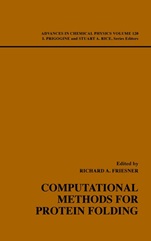
Computational Methods for Protein Folding
ISBN 9780471209553
Autor: Richard A. Friesner, Ilya Prigogine, Stuart A. Rice
Wydawca: Wiley
Dostępność: 3-6 tygodni
Cena: 1 552,95 zł
Przed złożeniem zamówienia prosimy o kontakt mailowy celem potwierdzenia ceny.
ISBN13: |
9780471209553 |
ISBN10: |
0471209554 |
Autor: |
Richard A. Friesner, Ilya Prigogine, Stuart A. Rice |
Oprawa: |
Hardback |
Rok Wydania: |
2002-01-16 |
Ilość stron: |
544 |
Wymiary: |
234x161 |
Tematy: |
PN |
Since the first attempts to model proteins on a computer began almost thirty years ago, our understanding of protein structure and dynamics has dramatically increased. Spectroscopic measurement techniques continue to improve in resolution and sensitivity, allowing a wealth of information to be obtained with regard to the kinetics of protein folding and unfolding, and complementing the detailed structural picture of the folded state. Concurrently, algorithms, software, and computational hardware have progressed to the point where both structural and kinetic problems may be studied with a fair degree of realism. Despite these advances, many major challenges remain in understanding protein folding at both the conceptual and practical levels.
Computational Methods for Protein Folding seeks to illuminate recent advances in computational modeling of protein folding in a way that will be useful to physicists, chemists, and chemical physicists. Covering a broad spectrum of computational methods and practices culled from a variety of research fields, the editors present a full range of models that, together, provide a thorough and current description of all aspects of protein folding. A valuable resource for both students and professionals in the field, the book will be of value both as a cutting–edge overview of existing information and as a catalyst for inspiring new studies.
Computational Methods for Protein Folding is the 120h volume in the acclaimed series Advances in Chemical Physics, a compilation of scholarly works dedicated to the dissemination of contemporary advances in chemical physics, edited by Nobel Prize–winner Ilya Prigogine.
Spis treści:
Statistical Analysis of Protein Folding Kinetics (A. Dinner, et al).
Insights into Specific Problems in Protein Folding Using Simple Concepts (D. Thirumalai, et al.).
Protein Recognition by Sequence–to–Structure Fitness: Bridging Efficiency and Capacity of Threading
Models (J. Meller and R. Elber).
A Unified Approach to the Prediction of Protein Structure and Function (J. Skolnick and A. Kolinski).
Knowledge–Based Prediction of Protein Tertiary Structure (P. L′Heureux, et al.).
Ab Initio Protein Structure Prediction Using a Size–Dependent Tertiary Folding Potential (V. Eyrich, et al.).
Deterministic Global Optimization and Ab Initio Approaches for the Structure Prediction of Polypeptides, Dynamics of Protein Folding, and Protein–Protein Interactions (J. Klepeis, et al.).
Detecting Native Protein Folds Among Large Decoy Sites with the OPLS All–Atom Potential and the Surface Generalized Born Solvent Model (A. Wallqvist, et al.).
Author Index.
Subject Index.
Okładka tylna:
Since the first attempts to model proteins on a computer began almost thirty years ago, our understanding of protein structure and dynamics has dramatically increased. Spectroscopic measurement techniques continue to improve in resolution and sensitivity, allowing a wealth of information to be obtained with regard to the kinetics of protein folding and unfolding, and complementing the detailed structural picture of the folded state. Concurrently, algorithms, software, and computational hardware have progressed to the point where both structural and kinetic problems may be studied with a fair degree of realism. Despite these advances, many major challenges remain in understanding protein folding at both the conceptual and practical levels.
Computational Methods for Protein Folding seeks to illuminate recent advances in computational modeling of protein folding in a way that will be useful to physicists, chemists, and chemical physicists. Covering a broad spectrum of computational methods and practices culled from a variety of research fields, the editors present a full range of models that, together, provide a thorough and current description of all aspects of protein folding. A valuabl
e resource for both students and professionals in the field, the book will be of value both as a cutting–edge overview of existing information and as a catalyst for inspiring new studies.
Computational Methods for Protein Folding is the 120h volume in the acclaimed series Advances in Chemical Physics, a compilation of scholarly works dedicated to the dissemination of contemporary advances in chemical physics, edited by Nobel Prize–winner Ilya Prigogine.
Koszyk
Książek w koszyku: 0 szt.
Wartość zakupów: 0,00 zł
Informacje


Kontakt
Gambit
Centrum Oprogramowania
i Szkoleń Sp. z o.o.
Al. Pokoju 29b/22-24
31-564 Kraków
Siedziba Księgarni
ul. Kordylewskiego 1
31-542 Kraków
+48 12 410 5991
+48 12 410 5987
+48 12 410 5989
Subskrypcje
Administratorem danych osobowych jest firma Gambit COiS Sp. z o.o. Na podany adres będzie wysyłany wyłącznie biuletyn informacyjny.
Autoryzacja płatności

Informacje na temat autoryzacji płatności poprzez PayU.

© Copyright 2012: GAMBIT COiS Sp. z o.o. Wszelkie prawa zastrzeżone.
Projekt i wykonanie: Alchemia Studio Reklamy