


Wydawcy
Katalog tematyczny
- Archeologia (109)
- Ekonomia, finanse, business (13704)
- Filozofia (1445)
- Historia (3040)
- Języki i językoznawstwo (2356)
- Lifestyle, hobby i rozrywka (475)
- Medycyna (9704)
- Nauki humanistyczne (4)
- Nauki o Ziemi i środowisku (2638)
- Nauki ścisłe (20412)
- Astronomia (294)
- Biologia (5119)
- Chemia (6540)
- Chemia analityczna (361)
- Chemia fizyczna (346)
- Chemia nieorganiczna (137)
- Chemia organiczna (535)
- Krystalografia (27)
- Minerologia (46)
- Fizyka (3309)
- Matematyka (4574)
- Nauki ścisłe, ogólnie (503)
- Nauki społeczne (8486)
- Nauki techniczne (13450)
- Prawo (1696)
- Publikacje informacyjne i interdyscyplinarne (1288)
- Religia i wierzenia (917)
- Technika komputerowa (4067)
- Zdrowie, relacje międzyludzkie i rozwój osobisty (657)





Informacje szczegółowe o książce
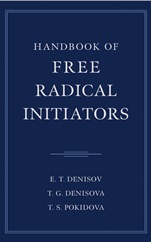
Handbook of Free Radical Initiators
ISBN 9780471207535
Autor: E. T. Denisov, T. G. Denisova, T. S. Pokidova
Wydawca: Wiley
Dostępność: 3-6 tygodni
Cena: 2 499,00 zł
Przed złożeniem zamówienia prosimy o kontakt mailowy celem potwierdzenia ceny.
ISBN13: |
9780471207535 |
ISBN10: |
0471207535 |
Autor: |
E. T. Denisov, T. G. Denisova, T. S. Pokidova |
Oprawa: |
Hardback |
Rok Wydania: |
2003-04-15 |
Ilość stron: |
904 |
Wymiary: |
239x160 |
Tematy: |
PN |
A comprehensive, one–of–a–kind reference on free radical initiators
Free radical initiators–chemical molecules which easily decompose into free radicals–serve as reactive intermediates in synthetic methodologies such as organic and polymer synthesis as well as in technological processes, oligomerization, network formation, and kinetic research. The Handbook of Free Radical Initiators presents an up–to–date account of the physicochemical data on radical initiators and reactions of radical generation.
The authors divide their study into three sections. Part I is devoted to initiators of free radicals; coverage includes different mechanisms of decomposition of initiators, the cage effect that accompanies decomposition in liquids and solid polymers, and methods of study of initiator decomposition. Part II addresses bimolecular reactions of free radical generation, including those of retrodisproportionation, of paraffins and olefins with haloid molecules, and bimolecular and trimolecular reactions of RH with dioxygen, ozone, and nitrogen dioxide. Part III collects data on the mechanism and rate constants of reactions of free radicals formed from initiators. Individual chapters include:Dialkyl Peroxides and HydroperoxidesDiacyl Peroxides, Peresters, and Organic PolyoxidesAzo–CompoundsBimolecular Reactions of Free Radical Generation by Ozone, Dioxygen, Hydroperoxides, and Haloid MoleculesFree Radical Abstraction ReactionsFree Radical Addition ReactionsFree Radical Recombination and Disproportoination Reactions
Professionals and academic researchers in chemical engineering, pharmaceuticals, biotechnology, plastics, and rubbers will find the Handbook of Free Radical Initiators to be a distinguished, vital resource.
Spis treści:
Preface.
Symbols and Abbreviations.
PART I: INITIATORS.
Chapter 1. Mechanism of Decomposition of Initiators.
1.1 Int
roduction.
1.2 Nonconcerted Unimolecular Decomposition.
1.3 Concerted Fragmentation of Initiators.
1.4 Anchimerically Assisted Decomposition of Peroxides.
1.5 Decay of Initiators to Free Radicals and Molecular Products.
1.6 Chain Decomposition of Initiators.
References.
Chapter 2. Cage Effect.
2.1 Introduction.
2.2 Experimental Evidence for the Cage Effect.
2.3 Mechanistic Schemes of Cage Effect.
2.4 Cage Effect in Solid Polymers.
References.
Chapter 3. Methods of Study of Initiator Decomposition and Free Radical Generation.
3.1 Kinetic Decay of Initiator (KDI).
3.2 Kinetic Product Formation (KPF).
3.3 Acceptors of Free Radicals (AFR).
3.4 Kinetic Chain Initiated Reaction (KIR).
3.5 Chemiluminescence (CL) Method.
References.
Chapter 4. Dialkyl Peroxides and Hydroperoxides.
4.1 Dialkyl Peroxides.
4.2 Hydroperoxides and Peracids.
References.
Chapter 5. Diacyl Peroxides, Peroxy Esters, Polyatomic, and Organometallic Peroxides.
5.1 Diacyl Peroxides.
5.2 Peroxy Esters.
5.3 Decomposition of Polyatomic Peroxides.
5.4 Organometallic Peroxides.
References.
Chapter 6. Organic Polyoxides.
6.1 Dialkyl Trioxides.
6.2 Hydrotrioxides.
6.3 Tetroxides.
References.
Chapter 7. Azo Compounds.
7.1 Synthesis and Structure of Azo Compounds.
7.2 Thermochemistry of Azo Compounds.
7.3 Decomposition of Azo Compounds.
References.
Chapter 8. Compounds with Weak C–C, N–N, C–N and N–O Bonds.
8.1 Polyphenylhydrocarbons.
8.2 Substituted Hydrazines.
8.3 Alkoxyamines.
8.4 Nitro Compounds.
8.5 Nitrates and Nitrites.
8.6 Disulfides and Polysulfides.
8.7 Organometallic Compounds.
References.
PART II: BIMOLECULAR REACTIONS OF FREE RADICAL GENERATION.
Chapter 9. Parabolic Model of Bimolecular Homolytic Reaction.
9.1 Introduction.
9.2 Principles for the Parabolic Model of Bimolecular Homolytic Reaction.
9.3 Parameters of Bimo
lecular Homolytic Reaction in the Parabolic Model.
References.
Chapter 10. Bimolecular and Trimolecular Reactions of Free Radical Generation by Dioxygen.
10.1 Reaction of Dioxygen with C–H Bonds of Organic Compounds.
10.2 Reaction of Dioxygen with the Double Bond of Olefins.
10.3 Trimolecular Reaction of Radical Initiation by Dioxygen.
References.
Chapter 11. Bimolecular Reactions of Free Radical Generation by Ozone.
11.1 Initiation of Radicals by Ozone Reactions.
11.2 Chain Reactions of Ozone Decomposition.
References.
Chapter 12. Bimolecular Reactions of Hydroperoxides with Free Radical Generation.
12.1 Bimolecular Decomposition of Hydroperoxides.
12.2 Bimolecular Reactions of Hydroperoxides with a π–Bond to Olefins.
12.3 Bimolecular Reactions of Hydroperoxides with C–H, N–H, and O–H Bonds of Organic Compounds.
12.4 Acid Catalysis for Homolytic Reactions of Hydroperoxides.
12.5 Reaction of Peroxides with Amines.
References.
Chapter 13. Free Radical Generation by Olefins.
13.1 Reactions of Retrodisproportionation.
13.2 Chain Initiation in Thermal Radical Polymerization.
References.
Chapter 14. Free Radicals Generation by Haloid Molecules and Nitrogen Dioxide.
14.1 Reactions of Fluorine Compounds.
14.2 Reactions of Dichlorine and Other Chlorine Compounds.
14.3 Initiation by Nitrogen Dioxide.
References.
Chapter 15. Free Radical Generation by Reactions of Ions with Molecules.
15.1 Decomposition of Hydrogen Peroxide Catalyzed by Transition Metal Ions.
15.2 Catalysis by Ions and Complexes of Transition Metals in Liquid–Phase Oxidation of Organic Compounds.
15.3 Reactions of Free Radicals with Transition Metal Ions.
15.4 Oxidation of Transition Metal Ions by Dioxygen.
15.5 Oxidation of Organic Compounds by Transition Metal Ions.
15.6 Reduction of Peroxides by Radical Anions.
References.
PART III: REACTIONS OF FREE RADICALS.Chapter 16. Isomerization and Decomposition of Free Radicals.
16.1 Intramolecular Abstraction of Hydrogen Atom.
16.2 Cyclization of Free Radicals.
16.3 Decyclization of Cyclic Radicals.
16.4 Fragmentation of Free Radicals.
References.
Chapter 17. Free Radical Abstraction Reactions.
17.1 Classification of Radical Abstraction Reactions.
17.2 Enthalpy of Reaction.
17.3 Force Constants of Reacting Bonds.
17.4 Triplet Repulsion.
17.5 Electron Affinity of Atoms in Reaction Center.
17.6 Repulsion of Atoms Forming the Reaction Center.
17.7 Influence of π–Bonds in the Vicinity of the Reaction Center.
17.8 Steric Effect.
17.9 Polar Effect in Radical Reactions.
17.10 Effect of Multidipole Interaction.
17.11 Solvating Effect.
References.
Chapter 18. Free Radical Reactions of Hydrogen Transfer and Substitution.
18.1 Reactions of Hydrogen Atom Transfer from a Free Radical to a Molecule.
18.2 Free Radical Substitution Reactions.
18.3 Reaction of Peroxides with Ketyl Radicals.
References.
Chapter 19. Free Radical Addition.
19.1 Enthalpy and Entropy of Free Radical Addition.
19.2 Empirical Correlation Equations.
19.3 Quantum Chemical Calculations for the Activation Energy.
19.4 Parabolic Model of Radical Addition.
19.5 Contribution of Enthalpy for an Addition Reaction to Its Activation Energy.
19.6 Force Constants of Reacting Bonds.
19.7 Triplet Repulsion in the Transition State of Addition Reactions.
19.8 Influence of Neighboring π–Bonds on the Activation Energy of Radical Addition.
19.9 Role of the Radius of the Atom Bearing the Free Valence.
19.10 Interaction of Two Polar Groups.
19.11 Multidipole Interaction in Addition Reactions.
19.12 Steric Hindrance.
19.13 Addition of Alkyl Radicals to Dioxygen.
References.
Chapter 20. Recombination and Disproportionation of Free Radicals.
20.1 Alkyl Radicals.
20.2 Macroradicals.
20.3 Peroxyl
Koszyk
Książek w koszyku: 0 szt.
Wartość zakupów: 0,00 zł
Informacje


Kontakt
Gambit
Centrum Oprogramowania
i Szkoleń Sp. z o.o.
Al. Pokoju 29b/22-24
31-564 Kraków
Siedziba Księgarni
ul. Kordylewskiego 1
31-542 Kraków
+48 12 410 5991
+48 12 410 5987
+48 12 410 5989
Subskrypcje
Administratorem danych osobowych jest firma Gambit COiS Sp. z o.o. Na podany adres będzie wysyłany wyłącznie biuletyn informacyjny.
Autoryzacja płatności

Informacje na temat autoryzacji płatności poprzez PayU.

© Copyright 2012: GAMBIT COiS Sp. z o.o. Wszelkie prawa zastrzeżone.
Projekt i wykonanie: Alchemia Studio Reklamy