


Wydawcy
Katalog tematyczny
- Archeologia (109)
- Ekonomia, finanse, business (13704)
- Filozofia (1445)
- Historia (3040)
- Języki i językoznawstwo (2356)
- Lifestyle, hobby i rozrywka (475)
- Medycyna (9704)
- Nauki humanistyczne (4)
- Nauki o Ziemi i środowisku (2638)
- Nauki ścisłe (20412)
- Nauki społeczne (8486)
- Nauki techniczne (13450)
- Budownictwo lądowe (1045)
- Chemia przemysłowa (2258)
- Elektronika i telekomunikacja (3287)
- Energetyka (1122)
- Inne nauki stosowane (363)
- Inżynieria biochemiczna (507)
- Inżynieria transportu (232)
- Mechanika i materiały (3316)
- Nauka o środowisku (321)
- Rolnictwo (507)
- Technika, ogólnie (475)
- Prawo (1696)
- Publikacje informacyjne i interdyscyplinarne (1288)
- Religia i wierzenia (917)
- Technika komputerowa (4067)
- Zdrowie, relacje międzyludzkie i rozwój osobisty (657)





Informacje szczegółowe o książce
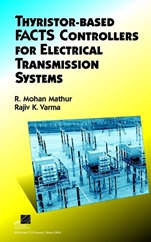
Thyristor–Based FACTS Controllers for Electrical Transmission Systems
ISBN 9780471206439
Autor: R. Mohan Mathur, Rajiv K. Varma
Wydawca: Wiley
Dostępność: 3-6 tygodni
Cena: 883,05 zł
Przed złożeniem zamówienia prosimy o kontakt mailowy celem potwierdzenia ceny.
ISBN13: |
9780471206439 |
ISBN10: |
0471206431 |
Autor: |
R. Mohan Mathur, Rajiv K. Varma |
Oprawa: |
Hardback |
Rok Wydania: |
2002-03-04 |
Ilość stron: |
528 |
Wymiary: |
245x164 |
Tematy: |
TJ |
An important new resource for the international utility market
Flexible AC Transmission System (FACTS) technology is fast becoming a mainstay of modern electrical power systems. Thyristor–based controllers such as Static Var Compensator (SVC) and Thyristor Controlled Series Capacitor (TCSC) constitute the key components of FACTS technology that have wide application potential around the world, especially in the restructured power system environment.
By integrating material from several publications in the available literature, this comprehensive reference book makes an elaborate presentation on:Operating principles, control systems, and modeling of different SVCs and TCSCControl system performance, including the influence of measurement systems, network resonances, and harmonic interactionsController design for enhancing power transfer, stability and damping, mitigating subsynchronous resonances, preventing voltage instability, etc.Controller interactions and techniques for coordinating FACTS controllersEmerging FACTS controllers–STATCOM, SSSC, and UPFC
Thyristor–based FACTS Controllers for Electrical Transmission Systems offers an in–depth discussion of both theoretical concepts and practical applications, enhanced by examples and case studies of control design and system performance. Filling the need for a comprehensive text in this area, the book will prove to be an important resource for academics, students, and practicing engineers involved in FACTS technology.
Spis treści:
1. Introduction.
1.1 Background.
1.2 Electrical Transmission Networks.
1.3 Conventional Control Mechanisms.
1.4 Flexible ac Transmission Systems (FACTS).
1.5 Emerging Transmission Networks.
2. Reactor–Power Control in Electrical Power Transmission Systems.
2.1 Reacrive Power.
2.2 Uncompensated Transmission Lines.
2.3 Passive Compensation.
2.4 Summary.<
br>3. Principles of Conventional Reactive–Power Compensators.
3.1 Introduction.
3.2 Synchronous Condensers.
3.3 The Saturated Reactor (SR).
3.4 The Thyristor–Controlled Reactor (TCR).
3.5 The Thyristor–Controlled Transformer (TCT).
3.6 The Fixed Capacitor–Thyristor–Controlled Reactor (FC–TCR).
3.7 The Mechanically Switched Capacitor–Thristor–Controlled Reactor (MSC–TCR).
3.8 The Thyristor–Switched capacitor and Reactor.
3.9 The Thyristor–Switched capacitor–Thyristor–Controlled Reactor (TSC–TCR).
3.10 A Comparison of Different SVCs.
3.11 Summary.
4. SVC Control Components and Models.
4.1 Introduction
4.2 Measurement Systems.
4.3 The Voltage Regulator.
4.4 Gate–Pulse Generation.
4.5 The Synchronizing System.
4.6 Additional Control and Protection Functions.
4.7 Modeling of SVC for Power–System Studies.
4.8 Summary.
5. Conceepts of SVC Voltage Control.
5.1 Introduction
5.2 Voltage Control.
5.3 Effect of Network Resonances on the Controller Response.
5.4 The 2nd Harmonic Interaction Between the SVC and ac Network.
5.5 Application of the SVC to Series–Compensated ac Systems.
5.6 3rd Harmonic Distortion.
5.7 Voltage–Controlled Design Studies.
5.8 Summary.
6. Applications.
6.1 Introduction.
6.2 Increase in Steady–State Power–Transfer Capacity.
6.3 Enhancement of Transient Stability.
6.4 Augmentation of Power–System Damping.
6.5 SVC Mitigation of Subsychronous Resonance (SSR).
6.6 Prevention of Voltage Instability.
6.7 Improvement of HVDC Link Performance.
6.8 Summary.
7. The Thyristor–Controlled SeriesCapacitor (TCSC).
7.1 Series Compensation.
7.2 The TCSC Controller.
7.3 Operation of the TCSC.
7.4 The TSSC.
7.5 Analysis of the TCSC.
7.6 Capability Characteristics.
7.7 Harm
onic Performance.
7.8 Losses.
7.9 Response of the TCSC.
7.10 Modeling of the TCSC.
7.11 Summary.
8. TCSC Applications.
8.1 Introduction.
8.2 Open–Loop Control.
8.3 Closed–Loop Control.
8.4 Improvement of the System–Stability Limit.
8.5 Enhancement of System Damping.
8.6 Subsynchronous Resonanace (SSR) Mitigation.
8.7 Voltage–Collapse Prevention.
8.8 TCSC Installations.
8.9 Summary.
9. Coordination of FACTS Controllers.
9.1 Introduction
9.2 Controller Interactions.
9.3 SVC–SVC Interaction.
9.4 SVC–HVDC Interaction.
9.5 SVC–TCSC Interaction.
9.6 TCSC–TCSC Interaction.
9.7 Performance Criteria for Damping–Controller Design.
9.8 Coordination of Multiple Controllers Using Linear–Control Techniques.
9.9 Coordination of Multiple Controllers using Nonlinear–Control Techniques.
9.10 Summary.
10. Emerging FACTS Controllers.
10.1 Introduction.
10.2 The STATCOM.
10.3 THE SSSC.
10.4 The UPFC.
10.5 Comparative Evaluation of Different FACTS Controllers.
10.6 Future Direction of FACTS Technology.
10.7 Summary.
Appendix A. Design of an SVC Voltage Regulator.
A.1 Study System.
A.2 Method of System Gain.
A.3 Elgen Value Analysis.
A.4 Simulator Studies.
A.5 A Comparison of Physical Simulator results With Analytical and Digital Simulator Results Using Linearized Models.
Appendix B. Transient–Stability Enhancement in a Midpoint SVC–Compensated SMIB System.
Appendix C. Approximate Multimodal decomposition Method for the Design of FACTS Controllers.
C.1 Introduction.
C.2 Modal Analysis of the ith Swing Mode,
C.3 Implications of Different Transfer Functions.
C.4 Design of the Damping Controller.
Appendix D. FACTS Terms and Definitions.
Index.
Nota biograficzna:
R. MOHAN MATHUR is Vice Pres
ident, Training Support and Services Division, Ontario Power Generation, Toronto, Canada. Until 1999 he was Dean, Faculty of Engineering Science and Professor of Electrical Engineering at the University of Western Ontario, London, Canada, where he continues to be a Professor Emeritus. For over two decades he has been engaged in research in the area of electronic controllers for power transmission systems, including ac/dc converters and active and reactive power compensators for ac transmission lines.
RAJIV K. VARMA is Professor of Electrical Engineering at Indian Institute of Technology, Kanpur, India. He was awarded the Government of India BOYSCAST Young Scientist Fellowship in 1992–93 to conduct research on FACTS at the University of Western Ontario, London, Canada. Since then he has maintained active research collaboration with researchers at the University of Western Ontario. With Wayne Litzenberger he has coedited two editions of the Annotated Bibliography of HVDC Transmission and FACTS Devices, 1994–95 and 1996–97. For preparing the Second Edition, he was awarded the Fulbright Scholarship of U.S. Educational Foundation in India to travel to the United States. His teaching and research interests include Flexible AC Transmission System and Power System Stability. He is a member of the faculty of the Department of Electrical and Computer Engineering, University of Western Ontario, London, Canada.
Okładka tylna:
An important new resource for the international utility market
Flexible AC Transmission System (FACTS) technology is fast becoming a mainstay of modern electrical power systems. Thyristor–based controllers such as Static Var Compensator (SVC) and Thyristor Controlled Series Capacitor (TCSC) constitute the key components of FACTS technology that have wide application potential around the world, especially in the restructured power system environment.
By integrating material from se
veral publications in the available literature, this comprehensive reference book makes an elaborate presentation on:Operating principles, control systems, and modeling of different SVCs and TCSCControl system performance, including the influence of measurement systems, network resonances, and harmonic interactionsController design for enhancing power transfer, stability and damping, mitigating subsynchronous resonances, preventing voltage instability, etc.Controller interactions and techniques for coordinating FACTS controllersEmerging FACTS controllers–STATCOM, SSSC, and UPFC
Thyristor–based FACTS Controllers for Electrical Transmission Systems offers an in–depth discussion of both theoretical concepts and practical applications, enhanced by examples and case studies of control design and system performance. Filling the need for a comprehensive text in this area, the book will prove to be an important resource for academics, students, and practicing engineers involved in FACTS technology.
Koszyk
Książek w koszyku: 0 szt.
Wartość zakupów: 0,00 zł
Informacje


Kontakt
Gambit
Centrum Oprogramowania
i Szkoleń Sp. z o.o.
Al. Pokoju 29b/22-24
31-564 Kraków
Siedziba Księgarni
ul. Kordylewskiego 1
31-542 Kraków
+48 12 410 5991
+48 12 410 5987
+48 12 410 5989
Subskrypcje
Administratorem danych osobowych jest firma Gambit COiS Sp. z o.o. Na podany adres będzie wysyłany wyłącznie biuletyn informacyjny.
Autoryzacja płatności

Informacje na temat autoryzacji płatności poprzez PayU.

© Copyright 2012: GAMBIT COiS Sp. z o.o. Wszelkie prawa zastrzeżone.
Projekt i wykonanie: Alchemia Studio Reklamy