


Wydawcy
Katalog tematyczny
- Archeologia (109)
- Ekonomia, finanse, business (13704)
- Filozofia (1445)
- Historia (3040)
- Języki i językoznawstwo (2356)
- Lifestyle, hobby i rozrywka (475)
- Medycyna (9704)
- Nauki humanistyczne (4)
- Nauki o Ziemi i środowisku (2638)
- Nauki ścisłe (20412)
- Nauki społeczne (8486)
- Edukacja (229)
- Kryminologia, opieka spełeczna (284)
- Obronność (10)
- Polityka (1389)
- Psychologia (777)
- Socjologia (410)
- Społeczeństwo i kultura (187)
- Nauki techniczne (13450)
- Prawo (1696)
- Publikacje informacyjne i interdyscyplinarne (1288)
- Religia i wierzenia (917)
- Technika komputerowa (4067)
- Zdrowie, relacje międzyludzkie i rozwój osobisty (657)





Informacje szczegółowe o książce
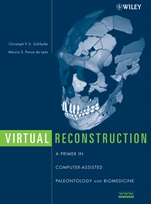
Virtual Reconstruction: A Primer in Computer–Assisted Paleontology and Biomedicine
ISBN 9780471205074
Autor: Christoph P. Zollikofer, Marcia Ponce de Leon
Wydawca: Wiley
Dostępność: 3-6 tygodni
Cena: 740,25 zł
Przed złożeniem zamówienia prosimy o kontakt mailowy celem potwierdzenia ceny.
ISBN13: |
9780471205074 |
ISBN10: |
0471205079 |
Autor: |
Christoph P. Zollikofer, Marcia Ponce de Leon |
Oprawa: |
Hardback |
Rok Wydania: |
2005-08-26 |
Ilość stron: |
334 |
Wymiary: |
277x213 |
Tematy: |
JBK |
Illustrating the concepts, methods, and applications of computer–assisted virtual reconstruction
Virtual Reconstruction demonstrates how readers can transform organisms from physical reality into virtual reality. Specifically, the authors provide the knowledge and tools needed to enable researchers to reconstruct fragmented and distorted fossil specimens in 3–D images so that their function, biomechanics, developmental changes, and evolutionary modifications can be determined. Likewise, the authors demonstrate how the same 3–D techniques can be used to enhance medical diagnosis and permit detailed planning of surgical intervention and forensic reconstruction on the basis of patient–specific anatomical data. They also provide a thorough introduction into modern methods of 3–D geometric–morphometric analysis.
All the steps of 3–D reconstruction are covered in detail, including data acquisition, processing, graphical representation, interactive manipulation, morphometric analysis, and rapid prototyping. Helping readers to bridge the gap between theory and practice, the authors have taken a four–pronged approach to their subject:The main text introduces basic concepts, provides technical information, presents practical applications, and discusses potential issues for further researchFeature boxes offer schematic diagrams to simplify difficult concepts and case studies that demonstrate how concepts and methods are applied in real–world situationsAppendices contain classical linear algebra formulation as well as standard data formats for text, standard images, biomedical images, and graphical objectsCompanion Internet site allows readers to experiment with sample data sets and applets and provides links to tutorials, applets, databases, and technical definitions: www.wiley.com/go/virtualreconstruction
The two authors are internationally recognized as leaders and in
novators in their field. Their text reflects more than a decade of research in computer–assisted paleoanthropology as well as their insightful lectures and courses in biomedical imaging, scientific visualization, and computational morphology.
This is the only reference that introduces readers, in the biosciences, to the concepts, methods, and applications of computer–assisted virtual reconstruction. It is an invaluable resource for researchers in physical anthropology, paleontology, morphology, anatomy, medicine, forensics, and primatology. Surgeons will find this book a reliable and state–of–the–art information source. Furthermore, the text is an excellent reference for computer scientists working in the biosciences.
Spis treści:
Preface.
Acknowledgments.
Introduction.
1. Virtual Reconstruction.
1.1 A Virtual Reality Contest.
1.2 Virtual Reconstruction.
1.3 Computer–Assisted Paleontology.
1.3.1 Data Acquisition.
1.3.2 Data Segmentation and Three–Dimensional Reconstruction.
1.3.3 Virtual Fossil Reconstruction.
1.3.4 From Virtual Reality to Real Virtuality.
1.3.5 Databases and Morphometry.
1.3.6 Virtual Reconstruction in Space and Time.
1.4 Computer–Assisted Surgery.
1.5 Further Reading.
2. Data Representation.
2.1 World Food on a Chessboard.
2.2 Facts About Data to Get Data About Facts.
2.2.1 Analog and Digital Data.
2.2.2 Bits, Bytes, and Words.
2.2.3 Characters, Numbers, Pixels, and Voxels.
2.2.4 Representing Gray Tones and Colors.
2.2.5 Data Compression.
2.2.6 Some Common Image File Formats.
2.2.7 Implicit Versus Explicit Representation of Object Data.
2.2.8 Modeling Three–Dimensional Objects.
2.3 A Taxonomy of Biomedical Data.
2.3.1 Perspectives on Data.
2.3.2 Volume Data.
2.3.3 Surface Data.
2.3.4 Landmark Data.
2.3.5 Extent–Based Data.
2.3.6 Relational Data.
2.4 Fu
rther Reading.
3. Data Acquisition.
3.1 Data and the Physical World.
3.2 Vision and Photography as Data Acquisition: Performance Considerations.
3.3 Computed Tomography.
3.3.1 Frau Röntgenâs Wedding Ring.
3.3.2 Radiographic Projections.
3.3.3 Reconstructing CT Images.
3.3.4 CT Scanning: Technical Considerations.
3.3.5 Limitations of CT Data Acquisition.
3.3.6 Slice–to–Slice, Helical, and Multislice CT.
3.3.7 Industrial and Micro Computed Tomography.
3.3.8 Three–Dimensional Data Acquisition with a Medical Scanner.
3.4 Magnetic Resonance Imaging.
3.5 Surface Scanners.
3.6 3D Digitizers.
3.7 Further Reading.
4. Image Data Processing.
4.1 Recovering Objects from Images.
4.2 Converting a CT Image into a Screen Image.
4.3 Filtering Images.
4.3.1 Coffee and Kernels.
4.3.2 Convolution and Fourier Analysis.
4.3.3 Statistical Filters.
4.3.4 Edge Detection Filters.
4.4 Extracting Isosurfaces.
4.4.1 Determining Boundaries in CT Images.
4.4.2 From Edges to Isocontours and Isosurfaces.
4.5 Interactive Segmentation.
4.6 Further Reading.
5. Visualization and Interaction.
5.1 Visualizing Data in Two and More Dimensions.
5.2 Interaction with Virtual Worlds.
5.3 The Graphics Rendering Pipeline.
5.4 Setting Up a Virtual Environment.
5.4.1 Object Materials, Lighting, and Shading.
5.4.2 Setting Up the Camera.
5.4.3 Object Manipulation and Interaction.
5.5 Volume Rendering.
5.6 Further Reading.
6. Virtual Fossil Reconstruction.
6.1 A Baroque Puzzle.
6.2 Principles of Reconstruction.
6.3 Physical and Virtual Reconstruction.
6.4 Preparing and Restoring Fossils on the Computer Screen.
6.5 Reconstructing Fossil Morphologies.
6.5.1 Recovering Implicit Anatomic Information.
6.5.2 Combining Computer Graphics and Anatomy: The Globe Paradigm.
6.5.3 Inferring Missing Information.
6.5.4 In
terpolation and Extrapolation.
6.6 Correcting Fossil Deformation.
6.6.1 Taphonomic Scenarios.
6.6.2 Correcting Plastic Deformation.
6.7 Validating Virtual Reconstructions.
6.8 Paleodiagnostics and Paleoforensics.
6.9 Inferring Soft Tissue Structures.
6.9.1 Motivation.
6.9.2 Fossil Soft Tissue Reconstruction: Classic and Virtual Approaches.
6.9.3 What Shall Be Reconstructed?
6.9.4 Soft Tissue Reconstruction and Measurement.
6.10 Virtual Surgery: A Paleoanthropologistâs Eye View.
6.10.1 Motivation.
6.10.2 Virtual Planning and Simulation of Surgical Interventions.
6.10.3 Custom Implant Design.
6.10.4 Soft Tissue Reconstruction.
6.11 Further Reading.
7. From Virtual Reality to Real Virtuality.
7.1 Reifying Virtual Objects.
7.2 Principles of Rapid Prototyping.
7.3 Combining Virtual Reality and Real Virtuality.
7.4 Further Reading.
8. Morphometric Analysis.
8.1 Morphometry as Reconstruction.
8.2 Morphometry and Geometry.
8.2.1 The Role of Geometry.
8.2.2 The Role of Size and Shape.
8.2.3 Multivariate Morphometry.
8.2.4 Principal Components Analysis and Dimension Reduction.
8.2.5 Classic Multivariate Morphometry: Geometry Lost.
8.2.6 Geometric Morphometrics: Geometry Recovered.
8.3 Shape Space Analysis.
8.3.1 From DâArcy Thompson to Kendall.
8.3.2 The Workflow of Shape Space Analysis.
8.3.3 Determining a Reference Shape.
8.3.4 Analyzing Data in Shape Space.
8.3.5 Visualizing Patterns of Shape Difference and Shape Change.
8.3.5 Visualizing Patterns of Shape Difference and Shape Change.
8.4 Euclidean Distance Matrix Analysis.
8.4.1 In Search of the Golden Mean.
8.4.2 Exploring Form Variability with EDMA.
8.5 Outline Analysis.
8.6 A Comparison of Geometric Morphometric Methods.
8.6.1 Criteria for Comparison.
8.6.2 From Pattern to Process.
8.7 Exploring Morphometric Patterns.
8.8 Further Reading.
Appendix
Koszyk
Książek w koszyku: 0 szt.
Wartość zakupów: 0,00 zł
Informacje


Kontakt
Gambit
Centrum Oprogramowania
i Szkoleń Sp. z o.o.
Al. Pokoju 29b/22-24
31-564 Kraków
Siedziba Księgarni
ul. Kordylewskiego 1
31-542 Kraków
+48 12 410 5991
+48 12 410 5987
+48 12 410 5989
Subskrypcje
Administratorem danych osobowych jest firma Gambit COiS Sp. z o.o. Na podany adres będzie wysyłany wyłącznie biuletyn informacyjny.
Autoryzacja płatności

Informacje na temat autoryzacji płatności poprzez PayU.

© Copyright 2012: GAMBIT COiS Sp. z o.o. Wszelkie prawa zastrzeżone.
Projekt i wykonanie: Alchemia Studio Reklamy