


Wydawcy
Katalog tematyczny
- Archeologia (109)
- Ekonomia, finanse, business (13704)
- Filozofia (1445)
- Historia (3040)
- Języki i językoznawstwo (2356)
- Lifestyle, hobby i rozrywka (475)
- Medycyna (9704)
- Chirurgia (272)
- Inne gałęzie medycyny (1871)
- Medycyna kliniczna (4187)
- Medycyna niekonwencjonalna (14)
- Medycyna przedkliniczna (269)
- Medycyna, ogólnie (1740)
- Historia medycyny (3)
- Lekarze, sprawy zawodowe (8)
- Medycyna, aspekty prawne (10)
- Służba zdrowia (36)
- Wyposażenie medyczne (157)
- Zdrowie publiczne (460)
- Medyczne służby pomocnicze (745)
- Studia medyczne (16)
- Weterynaria (548)
- Nauki humanistyczne (4)
- Nauki o Ziemi i środowisku (2638)
- Nauki ścisłe (20412)
- Nauki społeczne (8486)
- Nauki techniczne (13450)
- Prawo (1696)
- Publikacje informacyjne i interdyscyplinarne (1288)
- Religia i wierzenia (917)
- Technika komputerowa (4067)
- Zdrowie, relacje międzyludzkie i rozwój osobisty (657)





Informacje szczegółowe o książce
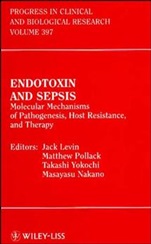
Endotoxin and Sepsis: Molecular Mechanisms of Pathogenesis, Host Resistance, and Therapy
ISBN 9780471194323
Autor: Jack Levin, Matthew Pollack, Takashi Yokochi, Masayasu Nakano
Wydawca: Wiley
Dostępność: 3-6 tygodni
Cena: 1 573,95 zł
Przed złożeniem zamówienia prosimy o kontakt mailowy celem potwierdzenia ceny.
ISBN13: |
9780471194323 |
ISBN10: |
0471194328 |
Autor: |
Jack Levin, Matthew Pollack, Takashi Yokochi, Masayasu Nakano |
Oprawa: |
Hardback |
Rok Wydania: |
1998-05-20 |
Ilość stron: |
398 |
Wymiary: |
233x161 |
Tematy: |
MB |
Progress in Clinical and Biological Research, Volume 397
ENDOTOXIN AND SEPSIS
Molecular Mechanisms of Pathogenesis, Host Resistance, and Therapy
Proceedings of the Fourth Conference of the International Endotoxin Society Held in Nagoya, Japan, October 23–27, 1996
Jack Levin, Matthew Pollack, Takashi Yokochi, and Masayasu Nakano, Editors
Recent breakthroughs in our understanding of the molecular biology of the human immune response have lead to important advances in the recognition and treatment of sepsis. Endotoxin and Sepsis: Molecular Mechanisms of Pathogenesis, Host Resistance, and Therapy compiles the latest basic and clinical research on many aspects of sepsis, including sepsis/SIRS. It provides researchers and clinicians with an up–to–date overview of the critical data and concepts in this rapidly progressing field of inquiry.
Featuring contributions by researchers and clinicians from around the world, this book presents papers covering a broad spectrum of specialized topics in the bacteriology, biochemistry, molecular and cellular interactions, pathophysiology, and pharmacodynamics of sepsis/SIRS. It also presents information on in vivo detection and potential new therapies that target sepsis and its cellular effects. Specific topics covered in Endotoxin and Sepsis: Molecular Mechanisms of Pathogenesis, Host Resistance, and Therapy include: Enzymes essential to the biosynthesis of Lipid A and their importance in the design of a new generation of antibiotics Recent breakthroughs in the understanding of the role of CD–14 in cellular resistance to infection and its therapeutic implications The role of Interleukin 6 in endotoxin–induced inflammatory response The molecular mechanisms responsible for endotoxin tolerance Unique chemical and biological features of LPS, and natural and synthetic LPS control mechanisms.
Endotoxin and Sepsis: Molecular Mechanisms of Pathogenesis, Host Resi
stance, and Therapy is must reading for laboratory and clinical microbiologists, immunologists, and other investigators studying bacterial endotoxins, and specialists in internal medicine. It will also be of interest to biotechnology and pharmaceutical researchers involved with the development of new drugs to combat sepsis.
Spis treści:
Enzymes of Lipid A Biosynthesis: Target for the Design of New Antibiotics (C. Raetz).
Biosynthesis of Escherichia coli 09 Polysaccharide and its Evolution (N. Kido).
Core Structure, of Enterobacterial Lipopolysaccharides (O. Holst, et al.).
Unique Structural and Biological Features of Helicobacter pylori Lipopolysaccharides (A. Moran & G. Aspinall).
What We Know and Don′t Know about the Chemical and Physical Structure of Lipopolysaccharides in Relation to Biological Activity (S. Müller–Loennies, et al.).
Roles for LBP and Soluble Cd14 in Cellular Uptake of LPS (R. Tapping, et al.).
Structure–Function Analysis of Soluble and Membrane–Bound CD14 (T. Kirkland & S. Viriyakosol).
Roles of CD14 in LPS Signaling and Scavenging: Analysis of CD14–Transgenic and Non–Transgenic Mice and Rats in Response to LPS (S. Yamamoto, et al.).
The Role of Scavenger Receptors in LPS–Induced Macrophage Activation (T. Kirikae, et al.).
The CD11/CD18 Integrins: Characterization of Three Novel LPS Signaling Receptors (R. Ingalls, et al.).
The Role of Tyrosine Kinases and MAP Kinases in LPS–Induced Signaling (A. DeFranco, et al.).
CD14 Dependent and Independent Signaling Pathways in Murine Macrophages from Normal and CD14 "Knockout" (CD14KO) Mice Stimulated with LPS or Taxol (S. Vogel, et al.).
ADP–Ribosylation: Role in LPS–Induced Phosphorylation of Two Cytosolic Proteins (p36/38) in Monocytes (S. Hauschildt, et al.).
CD14 Dependent Mechanisms of Cell
Activation (J. Han, et al.).
Cytokine Regulation of Inducible Nitric Oxide Synthase in Vascular Smooth Muscle Cells (J. Cohen, et al.N).
Detoxification of Lipopolysaccharide by Lysozyme (N. Ohno, et al.).
Role of Hepatocytes in the Clearance of Lipopolysaccharide and its Clinical Significance (K. Tanikawa, et al.).
Antibiotic–Mediated Release of Endotoxin and the Pathogenesis of Gram–Negative Sepsis (D. Morrison).
Molecular Mechanisms Responsible for Endotoxin Tolerance (B. Yoza, et al.N).
Endotoxin Tolerance Alters Macrophage Membrane Regulatory G Proteins (M. Makhlouf, et al.).
Lipopolysaccharide (LPS) Antibodies Regulate Cellular Uptake of LPS and LPS Induced Proinflammatory Responses (C. Ohl & M. Pollack).
Apoptotic Cell Death in Response to LPS (T. Yokochi, et al.).
Stimulation of Human T Lymphocytes by Lipopolysaccharide (LPS) in the Presence of Autologous and Heterologous Monocytes (T. Mattern, et al.).
Role of CD14 in Infection: Studies in CD14–Deficient Mice (A. Haziot, et al.).
Reconciling the Concepts of Endotoxin Sensitization and Tolerance (M. Freudenberg, et al.).
Production of Nontoxic Lipid A by Chemical Modification and its Antagonistic Effect on LPS Activity (K. Tanamoto).
The Protective Effect of Prostaglandin E1 on Endotoxin–Induced Hepatocyte Injury (H. Shimada, et al.).
Natural and Synthetic LPS and Lipid A Analogs or Partial Structures that Antagonize or Induce Tolerance to LPS (N. Qureshi, et al.).
The Molecular Basis for Therapeutic Concepts Utilizing CD14 (F. Stelter, et al.).
Natural and Synthetic Polypeptides that Recoggnize the Conserved Lipid A Binding Site of Lipoplysaccharides (M. Porro, et al.).
Prevention of Endotoxin Shock through Targeting Leukocytes Adhesion Molecules (H. Higashi, et al.).
Suppression of TNF and other Proinflammatory Cytokine
s by the Tetravalent Guanylhydrazone CNI–1493 (K. Tracey).
Interaction of Lipopolysaccharide with a Mammalian Lyso–phosphatidate Acyltransferase (LPAAT) Tranfected into E.
coli, and Effect of Lisofylline on LPAAT Transfected into Mammalian Cells (S. Bursten).
Role of Nitric Oxide and Reactive Oxygen Species in Endotoxin Shock (T. Yoshikawa, et al.).
The Role of Interleukin 6 in Endotoxin–Induced Inflammatory Responses (T. van der Poll & S. van Deventer).
The Pathogenic Role of LBP in Gram–Negative Sepsis and Septic Shock (D. Heumann, et al.).
Index.
Okładka tylna:
Progress in Clinical and Biological Research, Volume 397
ENDOTOXIN AND SEPSIS
Molecular Mechanisms of Pathogenesis, Host Resistance, and Therapy
Proceedings of the Fourth Conference of the International Endotoxin Society Held in Nagoya, Japan, October 23–27, 1996
Jack Levin, Matthew Pollack, Takashi Yokochi, and Masayasu Nakano, Editors
Recent breakthroughs in our understanding of the molecular biology of the human immune response have lead to important advances in the recognition and treatment of sepsis. Endotoxin and Sepsis: Molecular Mechanisms of Pathogenesis, Host Resistance, and Therapy compiles the latest basic and clinical research on many aspects of sepsis, including sepsis/SIRS. It provides researchers and clinicians with an up–to–date overview of the critical data and concepts in this rapidly progressing field of inquiry.
Featuring contributions by researchers and clinicians from around the world, this book presents papers covering a broad spectrum of specialized topics in the bacteriology, biochemistry, molecular and cellular interactions, pathophysiology, and pharmacodynamics of sepsis/SIRS. It also presents information on in vivo detection and potential new therapies that target sepsis and its cellular effects. Specific topics covered in Endotoxin and Sepsis: Molecular Mech
Koszyk
Książek w koszyku: 0 szt.
Wartość zakupów: 0,00 zł
Informacje


Kontakt
Gambit
Centrum Oprogramowania
i Szkoleń Sp. z o.o.
Al. Pokoju 29b/22-24
31-564 Kraków
Siedziba Księgarni
ul. Kordylewskiego 1
31-542 Kraków
+48 12 410 5991
+48 12 410 5987
+48 12 410 5989
Subskrypcje
Administratorem danych osobowych jest firma Gambit COiS Sp. z o.o. Na podany adres będzie wysyłany wyłącznie biuletyn informacyjny.
Autoryzacja płatności

Informacje na temat autoryzacji płatności poprzez PayU.

© Copyright 2012: GAMBIT COiS Sp. z o.o. Wszelkie prawa zastrzeżone.
Projekt i wykonanie: Alchemia Studio Reklamy