


Wydawcy
Katalog tematyczny
- Archeologia (109)
- Ekonomia, finanse, business (13704)
- Filozofia (1445)
- Historia (3040)
- Języki i językoznawstwo (2356)
- Lifestyle, hobby i rozrywka (475)
- Medycyna (9704)
- Nauki humanistyczne (4)
- Nauki o Ziemi i środowisku (2638)
- Nauki ścisłe (20412)
- Astronomia (294)
- Biologia (5119)
- Chemia (6540)
- Chemia analityczna (361)
- Chemia fizyczna (346)
- Chemia nieorganiczna (137)
- Chemia organiczna (535)
- Krystalografia (27)
- Minerologia (46)
- Fizyka (3309)
- Matematyka (4574)
- Nauki ścisłe, ogólnie (503)
- Nauki społeczne (8486)
- Nauki techniczne (13450)
- Prawo (1696)
- Publikacje informacyjne i interdyscyplinarne (1288)
- Religia i wierzenia (917)
- Technika komputerowa (4067)
- Zdrowie, relacje międzyludzkie i rozwój osobisty (657)





Informacje szczegółowe o książce
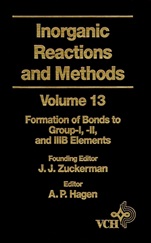
Inorganic Reactions and Methods: The Formation of Bonds to Group–I, –II, and –IIIB Elements
ISBN 9780471186649
Autor: J. J. Zuckerman, A. P. Hagen
Wydawca: Wiley
Dostępność: 3-6 tygodni
Cena: 2 839,20 zł
Przed złożeniem zamówienia prosimy o kontakt mailowy celem potwierdzenia ceny.
ISBN13: |
9780471186649 |
ISBN10: |
0471186643 |
Autor: |
J. J. Zuckerman, A. P. Hagen |
Oprawa: |
Hardback |
Rok Wydania: |
1991-09-02 |
Ilość stron: |
576 |
Wymiary: |
240x165 |
Tematy: |
PN |
Spis treści:
How to use this book
Preface to the Series
Editorial Consultants to the Series
Contributors to Volume 13
6. Formation of the Bonds to Group–IIIB (B, AI, Ga, In, TI) Elements
6.1. Introduction
6.2. Formation of the Group–IIIB–Group–IIIB Element (B, AI, Ga, In, TI) Bond
6.2.1. Introduction
6.2.2. from Group–IIIB Halides
6.2.2.1. by Comproportionation with the Group–IIIB Element or Its Univalent State
6.2.2.2. by Reduction with Metals
6.2.2.3. by Disproportionation of Dinuclear Compounds
6.2.2.4. by Metal Atom and Related Reactions
6.2.3. in Combination with Group–VIB Elements
6.2.4. from Group–IIIB–Group–IVB Bonds
6.2.5. from Gallium in Halogen Acid Media
6.3. Formation of Group–IIIB–Group IA or Group–IIA Bonds
6.4. Formation of Group III–B–Group–IB or Group–IIB Bonds
6.5. Formation of Group–IIIB–Transition– or –Inner Transition–Metal Bonds
6.5.1. Introduction
6.5.2. Formation from Group–IIIB Halides
6.5.2.1. by Reaction with Neutral Metal Bases
6.5.2.2. by Reaction with Anionic Metal Bases
6.5.2.3. by Oxidative–Addition Reactions
6.5.3. Formation from Other Group–IIIB Compounds
6.5.3.1. by Reaction with Neutral Metal Bases
6.5.3.2. by Reaction with Anionic Metal Bases
6.5.3.3. by Oxidative Addition Reactions.
6.5.3.4. by Reaction with Metal Halides
6.6. The Formation of the Group III–Group 0 Element Bond
6.7. Formation of Borides
6.7.1. Introduction
6.7.2. Existence and Crystal Chemistry of Borides
6.7.2.1. Borides with Isolated Boron Atoms
6.7.2.1.1. Metal Frame Structures — Topological Packed Structures.
6.7.2.1.2. Substitutional Metal Borides.
6.7.2.1.3. Metal Boride Structures (Isolated Boron Atoms).
6.7.2.2. Borides with Boron Chains
6.7.2.2.1. Structure Types wi
th Chain Fragments (B2, B3, B4 Groups).
6.7.2.2.2. Ternary Borides with Boron–Boron Chain Formation.
6.7.2.3. Borides with Two–Dimensional Boron Networks
6.7.2.4. Borides with Three–Dimensional Boron Networks
6.7.2.4.1. ThB4–Type Tetraborides.
6.7.2.4.2. CaB6–Type Hexaborides.
6.7.2.4.3. UB12–Type Dodecaborides.
6.7.2.4.4. YB66–Type Borides.
6.7.2.4.5. Other Types.
6.7.2.4.6. Summary.
6.7.2.5. Solid Solution of Transition and Inner Transition Metals in Boron
6.7.2.5.1. The Solubility in the Various Modifications of Boron.
6.7.2.5.2.Solid Solutions in beta–Rhombohedral Boron.
6.7.2.5.3. Crystallographic Data on Solid Solutions of beta–Rhombohedral Boron.
6.7.3. Preparation of Borides
6.7.3.1. by Direct Combination of the Elements
6.7.3.2. by Reduction of a Metal Compound and Boron Halide with Hydrogen
6.7.3.3. by Fused–Salt Electrolysis
6.7.3.4. by Reduction of a Metal Oxide or Other Metal Compound Using Carbon, Boron or Boron Carbide
6.7.3.5. by Reduction of Boron Oxide or Boron Halides with Metals
6.7.3.6. by Low–Temperature Precipitation of Borides from Solution
6.7.3.7. by Other Methods
6.7.4. Crystal Growth of Borides
6.7.4.1. by Gas–Phase Methods
6.7.4.1.1. by Chemical Vapor Deposition (CVD).
6.7.4.1.2. Crystal Growth of Borides by Chemical Vapor Transport.
6.7.4.2. Liquid–Phase Method
6.7.4.2.1. Crystal Pulling.
6.7.4.2.2. Floating–Zone Technique.
6.7.4.2.3. Flame–Fusion Technique.
6.7.4.3. Flux Methods
6.7.5. Sintering Methods
6.7.5.1. Sintering of Pure Borides
6.7.5.1.1. Comminution of Powders.
6.7.5.1.2. Compacting or Molding of Powders.
6.7.5.1.3. Sintering: Miscellaneous.
6.7.5.1.4. Sintering: Characteristics.
6.7.5.1.5. Sintering of Boride–Metal Composites.
6.7.5.2. Hot P
ressing of Pure Borides
6.7.5.2.1. Technology of Hot Pressing.
6.7.5.2.2. Hot–Pressing Characteristics of Pure Borides.
7. Formation of Bonds to the Group–IA (Li, Na, K, Rb, Cs, Fr) or Group–IIA (Be, Mg, Ca, Sr, Ba,Ra) Metals
7.1. Introduction
7.2. Formation of Group–IA (Li, Na, K, Rb, Cs, Fr) or Group–IIA (Be, Mg, Ca, Sr, Ba, Ra)–Group–IA (Li, Na, K, Rb, Cs, Fr) or –Group–IIA (Be, Mg, Ca, Sr, Ba, Ra) Metal Bonds
7.2.1. Introduction
7.2.2. in the Group–IA Elements
7.2.2.1. in Lithium
7.2.2.1.1. Industrial Manufacture.
7.2.2.1.2. The Purity of Commercial Lithium.
7.2.2.1.3. The Purification of Lithium.
7.2.2.1.4. Analysis of Lithium for Impurities.
7.2.2.2. in Sodium
7.2.2.2.1. Industrial Manufacture.
7.2.2.2.2. The Purity of Commercial Sodium.
7.2.2.2.3. The Purification of Sodium.
7.2.2.2.4. Analysis of Sodium for Impurities.
7.2.2.3. in Potassium
7.2.2.3.1. Industrial Manufacture.
7.2.2.3.2. Impurities in Commercial Potassium.
7.2.2.3.3. Purification of Potassium.
7.2.2.3.4. Analysis of Potassium.
7.2.2.4. in Rubidium and Cesium
7.2.2.4.1. Industrial Manufacture.
7.2.2.4.2. Purity of the Commercial Metals.
7.2.2.4.3. Purification.
7.2.2.4.4. Analysis for Impurities.
7.2.2.5. In Francium
7.2.3. in the Group–IIA Elements
7.2.3.1. in Beryllium
7.2.3.1.1. Industrial Manufacture.
7.2.3.1.2. Laboratory Preparation.
7.2.3.1.3. Purity and Purification.
7.2.3.2. in Magnesium
7.2.3.2.1. Industrial Manufacture.
7.2.3.2.2. Laboratory Preparation.
7.2.3.2.3. Purity and Purification.
7.2.3.3. in Calcium
7.2.3.3.1.Industrial Manufacture.
7.2.3.3.2. Laboratory Preparation.
7.2.3.3.3. Purity and Purification.
7.2.3.4. in Strontium and in Barium
7.2.3.4.1. Industrial Manufacture.
7.2.3.4.2. Laboratory Preparation.
7.2.3.4.3. Purity and Purification.
7.2.4. Formation of Alloys Betw
een Group–IA Elements
7.2.4.1. Binary Alloys
7.2.4.1.1. Phase Diagrams.
7.2.4.1.2. Compound Formation.
7.2.4.1.3. Preparations.
7.2.4.2. Multicomponent Alloys
7.2.5. Formation of Alloys Between Group–IIA Elements
7.2.5.1. Binary Alloys
7.2.5.1.1. Phase Diagrams.
7.2.5.1.2. Compound Formation.
7.2.5.1.3. Preparations.
7.2.6. Formation of Alloys Between Group–IA and Group–IA Elements
7.2.6.1. Binary Alloys
7.2.6.1.1. Phase Diagrams.
7.2.6.1.2. Compound Formation.
7.2.6.1.3. Preparations.
7.3. Formation of the Group–IA or –IIA– Group–IB or –IIB Element Bonds
7.3.1. Formation of the Group–IA–Group–IB Element Bonds
7.3.1.1. Phase Diagrams
7.3.1.1.1. Lithium Systems.
7.3.1.1.2. Sodium Systems.
7.3.1.1.3. Potassium Systems.
7.3.1.1.4. Rubidium and Cesium Systems.
7.3.1.2. Compound Formation
7.3.1.3. Preparations
7.3.1.3.1. of Alkali–Metal–Copper Compounds.
7.3.1.3.2. of Alkali–Metal–Silver Compounds.
7.4.1.1. in Metallic Systems
7.4.1.2. in Coordination Compounds Containing a Group–IA – Transition–Metal or Inner–Transition–Metal Bond
7.4.1.2.1. in Synthesis of Compounds Containing Lithium Bonded to a Transition Metal.
7.4.1.2.2. in Synthesis of Compounds Containing Sodium Bonded to a Transition Metal.
7.4.2. Formation of the Group–IIA–and –Inner Transition–Metal Bond
7.4.2.1. in Metallic Systems
7.4.2.2. in Coordination Compounds Containing a Group–IIA – Transition– and Inner–Transition–Metal Bond
7.5. The Formation of the Group IA or IIA–Group 0 Element Bond
8. Formation of the Bond to the Group–IB (Cu, Ag, Au) or –IIB (Zn, Cd, Hg) Elements
8.1. Introduction
8.2. Formation of the Group–IB or –IIB–Group–IB or –IIB Metal Bonds
8.2.1. in
Koszyk
Książek w koszyku: 0 szt.
Wartość zakupów: 0,00 zł
Informacje


Kontakt
Gambit
Centrum Oprogramowania
i Szkoleń Sp. z o.o.
Al. Pokoju 29b/22-24
31-564 Kraków
Siedziba Księgarni
ul. Kordylewskiego 1
31-542 Kraków
+48 12 410 5991
+48 12 410 5987
+48 12 410 5989
Subskrypcje
Administratorem danych osobowych jest firma Gambit COiS Sp. z o.o. Na podany adres będzie wysyłany wyłącznie biuletyn informacyjny.
Autoryzacja płatności

Informacje na temat autoryzacji płatności poprzez PayU.

© Copyright 2012: GAMBIT COiS Sp. z o.o. Wszelkie prawa zastrzeżone.
Projekt i wykonanie: Alchemia Studio Reklamy