


Wydawcy
Katalog tematyczny
- Archeologia (109)
- Ekonomia, finanse, business (13704)
- Filozofia (1445)
- Historia (3040)
- Języki i językoznawstwo (2356)
- Lifestyle, hobby i rozrywka (475)
- Medycyna (9704)
- Nauki humanistyczne (4)
- Nauki o Ziemi i środowisku (2638)
- Nauki ścisłe (20412)
- Astronomia (294)
- Biologia (5119)
- Chemia (6540)
- Chemia analityczna (361)
- Chemia fizyczna (346)
- Chemia nieorganiczna (137)
- Chemia organiczna (535)
- Krystalografia (27)
- Minerologia (46)
- Fizyka (3309)
- Matematyka (4574)
- Nauki ścisłe, ogólnie (503)
- Nauki społeczne (8486)
- Nauki techniczne (13450)
- Prawo (1696)
- Publikacje informacyjne i interdyscyplinarne (1288)
- Religia i wierzenia (917)
- Technika komputerowa (4067)
- Zdrowie, relacje międzyludzkie i rozwój osobisty (657)





Informacje szczegółowe o książce
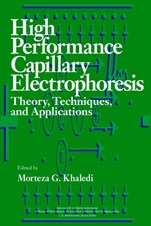
High–Performance Capillary Electrophoresis: Theory, Techniques, and Applications
ISBN 9780471148517
Autor: Morteza G. Khaledi
Wydawca: Wiley
Dostępność: 3-6 tygodni
Cena: 1 573,95 zł
Przed złożeniem zamówienia prosimy o kontakt mailowy celem potwierdzenia ceny.
ISBN13: |
9780471148517 |
ISBN10: |
0471148512 |
Autor: |
Morteza G. Khaledi |
Oprawa: |
Hardback |
Rok Wydania: |
1998-05-13 |
Ilość stron: |
1080 |
Wymiary: |
239x163 |
Tematy: |
PN |
A complete and up–to–date manual on HPCE theory and practice
High Performance Capillary Electrophoresis brings together in one volume essential coverage of the theory, techniques, and applications of this highly useful and efficient technology.
Suitable for the novice as well as the experienced user of HPCE, this book features expert contributions from highly respected scientists representing a wide range of disciplines. Chapters, which are grouped into sections to make information easy to find, cover:
∗ Theory and principles of the six HPCE techniques
∗ Detection systems, including indirect detection
∗ Essential operation topics such as sample introduction and stacking, coated capillaries, and method validation
∗ Recently developed methods, including two–dimensional separations, nonaqueous CE, and HPCE on microchips
∗ All of the basic HPCE applications, with an emphasis on bioanalytical uses
∗ HPCE in the determination of physico–chemical properties of molecules
With features and capabilities that match––and even surpass––those of conventional electrophoresis and HPLC, high performance capillary electrophoresis (HPCE) is the fastest developing technology for the separation and analysis of chemical compounds. Keeping pace with the rapid changes in this field and the wealth of journal articles on the subject is a difficult and time–consuming challenge for anyone needing a basic and up–to–date grasp of HPCE.
This book makes it much easier to find this important information––with comprehensive one–source coverage of all of the essential aspects of HPCE theory, techniques, and applications. Featuring the contributions of well–qualified, highly regarded scientists, it is organized into sections on:
∗ Theory and principles of HPCE techniques
∗ Detection systems
∗ Operation aspects and specia
l methods in HPCE
∗ Uses in chemical analysis
∗ Physico–chemical studies
Specific topics addressed here that are not treated extensively by other books include two–dimensional separations, CE on microchips, nonaqueous CE, indirect detection, monitoring enzymatic reactions, and more.
As interest in HPCE continues to grow, it is clear that this technology has much to offer researchers and others working in disciplines ranging from analytical chemistry and biochemistry to pharmaceutical chemistry and biotechnology. High Performance Capillary Electrophoresis equips scientists and students with the knowledge they need to take immediate advantage of the exciting potential of HPCE.
Spis treści:
THEORY AND MODES OF HPCE.
Capillary Electrophoresis: Overview and Perspective (B. Karger).
Theory of Capillary Zone Electrophoresis (E. Kenndler).
Micellar Electrokinetic Chromatography (M. Khaledi).
Band Broadening in Micellar Electrokinetic Chromatography (J. Davis).
Capillary Gel Electrophoresis (P. Shieh, et al.).
Capillary Isoelectric Focusing (J. Wiktorowicz).
Capillary Isotachophoresis (L. Kivánková & P. Boek).
Capillary Electrochromatography (K. Kelly & M. Khaledi).
DETECTION SYSTEMS IN HPCE.
Capillary Electrophoretic Detectors Based on Light (L. Cruz, et al.).
Electrochemical Detection in High–Performance Capillary Electrophoresis (B. Bryant, et al.).
Indirect Detection in Capillary Electrophoresis (H. Poppe & X. Xu).
High–Performance Capillary Electrophoresis–Mass Spectrometry (K. Tomer, et al.).
OPERATIONAL ASPECTS AND SPECIAL TECHNIQUES IN HPCE.
Sample Introduction and Stacking (R. Chien).
Coated Capillaries in High–Performance Capillary Electrophoresis (G. Schomburg).
Nonaqueous Capillary Electrophoresis (J. Miller & M. Khaledi).
Method Validation in Capillary Electrophoresis (K. Altria).
Two–Dimensio
nal Separations in High–Performance Capillary Electrophoresis (T. Hooker, et al.).
Microfabricated Chemical Separation Devices (S. Jacobson & J. Ramsey).
APPLICATIONS OF HPCE.
Peptides Analysis by Capillary Electrophoresis: Methods Development and Optimization, Sensitivity Enhancement Strategies, and Applications (G. McLaughlin, et al.).
Capillary Electrophoresis of Proteins (F. Regnier & S. Lin).
Capillary Electrophoresis of Carbohydrates (M. Novotny).
DNA Sequencing by Multiplexed Capillary Electrophoresis (E. Yeung & Q. Li).
Chiral Separations by Capillary Electrophoresis (F. Wang & M. Khaledi).
Capillary Electrophoresis of Inorganic Ions (J. Mazzeo).
The Analysis of Pharmaceuticals by Capillary Electrophoresis (K. Altria).
On–Line Immunoaffinity Capillary Electrophoresis for the Determination of Analytes Derived From Biological Fluids (N. Guzman, et al.).
Microbioanalysis Using On–Line Microreactors–Capillary Electrophoresis Systems (L. Licklider & W. Kuhr).
Electrophoretically Mediated Microanalysis (B. Harmon & F. Regnier).
PHYSICOCHEMICAL STUDIES.
Affinity Capillary Electrophoresis: Using Capillary Electrophoresis to Study The Interactions of Proteins with Ligands (J. Gao, et al.).
Determination of Physicochemical Parameters by Capillary Electrophoresis (P. Righetti).
Applications of Micellar Electrokinetic Chromatography in Quantitative Structure–Activity Relationship Studies: Estimation of LogP—ow and Bioactivity (M. Khaledi).
Index.
Nota biograficzna:
MORTEZA G. KHALEDI is Professor of Chemistry at North Carolina State University in Raleigh. His research interests include mechanistic studies and solvation effects in CE and LC, use of micelles and other organized media in chemical separations, multivariate optimization of CE and LC separations, applications of chromatographic techniques in structure–activity studies, chiral
separations, and bioanalytical chemistry.
Okładka tylna:
A complete and up–to–date manual on HPCE theory and practice
High Performance Capillary Electrophoresis brings together in one volume essential coverage of the theory, techniques, and applications of this highly useful and efficient technology.
Suitable for the novice as well as the experienced user of HPCE, this book features expert contributions from highly respected scientists representing a wide range of disciplines. Chapters, which are grouped into sections to make information easy to find, cover:
∗ Theory and principles of the six HPCE techniques
∗ Detection systems, including indirect detection
∗ Essential operation topics such as sample introduction and stacking, coated capillaries, and method validation
∗ Recently developed methods, including two–dimensional separations, nonaqueous CE, and HPCE on microchips
∗ All of the basic HPCE applications, with an emphasis on bioanalytical uses
∗ HPCE in the determination of physico–chemical properties of molecules
With features and capabilities that match––and even surpass––those of conventional electrophoresis and HPLC, high performance capillary electrophoresis (HPCE) is the fastest developing technology for the separation and analysis of chemical compounds. Keeping pace with the rapid changes in this field and the wealth of journal articles on the subject is a difficult and time–consuming challenge for anyone needing a basic and up–to–date grasp of HPCE.
This book makes it much easier to find this important information––with comprehensive one–source coverage of all of the essential aspects of HPCE theory, techniques, and applications. Featuring the contributions of well–qualified, highly regarded scientists, it is organized into sections on:
∗ Theory and principles of HPCE
techniques
∗ Detection systems
∗ Operation aspects and special methods in HPCE
∗ Uses in chemical analysis
∗ Physico–chemical studies
Specific topics addressed here that are not treated extensively by other books include two–dimensional separations, CE on microchips, nonaqueous CE, indirect detection, monitoring enzymatic reactions, and more.
As interest in HPCE continues to grow, it is clear that this technology has much to offer researchers and others working in disciplines ranging from analytical chemistry and biochemistry to pharmaceutical chemistry and biotechnology. High Performance Capillary Electrophoresis equips scientists and students with the knowledge they need to take immediate advantage of the exciting potential of HPCE.
Koszyk
Książek w koszyku: 0 szt.
Wartość zakupów: 0,00 zł
Informacje


Kontakt
Gambit
Centrum Oprogramowania
i Szkoleń Sp. z o.o.
Al. Pokoju 29b/22-24
31-564 Kraków
Siedziba Księgarni
ul. Kordylewskiego 1
31-542 Kraków
+48 12 410 5991
+48 12 410 5987
+48 12 410 5989
Subskrypcje
Administratorem danych osobowych jest firma Gambit COiS Sp. z o.o. Na podany adres będzie wysyłany wyłącznie biuletyn informacyjny.
Autoryzacja płatności

Informacje na temat autoryzacji płatności poprzez PayU.

© Copyright 2012: GAMBIT COiS Sp. z o.o. Wszelkie prawa zastrzeżone.
Projekt i wykonanie: Alchemia Studio Reklamy