


Wydawcy
Katalog tematyczny
- Archeologia (109)
- Ekonomia, finanse, business (13704)
- Filozofia (1445)
- Historia (3040)
- Języki i językoznawstwo (2356)
- Lifestyle, hobby i rozrywka (475)
- Medycyna (9704)
- Nauki humanistyczne (4)
- Nauki o Ziemi i środowisku (2638)
- Nauki ścisłe (20412)
- Astronomia (294)
- Biologia (5119)
- Chemia (6540)
- Fizyka (3309)
- Elektryczność i magnetyzm (90)
- Fizyka atomowa i molekularna (110)
- Fizyka cząstek elementarnych (36)
- Fizyka jądra atomowego (36)
- Fizyka kwantowa (210)
- Fizyka matematyczna (121)
- Fizyka relatywistyczna (36)
- Fizyka statystyczna (51)
- Fizyka stosowana (498)
- Mechanika klasyczna (186)
- Optyka i światło (133)
- Stany materii (202)
- Matematyka (4574)
- Nauki ścisłe, ogólnie (503)
- Nauki społeczne (8486)
- Nauki techniczne (13450)
- Prawo (1696)
- Publikacje informacyjne i interdyscyplinarne (1288)
- Religia i wierzenia (917)
- Technika komputerowa (4067)
- Zdrowie, relacje międzyludzkie i rozwój osobisty (657)







Informacje szczegółowe o książce
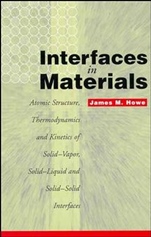
Interfaces in Materials: Atomic Structure, Thermodynamics and Kinetics of Solid–Vapor, Solid–Liquid and Solid–Solid Interfaces
ISBN 9780471138303
Autor: James M. Howe
Wydawca: Wiley
Dostępność: 3-6 tygodni
Cena: 1 062,60 zł
Przed złożeniem zamówienia prosimy o kontakt mailowy celem potwierdzenia ceny.
ISBN13: |
9780471138303 |
ISBN10: |
0471138304 |
Autor: |
James M. Howe |
Oprawa: |
Hardback |
Rok Wydania: |
1997-03-07 |
Ilość stron: |
544 |
Wymiary: |
239x156 |
Tematy: |
PHGD |
A thorough exploration of the atomic structures and properties of the essential engineering interfaces—an invaluable resource for students, teachers, and professionals
The most up–to–date, accessible guide to solid–vapor, solid–liquid, and solid–solid phase transformations, this innovative book contains the only unified treatment of these three central engineering interfaces. Employing a simple nearest–neighbor broken–bond model, Interfaces in Materials focuses on metal alloys in a straightforward approach that can be easily extended to all types of interfaces and materials. Enhanced with nearly 300 illustrations, along with extensive references and suggestions for further reading, this book provides: A simple, cohesive approach to understanding the atomic structure and properties of interfaces formed between solid, liquid, and vapor phases Self–contained discussions of each interface—allowing separate study of each phase transformation A comparative look at the different interfaces, including atomic structure and crystallography; anisotropy, roughening, and melting; interfacial stability and segregation; continuous and ledge growth models; and atomistic modeling An analysis of nearest–neighbor broken–bond results against thermodynamic and kinetic descriptions of the interfaces Problem sets at the end of each chapter, emphasizing the key concepts detailed in the text
Spanning the fields of chemical, electrical and computer engineering, materials science, solid–state physics, and microscopy, Interfaces in Materials bridges a major gap in the literature of surface and interface science.
Spis treści:
INTRODUCTORY MATERIAL.
Atomic Bonding.
Regular Solution (Quasi–Chemical) Model.
SOLID–VAPOR INTERFACES.
Surface Energy.
Surface Structure.
Crystal Growth from the Vapor.
Thermodynamics of Multicompo
nent Systems and Surface Segregation.
Surface Films.
SOLID–LIQUID INTERFACES.
Liquids.
Interfacial Structure and Energy.
Crystal Growth from the Liquid.
Solute Partitioning and Morphological Stability.
SOLID–SOLID INTERFACES.
Introduction to Solid–Solid Interfaces.
Structure and Energy of Homophase Interfaces.
Structure and Energy of Heterophase Interfaces.
Growth of Solid–Solid Heterophase Interfaces.
Morphological Stability and Segregation.
References and Additional Reading.
Appendices.
Index.
Nota biograficzna:
JAMES M. HOWE, PhD, is Associate Professor of Materials Science and Engineering at the University of Virginia. He is the recipient of numerous honors and awards for his research on transformation interfaces and electron microscopy, and his articles have appeared in such journals as Philosophical Magazine A, Acta Metallurgica et Materialia, and Ultramicroscopy.
Okładka tylna:
A thorough exploration of the atomic structures and properties of the essential engineering interfaces—an invaluable resource for students, teachers, and professionals
The most up–to–date, accessible guide to solid–vapor, solid–liquid, and solid–solid phase transformations, this innovative book contains the only unified treatment of these three central engineering interfaces. Employing a simple nearest–neighbor broken–bond model, Interfaces in Materials focuses on metal alloys in a straightforward approach that can be easily extended to all types of interfaces and materials. Enhanced with nearly 300 illustrations, along with extensive references and suggestions for further reading, this book provides: A simple, cohesive approach to understanding the atomic structure and properties of interfaces formed between solid, liquid, and vapor phases Self–contained discussions of each interface—allowing sep
arate study of each phase transformation A comparative look at the different interfaces, including atomic structure and crystallography; anisotropy, roughening, and melting; interfacial stability and segregation; continuous and ledge growth models; and atomistic modeling An analysis of nearest–neighbor broken–bond results against thermodynamic and kinetic descriptions of the interfaces Problem sets at the end of each chapter, emphasizing the key concepts detailed in the text
Spanning the fields of chemical, electrical and computer engineering, materials science, solid–state physics, and microscopy, Interfaces in Materials bridges a major gap in the literature of surface and interface science.
Koszyk
Książek w koszyku: 0 szt.
Wartość zakupów: 0,00 zł
Informacje


Kontakt
Gambit
Centrum Oprogramowania
i Szkoleń Sp. z o.o.
Al. Pokoju 29b/22-24
31-564 Kraków
Siedziba Księgarni
ul. Kordylewskiego 1
31-542 Kraków
+48 12 410 5991
+48 12 410 5987
+48 12 410 5989
Subskrypcje
Administratorem danych osobowych jest firma Gambit COiS Sp. z o.o. Na podany adres będzie wysyłany wyłącznie biuletyn informacyjny.
Autoryzacja płatności

Informacje na temat autoryzacji płatności poprzez PayU.

© Copyright 2012: GAMBIT COiS Sp. z o.o. Wszelkie prawa zastrzeżone.
Projekt i wykonanie: Alchemia Studio Reklamy