


Wydawcy
Katalog tematyczny
- Archeologia (109)
- Ekonomia, finanse, business (13704)
- Filozofia (1445)
- Historia (3040)
- Języki i językoznawstwo (2356)
- Lifestyle, hobby i rozrywka (475)
- Medycyna (9704)
- Nauki humanistyczne (4)
- Nauki o Ziemi i środowisku (2638)
- Nauki ścisłe (20412)
- Nauki społeczne (8486)
- Edukacja (229)
- Kryminologia, opieka spełeczna (284)
- Obronność (10)
- Polityka (1389)
- Psychologia (777)
- Socjologia (410)
- Społeczeństwo i kultura (187)
- Nauki techniczne (13450)
- Prawo (1696)
- Publikacje informacyjne i interdyscyplinarne (1288)
- Religia i wierzenia (917)
- Technika komputerowa (4067)
- Zdrowie, relacje międzyludzkie i rozwój osobisty (657)





Informacje szczegółowe o książce
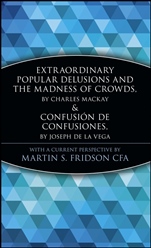
Extraordinary Popular Delusions and the Madness of Crowds and Confusión de Confusiones
ISBN 9780471133094
Autor: Martin S. Fridson
Wydawca: Wiley
Dostępność: 3-6 tygodni
Cena: 233,10 zł
Przed złożeniem zamówienia prosimy o kontakt mailowy celem potwierdzenia ceny.
ISBN13: |
9780471133094 |
ISBN10: |
0471133094 |
Autor: |
Martin S. Fridson |
Oprawa: |
Hardback |
Rok Wydania: |
1996-02-13 |
Ilość stron: |
224 |
Wymiary: |
223x149 |
Tematy: |
JCW |
Priceless investment wisdom from two timeless classics
Can you imagine tulips trading at a higher price than gold? That′s just what happened in 1634 as Tulipmania swept across Holland. Nearly a century later, stock prices in England soared as a bold proposal to pay off the national debt caused a fleet of bubble companies to form in its wake. But what happened when the bubbles burst? Did these famous incidents simply demonstrate the potential for market volatility, or did they reflect outbreaks of mass hysteria? Charles Mackay brought his own unique perspective to this, and a number of other remarkable episodes, when the legendary Extraordinary Popular Delusions and the Madness of Crowds first appeared in 1841.
The Dutch East India Company was the hot stock to watch in the early days of the Amsterdam stock exchange. But the price action became hard to unravel once speculation and treacherous deceit came into play. Market manipulation, it seems, was a factor even at the dawn of modern exchange trading. Joseph de la Vega′s 1688 Confusión de Confusiones offered a firsthand account of seventeenth–century market complexities that rings remarkably true even today.
Exploring the sometimes humorous, sometimes devastating impact of crowd behavior and trading trickery on the financial markets, this book brilliantly combines two all–time investment classics. Financial analyst and author Martin S. Fridson is your guide, and the result is an insightful new volume that is a quirky, entertaining, and thoroughly intriguing journey back through time.
From the investment strategies of Bernard Baruch, to Japanese land prices, junk bonds, and the collapse of Baring Securities, the far–reaching influence of Mackay′s and de la Vega′s revered works remains potent and truly timeless. By juxtaposing Extraordinary Popular Delusions and Confusión de Confusiones, this unique book points up the interesting contrast in their respect
ive conclusions. Mackay believed that "periodic outbreaks of mass hysteria" led to volatile market activity, while de la Vega saw "cunning behind the market′s convulsions." Both interpretations are worth examining for their fascinating commentaries on market movement and investment psychology. Viewed from within the context of events of our own time, these classics are must reading for all those seeking a greater understanding of the stock exchange′s frequently erratic behavior.
"The market never ceases to befuddle and beguile. These two venerable works are fixtures on the short lists for most valuable books on the securities markets, and investors continue to cherish them." —From the Introduction by Martin S. Fridson Managing Director, Merrill Lynch & Co. Author of Investment Illusions
Exploring the sometimes hilarious, sometimes devastating impact of crowd behavior and trading trickery on the financial markets, this book brilliantly combines two all–time investment classics. Extraordinary Popular Delusions and Confusión de Confusiones take us from Tulipmania in 1634—when tulips actually traded at a higher price than gold—to the South Sea "bubble" of 1720, and beyond. Securities analyst and author Martin Fridson guides you on a quirky, entertaining, and intriguing journey back through time.
Chosen by the Financial Times as Two of the Ten Best Books Ever Written on Investment
Critical Praise . . .
"This is the most important book ever written about crowd psychology and, by extension, about financial markets. A serious student of the markets and even anyone interested in the extremes of human behavior should read this book!" —Ron Insana, CNBC
"In combining ′Extraordinary′ with ′Confusion,′ the result is not extraordinary confusion. Instead, with clarity, the book sears into modern investor minds the dangers of following the crowd." —Greg Heberlein,
The Seattle Times
"Once upon a time, there was an emperor with no clothes. For the longest time no one noticed. As you will read in this marvelous book, there have been many naked emperors since. There will doubtless be many more." —Andrew Tobias, Author of Managing Your Money
"You will see between its staid lines (written in ye olde English and as ponderable as Buddha′s navel) that, despite what the media says, nothing really important has changed in the financial markets in centuries." —Kenneth L. Fisher, Forbes
Spis treści:
In the Realm of the Senseless.
Extraordinary Popular Delusions and the Madness of Crowds.
Confusion de Confusiones.
Nota biograficzna:
Martin S. Fridson is a Managing Director at Merrill Lynch & Co. and a member of Institutional Investor′s All–America Research Team. He is the author of Financial Statement Analysis, Second Edition and Investment Illusions, both published by Wiley. Fridson also serves on the editorial board of Financial Analysts Journal.
Charles Mackay, L.L.D., was a Scottish journalist in the nineteenth century. He received an honorary law degree from Glasgow University and was a renowned poet and songwriter.
Joseph de la Vega was a businessman and poet residing in seventeenth–century Amsterdam. He lived in a community of Portuguese Jews whose ancestors had fled the Spanish Inquisition.
Okładka tylna:
Priceless investment wisdom from two timeless classics
Can you imagine tulips trading at a higher price than gold? That′s just what happened in 1634 as Tulipmania swept across Holland. Nearly a century later, stock prices in England soared as a bold proposal to pay off the national debt caused a fleet of bubble companies to form in its wake. But what happened when the bubbles burst? Did these famous incidents simply demonstrate the potential for market volatility, or did they reflect outbreaks of
mass hysteria? Charles Mackay brought his own unique perspective to this, and a number of other remarkable episodes, when the legendary Extraordinary Popular Delusions and the Madness of Crowds first appeared in 1841.
The Dutch East India Company was the hot stock to watch in the early days of the Amsterdam stock exchange. But the price action became hard to unravel once speculation and treacherous deceit came into play. Market manipulation, it seems, was a factor even at the dawn of modern exchange trading. Joseph de la Vega′s 1688 Confusión de Confusiones offered a firsthand account of seventeenth–century market complexities that rings remarkably true even today.
Exploring the sometimes humorous, sometimes devastating impact of crowd behavior and trading trickery on the financial markets, this book brilliantly combines two all–time investment classics. Financial analyst and author Martin S. Fridson is your guide, and the result is an insightful new volume that is a quirky, entertaining, and thoroughly intriguing journey back through time.
From the investment strategies of Bernard Baruch, to Japanese land prices, junk bonds, and the collapse of Baring Securities, the far–reaching influence of Mackay′s and de la Vega′s revered works remains potent and truly timeless. By juxtaposing Extraordinary Popular Delusions and Confusión de Confusiones, this unique book points up the interesting contrast in their respective conclusions. Mackay believed that "periodic outbreaks of mass hysteria" led to volatile market activity, while de la Vega saw "cunning behind the market′s convulsions." Both interpretations are worth examining for their fascinating commentaries on market movement and investment psychology. Viewed from within the context of events of our own time, these classics are must reading for all those seeking a greater understanding of the stock exchange′s frequently erratic behavior.
"The market
never ceases to befuddle and beguile. These two venerable works are fixtures on the short lists for most valuable books on the securities markets, and investors continue to cherish them." —From the Introduction by Martin S. Fridson Managing Director, Merrill Lynch & Co. Author of Investment Illusions
Exploring the sometimes hilarious, sometimes devastating impact of crowd behavior and trading trickery on the financial markets, this book brilliantly combines two all–time investment classics. Extraordinary Popular Delusions and Confusión de Confusiones take us from Tulipmania in 1634—when tulips actually traded at a higher price than gold—to the South Sea "bubble" of 1720, and beyond. Securities analyst and author Martin Fridson guides you on a quirky, entertaining, and intriguing journey back through time.
Chosen by the Financial Times as Two of the Ten Best Books Ever Written on Investment
Critical Praise . . .
"This is the most important book ever written about crowd psychology and, by extension, about financial markets. A serious student of the markets and even anyone interested in the extremes of human behavior should read this book!" —Ron Insana, CNBC
"In combining ′Extraordinary′ with ′Confusion,′ the result is not extraordinary confusion. Instead, with clarity, the book sears into modern investor minds the dangers of following the crowd." —Greg Heberlein, The Seattle Times
"Once upon a time, there was an emperor with no clothes. For the longest time no one noticed. As you will read in this marvelous book, there have been many naked emperors since. There will doubtless be many more." —Andrew Tobias, Author of Managing Your Money
"You will see between its staid lines (written in ye olde English and as ponderable as Buddha′s navel) that, despite what the media says, nothing really important has changed in the financial markets in centuri
es." —Kenneth L. Fisher, Forbes
Koszyk
Książek w koszyku: 0 szt.
Wartość zakupów: 0,00 zł
Informacje


Kontakt
Gambit
Centrum Oprogramowania
i Szkoleń Sp. z o.o.
Al. Pokoju 29b/22-24
31-564 Kraków
Siedziba Księgarni
ul. Kordylewskiego 1
31-542 Kraków
+48 12 410 5991
+48 12 410 5987
+48 12 410 5989
Subskrypcje
Administratorem danych osobowych jest firma Gambit COiS Sp. z o.o. Na podany adres będzie wysyłany wyłącznie biuletyn informacyjny.
Autoryzacja płatności

Informacje na temat autoryzacji płatności poprzez PayU.

© Copyright 2012: GAMBIT COiS Sp. z o.o. Wszelkie prawa zastrzeżone.
Projekt i wykonanie: Alchemia Studio Reklamy