


Wydawcy
Katalog tematyczny
- Archeologia (109)
- Ekonomia, finanse, business (13704)
- Filozofia (1445)
- Historia (3040)
- Języki i językoznawstwo (2356)
- Lifestyle, hobby i rozrywka (475)
- Medycyna (9704)
- Nauki humanistyczne (4)
- Nauki o Ziemi i środowisku (2638)
- Nauki ścisłe (20412)
- Nauki społeczne (8486)
- Nauki techniczne (13450)
- Prawo (1696)
- Publikacje informacyjne i interdyscyplinarne (1288)
- Religia i wierzenia (917)
- Technika komputerowa (4067)
- Zdrowie, relacje międzyludzkie i rozwój osobisty (657)





Informacje szczegółowe o książce
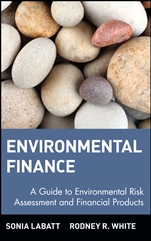
Environmental Finance: A Guide to Environmental Risk Assessment and Financial Products
ISBN 9780471123620
Autor: Sonia Labatt, Rodney R. White
Wydawca: Wiley
Dostępność: 3-6 tygodni
Cena: 530,25 zł
Przed złożeniem zamówienia prosimy o kontakt mailowy celem potwierdzenia ceny.
ISBN13: |
9780471123620 |
ISBN10: |
0471123625 |
Autor: |
Sonia Labatt, Rodney R. White |
Oprawa: |
Hardback |
Rok Wydania: |
2002-11-22 |
Ilość stron: |
384 |
Wymiary: |
241x166 |
Tematy: |
KF |
Environmental Finance provides a thorough, objective discussion of the environmental risk issues facing financial institutions and how to effectively manage both the challenges and opportunities they present. A very current, informative and comprehensive reference."
–James R. Evans, Manager, Environmental Risk Management
RBC Financial Group
Today, environmentally irresponsible companies run the risk of hurting their bottom line as well as their image. As a result, environmental risk is reshaping the way insurance companies underwrite to corporate clients, banks lend, investors invest, and companies operate. Banks and insurance companies are also developing new environmental financial products to help their corporate customers protect their bottom line against changes in environmental legislation and the impact of adverse weather and climate change.
Environmental Finance: A Guide to Environmental Risk Assessment and Financial Products is one of the first books to explore this emerging field. This comprehensive reference opens with a discussion of the concepts and tools used by financial institutions to develop environmental policies and products, and then details how recent changes in the financial services sector have affected the capacity of companies to respond to the environmental challenge. From here you′ll learn about innovative new products such as tradable pollution permits, weather derivatives, catastrophe bonds, and many other market–based solutions that are being created in response to every type of environmental problem–from hurricanes to asbestos.
The financial and social consequences of environmental risk will continue to grow. Learn how to hedge these risks and come out on top with Environmental Finance as your guide.
Spis treści:
CHAPTER 1: THE EMERGING WORLD OF ENVIRONMENTAL FINANCE.
Introduction.
An Emerging Field.
Why Is It Happening at This Particular Time?
Lessons Learned.
How Might Environmental Finance Prepare Us for the Challenges Ahead?
Conclusion.
CHAPTER 2: CONCEPTS AND TOOLS FOR DEVELOPING ENVIRONMENTAL FINANCE.
Introduction.
Environmental Management and Shareholder Value Creation.
Environmental Management Systems.
Stakeholder Relationships.
Looking Ahead: Scenarios and Simulations.
Tools for Risk Transfer.
Trading Atmospheric Emission Reduction Credits.
Conclusion.
CHAPTER 3: THE FINANCIAL SERVICES SECTOR.
Introduction.
Structure of the Global Market for Financial Capital.
Forces Reshaping Financial Service Industries.
Core Financial Services.
Response of the Financial Services Sector to Deregulation.
Financial Services′ Approach to Environmental Issues.
Conclusion.
Endnotes.
CHAPTER 4: BANKING.
Introduction.
Commercial Banking.
Direct Liability of Contaminated Land.
Brownfield Redevelopment.
Risk Management.
Environmental Products and Services.
Niche Markets and Microcredit.
Internal Environmental Management.
UNEP Financial Institutions Initiative.
Measurements and Reporting of Environmental Management.
Investment Banking.
Climate Change: Risks and Opportunities for the Banking Sector.
Sustainable Energy Funds.
The Price of Carbon.
Reputational Risk.
Conclusion.
Web Sites.
CHAPTER 5: INSURANCE.
Introduction.
Angus Ross, Invited Author′s Comment.
Contaminants in the Environment.
Climate Change and Extreme Weather Events.
Transferring Risk from the Insurance Industry to the Capital Markets.
Regional Variations in the Response of Insurance Companies to the Environmental Challenge.
Conclusion.
Endnote.
CHAPTER 6: INVESTMENTS.
Introduction.
Evolution of Screening for Social and Environmental Responsibility.
The Relationship between Environmental and Financial Performance.
Performance of Environmentally Screened Funds.
Variation in Research Results.
Socially
Responsible Investment Portfolio Performance Ratings.
Institutional Portfolio Managers.
Environmental Products in Fund Management.
Environmental Research and Rating Organizations.
Weightings.
Investable Indexes.
Conclusion.
Endnotes.
Web Sites.
CHAPTER 7: CLIMATE CHANGE AND FINANCIAL VULNERABILITY.
Introduction.
Accepting Climate Change as a Real Phenomenon.
Physical Impacts of Climate Change.
Vulnerability by Economic Sector.
Anticipating Human Response to Climate Change.
Critical Factors in Human Response to Climate Change.
Conclusion.
Web Sites.
CHAPTER 8: Environmental Reporting and Verification.
Introduction.
Trends in Environmental Reporting.
Main Types of Environmental Reporting.
Pollution Release and Transfer Registers.
Accounting Profession and Security Regulators.
Environmental Reporting from the Preparer′s Perspective.
Environmental Reporting from the User′s Perspective.
Progress in Environmental Reporting.
Alan Willis, Invited Author′s Comment.
Conclusion.
Web Sites.
CHAPTER 9: Strategies for Managing Environmental Change.
Introduction
Greenhouse Gas Emission Targets: Rationale, Types, and Methods.
Green Housekeeping.
Environmental Reporting.
Global Monitoring.
Climate Change Programs.
New Weather–Related Products.
Trading Pollution Reduction Credits.
Conclusion.
Endnotes.
Web Sites.
CHAPTER 10: THE WAY AHEAD.
Introduction.
Business and Environmental Change: What′s New?
The New Paradigm.
Data Quality.
Leadership.
Environmental Change: From Challenge to Opportunity.
The Environmental Learning Curve: Redefining Success.
APPENDIX A.
UNEP Statement by Financial Institutions on the Environment and Sustainable Development.
List of Signatories to the UNEP Statement by Financial Institutions on the Environment and Sustainable Development.
UNEP Statement of Environmental Commi
tment by the Insurance Industry.
Status of the UNEP Statement of Environmental Commitment by the Insurance Industry.
APPENDIX B.
APPENDIX C.
The Annex 1 Countries.
ACRONYMS.
REFERENCES.
INDEX.
Nota biograficzna:
SONIA LABATT is an associate faculty member at the Institute of Environmental Studies (IES), University of Toronto. She is actively engaged with the financial services world as an investor, and the academic world of environmental finance through a graduate–level course that she has developed and taught since 1996, "Corporate Perspectives on the Environment."
RODNEY R. WHITE is Director of the Institute for Environmental Studies (IES), University of Toronto. His experience includes environmental consulting work for clients such as the World Bank, UNESCO, the Canadian International Development Agency, and the United States Agency for International Development. During 1999–2000, he was an Associate Fellow of the Environmental Change Institute at the University of Oxford, where he offered a graduate course, "The Financial Services Sector and Environmental Change." His most recent books include North, South and the Environmental Crisis, Urban Environmental Management (Wiley), and Building the Ecological City.
Okładka tylna:
"Environmental Finance provides a thorough, objective discussion of the environmental risk issues facing financial institutions and how to effectively manage both the challenges and opportunities they present. A very current, informative and comprehensive reference."
–James R. Evans, Manager, Environmental Risk Management
RBC Financial Group
Today, environmentally irresponsible companies run the risk of hurting their bottom line as well as their image. As a result, environmental risk is reshaping the way insurance companies underwrite to corporate clients, banks lend, investors invest, and companies operate. Banks and insurance companies are also develop
Koszyk
Książek w koszyku: 0 szt.
Wartość zakupów: 0,00 zł
Informacje


Kontakt
Gambit
Centrum Oprogramowania
i Szkoleń Sp. z o.o.
Al. Pokoju 29b/22-24
31-564 Kraków
Siedziba Księgarni
ul. Kordylewskiego 1
31-542 Kraków
+48 12 410 5991
+48 12 410 5987
+48 12 410 5989
Subskrypcje
Administratorem danych osobowych jest firma Gambit COiS Sp. z o.o. Na podany adres będzie wysyłany wyłącznie biuletyn informacyjny.
Autoryzacja płatności

Informacje na temat autoryzacji płatności poprzez PayU.

© Copyright 2012: GAMBIT COiS Sp. z o.o. Wszelkie prawa zastrzeżone.
Projekt i wykonanie: Alchemia Studio Reklamy