


Wydawcy
Katalog tematyczny
- Archeologia (109)
- Ekonomia, finanse, business (13704)
- Filozofia (1445)
- Historia (3040)
- Języki i językoznawstwo (2356)
- Lifestyle, hobby i rozrywka (475)
- Medycyna (9704)
- Nauki humanistyczne (4)
- Nauki o Ziemi i środowisku (2638)
- Nauki ścisłe (20412)
- Nauki społeczne (8486)
- Nauki techniczne (13450)
- Prawo (1696)
- Publikacje informacyjne i interdyscyplinarne (1288)
- Religia i wierzenia (917)
- Technika komputerowa (4067)
- Zdrowie, relacje międzyludzkie i rozwój osobisty (657)





Informacje szczegółowe o książce
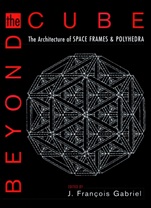
Beyond the Cube: The Architecture of Space Frames and Polyhedra
ISBN 9780471122616
Autor: Jean–François Gabriel
Wydawca: Wiley
Dostępność: 3-6 tygodni
Cena: 693,00 zł
Przed złożeniem zamówienia prosimy o kontakt mailowy celem potwierdzenia ceny.
ISBN13: |
9780471122616 |
ISBN10: |
0471122610 |
Autor: |
Jean–François Gabriel |
Oprawa: |
Hardback |
Rok Wydania: |
1997-10-27 |
Ilość stron: |
528 |
Wymiary: |
288x227 |
Tematy: |
AM |
Though human fascination with polyhedra can be traced back to the time of Pythagoras, only in the twentieth century have architects begun to fully appreciate and exploit their advantages as elements of structure and design. In Beyond the Cube, J. François Gabriel and a team of leading space frame experts from around the world examine the practical as well as theoretical aspects of space frames. They discuss some of the most memorable examples and practitioners of twentieth–century space frame design: Louis Kahn and the Yale University Art Gallery, Buckminster Fuller′s geodesic domes, Philip Johnson′s radically different approach to space frames in the Crystal Cathedral, and I. M. Pei′s Javits Convention and Exhibition Center, among others. In an extended discussion on the theory of polyhedra, Beyond the Cube explores the ways in which coupling cube to tetrahedron produces an array of other polyhedra that enable the expansion of design sources beyond the cube. The book examines the geometric laws that govern many of these shapes––prisms, antiprisms, domes, and folded plate structures, as well as space frames––and surveys the symbolic meanings ascribed to many polyhedra. Structural aspects of polyhedra are examined from two points of view, that of the structural engineer and that of the designer using CAD for the purpose of visualization and formal transformations. The book concludes with a look toward the future of polyhedra in architecture, including tensegrity structures, in which structural elements under compression are not in direct contact with each other; space labyrinths, made of a continuous surface dividing space into two parts; and quasicrystals, three–dimensional manifestations of higher–dimensional polyhedra. The final chapter examines the architectural spaces found within space frames, including "hexmods," "star beams," and the many other spaces that have yet to be named. For architects, structural engineers, and students, Beyond the Cube covers the what, why, and how of space frame architecture in a comprehensive and accessible manner not available in any other book. Hundreds of line drawings, black–and–white photos, and an eight–page color insert are both instructive and inspiring. This book is more than an introduction to space frames, it is an invitation to explore, discover, and use polyhedra to create imaginative, expressive, and practical designs for buildings. "We use the cube as if it were the only acceptable model for our living spaces and, in doing so, we ignore countless other forms that might lead to more efficient, more beautiful, more economical, and certainly less worn–out environments." ––from the Preface
Partial table of contents: Polyhedra, from Pythagoras to Alexander G. Bell (J. Tomlow). Polyhedrality in the Architecture of Bruce Goff (R. Ristine). Louis Kahn and Space Frames (I. Ayad). Buckminster Fuller and the Relevant Pattern (A. Loeb). Philip Johnson′s Crystal Cathedral and the Rhetoric of Its Free–Form Polyhedral Structure (L. Davis). Tetrahedral Purity: The Javits Center (M. Levy). Proportion and Symbolism in Polyhedra (R. Motro). The Structural Morphology of Basic Polyhedra (T. Wester). Computer–Aided Processing of Polyhedric Configurations (H. Nooshin, et al.). Tensegrity: Theory and Application (A. Hanaor). Visual Morphology of Space Labyrinths: A Source for Architecture and Design (H. Lalvani). Are Space Frames Habitable? (J. Gabriel). Contributors. Index.
J. FRANÇOIS GABRIEL is a professor at Syracuse University who specializes in the architecture of space frames. He is a member of the International Association of Shell and Spatial Structures, and he cofounded its Structural Morphology Working Group. Professor Gabriel has lectured worldwide and published widely on the topic of space frames and has conducted significant research on configurations.
Koszyk
Książek w koszyku: 0 szt.
Wartość zakupów: 0,00 zł
Informacje


Kontakt
Gambit
Centrum Oprogramowania
i Szkoleń Sp. z o.o.
Al. Pokoju 29b/22-24
31-564 Kraków
Siedziba Księgarni
ul. Kordylewskiego 1
31-542 Kraków
+48 12 410 5991
+48 12 410 5987
+48 12 410 5989
Subskrypcje
Administratorem danych osobowych jest firma Gambit COiS Sp. z o.o. Na podany adres będzie wysyłany wyłącznie biuletyn informacyjny.
Autoryzacja płatności

Informacje na temat autoryzacji płatności poprzez PayU.

© Copyright 2012: GAMBIT COiS Sp. z o.o. Wszelkie prawa zastrzeżone.
Projekt i wykonanie: Alchemia Studio Reklamy