


Wydawcy
Katalog tematyczny
- Archeologia (109)
- Ekonomia, finanse, business (13704)
- Filozofia (1445)
- Historia (3040)
- Języki i językoznawstwo (2356)
- Lifestyle, hobby i rozrywka (475)
- Medycyna (9704)
- Nauki humanistyczne (4)
- Nauki o Ziemi i środowisku (2638)
- Nauki ścisłe (20412)
- Nauki społeczne (8486)
- Nauki techniczne (13450)
- Budownictwo lądowe (1045)
- Chemia przemysłowa (2258)
- Elektronika i telekomunikacja (3287)
- Energetyka (1122)
- Inne nauki stosowane (363)
- Inżynieria biochemiczna (507)
- Inżynieria transportu (232)
- Mechanika i materiały (3316)
- Nauka o środowisku (321)
- Rolnictwo (507)
- Technika, ogólnie (475)
- Prawo (1696)
- Publikacje informacyjne i interdyscyplinarne (1288)
- Religia i wierzenia (917)
- Technika komputerowa (4067)
- Zdrowie, relacje międzyludzkie i rozwój osobisty (657)





Informacje szczegółowe o książce
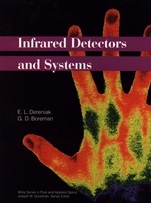
Infrared Detectors and Systems
ISBN 9780471122098
Autor: E. L. Dereniak, G. D. Boreman
Wydawca: Wiley
Dostępność: 3-6 tygodni
Cena: 1 085,70 zł
Przed złożeniem zamówienia prosimy o kontakt mailowy celem potwierdzenia ceny.
ISBN13: |
9780471122098 |
ISBN10: |
0471122092 |
Autor: |
E. L. Dereniak, G. D. Boreman |
Oprawa: |
Hardback |
Rok Wydania: |
1996-04-29 |
Ilość stron: |
592 |
Wymiary: |
246x166 |
Tematy: |
TJ |
This text covers the range of subjects necessary for the understanding of modern infrared–imaging systems at a level appropriate for seniors or first–year graduate students in physics or electrical engineering. The first six chapters focus on fundamental background issues of radiation detection, beginning with the basics of geometrical optics and finishing with a discussion of the figures of merit used for describing the signal–to–noise performance of a detector system. Other topics include radiometry and flux–transfer issues, basic radiation–detector mechanisms, and random–process mathematics.
The presentation then moves on to specific detector technologies and the fundamental mechanisms of detection, paying special attention to responsivity and noise performance. Devices discussed include photovoltaic detectors, photoconductive detectors, thermal detectors, Schottky–barrier diodes, and bandgap–engineered photodetectors via multiple quantum wells and superlattices.
The book concludes with a close look at infrared detection systems and related issues. In the discussion of infrared search systems, the range equation is developed in terms of the optical and detector parameters of the system. A separate chapter is devoted to modulation transfer function, a spatial–frequency–domain description of image quality. The final chapter describes the design equations for thermal–imager systems in terms of noise–equivalent temperature difference and minimum resolvable temperature.
Supported and clarified by 470 illustrations and accompanied by an extensive glossary of the nomenclature, this is an excellent text for graduate and senior level courses in radiometry and infrared detectors. It is also a valuable reference for practicing engineers involved in the use, design, analysis, and testing of infrared detector–based systems.
Infrared Detectors and Systems is a complete, accessible,
and timely exposition of a technology whose applications are increasingly important and widespread. Based on courses presented by two of the field′s leading figures, this book provides extensive coverage of the background and fundamentals of radiation detection and goes on to examine specific technologies and systems in depth and, in some cases, for the first time in print.
Technologies discussed include Photovoltaic detectors Photoconductive detectors Thermal detectors Schottky–barrier diodes Bandgap–engineered photodetectors via multiple quantum wells and superlattices
Supplemented with 470 illustrations and a complete glossary of the nomenclature, this is the ideal text for senior– and graduate–level courses in radiometry and optical detection.
Spis treści:
Partial table of contents:
Geometrical Optics.
Radiometry.
Optical–Detection Processes.
Probability and Statistics for Optical Detection.
Figures of Merit for Optical Detectors.
Photovoltaic Detectors.
Thermal Detectors.
Schottky–Barrier Photodiodes.
Infrared Search Systems.
Modulation Transfer Function.
Thermal–Imager Systems.
Appendices.
Index.
Nota biograficzna:
EUSTACE L. DERENIAK, PhD, is Professor in the Optical Sciences Center and the Department of Electrical & Computer Engineering of the University of Arizona. Before joining the university faculty in 1978, he spent many years in industrial research with Raytheon, Rockwell International, and Ball Brothers Research Corporation. He is coauthor of Optical Radiation Detectors and author or coauthor of more than 100 refereed articles. He has served as visiting professor with the U.S. Army and Air Force, research associate with the Air Force′s Rome Air Development Center, and consultant to the University of Hawaii Institute for Astronomy.
GLENN D. BOREMAN, PhD, is Associate Professor of
Electrical Engineering at the University of Central Florida′s Center for Research & Education in Optics and Lasers. A former visiting research scientist with McDonnell Douglas Astronautics Company, the U.S. Army Night Vision Laboratory, and Texas Instruments Research Center, he received his PhD in optical sciences from the University of Arizona. Professor Boreman is author and coauthor of 45 refereed journal articles on optical detectors and related topics.
Okładka tylna:
This text covers the range of subjects necessary for the understanding of modern infrared–imaging systems at a level appropriate for seniors or first–year graduate students in physics or electrical engineering. The first six chapters focus on fundamental background issues of radiation detection, beginning with the basics of geometrical optics and finishing with a discussion of the figures of merit used for describing the signal–to–noise performance of a detector system. Other topics include radiometry and flux–transfer issues, basic radiation–detector mechanisms, and random–process mathematics.
The presentation then moves on to specific detector technologies and the fundamental mechanisms of detection, paying special attention to responsivity and noise performance. Devices discussed include photovoltaic detectors, photoconductive detectors, thermal detectors, Schottky–barrier diodes, and bandgap–engineered photodetectors via multiple quantum wells and superlattices.
The book concludes with a close look at infrared detection systems and related issues. In the discussion of infrared search systems, the range equation is developed in terms of the optical and detector parameters of the system. A separate chapter is devoted to modulation transfer function, a spatial–frequency–domain description of image quality. The final chapter describes the design equations for thermal–imager systems in ter
ms of noise–equivalent temperature difference and minimum resolvable temperature.
Supported and clarified by 470 illustrations and accompanied by an extensive glossary of the nomenclature, this is an excellent text for graduate and senior level courses in radiometry and infrared detectors. It is also a valuable reference for practicing engineers involved in the use, design, analysis, and testing of infrared detector–based systems.
Infrared Detectors and Systems is a complete, accessible, and timely exposition of a technology whose applications are increasingly important and widespread. Based on courses presented by two of the field′s leading figures, this book provides extensive coverage of the background and fundamentals of radiation detection and goes on to examine specific technologies and systems in depth and, in some cases, for the first time in print.
Technologies discussed include Photovoltaic detectors Photoconductive detectors Thermal detectors Schottky–barrier diodes Bandgap–engineered photodetectors via multiple quantum wells and superlattices
Supplemented with 470 illustrations and a complete glossary of the nomenclature, this is the ideal text for senior– and graduate–level courses in radiometry and optical detection.
Koszyk
Książek w koszyku: 0 szt.
Wartość zakupów: 0,00 zł
Informacje


Kontakt
Gambit
Centrum Oprogramowania
i Szkoleń Sp. z o.o.
Al. Pokoju 29b/22-24
31-564 Kraków
Siedziba Księgarni
ul. Kordylewskiego 1
31-542 Kraków
+48 12 410 5991
+48 12 410 5987
+48 12 410 5989
Subskrypcje
Administratorem danych osobowych jest firma Gambit COiS Sp. z o.o. Na podany adres będzie wysyłany wyłącznie biuletyn informacyjny.
Autoryzacja płatności

Informacje na temat autoryzacji płatności poprzez PayU.

© Copyright 2012: GAMBIT COiS Sp. z o.o. Wszelkie prawa zastrzeżone.
Projekt i wykonanie: Alchemia Studio Reklamy