


Wydawcy
Katalog tematyczny
- Archeologia (109)
- Ekonomia, finanse, business (13704)
- Filozofia (1445)
- Historia (3040)
- Języki i językoznawstwo (2356)
- Lifestyle, hobby i rozrywka (475)
- Medycyna (9704)
- Nauki humanistyczne (4)
- Nauki o Ziemi i środowisku (2638)
- Nauki ścisłe (20412)
- Nauki społeczne (8486)
- Nauki techniczne (13450)
- Budownictwo lądowe (1045)
- Chemia przemysłowa (2258)
- Elektronika i telekomunikacja (3287)
- Energetyka (1122)
- Inne nauki stosowane (363)
- Inżynieria biochemiczna (507)
- Inżynieria transportu (232)
- Mechanika i materiały (3316)
- Nauka o środowisku (321)
- Rolnictwo (507)
- Technika, ogólnie (475)
- Prawo (1696)
- Publikacje informacyjne i interdyscyplinarne (1288)
- Religia i wierzenia (917)
- Technika komputerowa (4067)
- Zdrowie, relacje międzyludzkie i rozwój osobisty (657)





Informacje szczegółowe o książce
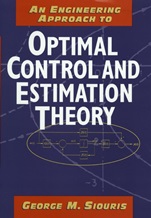
An Engineering Approach to Optimal Control and Estimation Theory
ISBN 9780471121268
Autor: George M. Siouris
Wydawca: Wiley
Dostępność: 3-6 tygodni
Cena: 947,10 zł
Przed złożeniem zamówienia prosimy o kontakt mailowy celem potwierdzenia ceny.
ISBN13: |
9780471121268 |
ISBN10: |
0471121266 |
Autor: |
George M. Siouris |
Oprawa: |
Hardback |
Rok Wydania: |
1996-03-06 |
Ilość stron: |
424 |
Wymiary: |
241x168 |
Tematy: |
TGPQ |
A much–awaited guide to real–world problems in modern control and estimation
This combined text and reference deals with the design of modern control systems. It is the first book in this rapidly growing field to approach optimal control and optimal estimation from a strictly pragmatic standpoint. Sidestepping the realm of theoretical mathematics, An Engineering Approach to Optimal Control and Estimation Theory offers realistic and workable solutions that can be put to immediate use by electrical and mechanical engineers in aerospace and in many other applications.
The author draws on his extensive experience in research and development from industry, government, and academia to present systematic, accessible coverage of all important topics, including: All basic mathematics needed to apply subsequent information A historical perspective on the evolution of modern control and estimation theory All major concepts relevant to the design of modern control systems—from the Kalman filter, to linear regulators, to decentralized Kalman filters Practical examples useful in applying the principles under discussion Problems at the end of each chapter Carefully selected references from the vast number of books published on this subject Appendixes reviewing matrix algebra that is central to modern control theory, as well as matrix subroutines, useful to both students and practicing engineers
Optimal Control and Estimation Theory
Optimal control and optimal estimation have seen tremendous growth over the past three decades, owing to major advances in aerospace and other types of engineering. Optimal control and estimation theory is crucial to the design of modern control systems; for instance, navigation, mobile robotics, or automated vehicles and aircraft. It ensures that variables such as temperatures or pressure are kept in check, regardless of the disturbance the system undergoes.
Despite the prolife
ration of books on the subject, most of the material published in this area is highly theoretical, and approaches the subject in a "theorem–proof" fashion, which is more appropriate to mathematics than to an engineering text. As its title suggests, An Engineering Approach to Optimal Control and Estimation Theory provides a practical and accessible guide, focusing on applications and implementation, and answering real–world questions faced by control engineers.
In its highly organized overview of all areas, the book examines the design of modern optimal controllers requiring the selection of a performance criterion, demonstrates optimization of linear systems with bounded controls and limited control effort, and considers nonlinearities and their effect on various types of signals.
Covering all the basics, the book deals with the evolution of optimal control and estimation theory, and presents the necessary mathematical background needed for this study. It also lists references and problems, and supplies appendixes for those wishing to delve into matrix algebra. Throughout, it offers opportunities for experimentation, while discussing analysis, various filtering methods, and many other pertinent topics.
An Engineering Approach to Optimal Control and Estimation Theory is an invaluable, self–contained reference for practicing engineers, a useful text for graduate students and qualified senior undergraduates, and an important resource for anyone interested in the future of modern control technology.
Spis treści:
Mathematical Preliminaries.
Linear Regression, Least–Squares and Maximum–Likelihood Estimation.
The Kalman Filter.
Linear Regulators.
Covariance Analysis and Suboptimal Filtering.
The –beta–gamma Tracking Filters.
Decentralized Kalman Filters.
References.
Appendices.
Index.
Nota biograficzna:
George M. Siouris, D.Eng.Sc., is Adjunct Professor in
the Department of Electrical and Computer Engineering at the Air Force Institute of Technology, and a researcher with the Directorate of Development Planning, Studies and Analysis Division, Wright–Patterson Air Force Base, Ohio. Dr. Siouris has written numerous technical papers, book reviews, and conference papers; contributed a chapter on inertial navigation to the Encyclopedia of Physical Science Technology; and is the author of Aerospace Avionics Systems: A Modern Synthesis. From 1983 to 1993 he was the Editor for Navigation/Tracking Systems in the IEEE Transactions on Aerospace and Electronic Systems. His primary research interests include theory and applications of inertial navigation and guidance systems, modeling of physical systems, and applications of modern control and estimation theory.
Okładka tylna:
A much–awaited guide to real–world problems in modern control and estimation
This combined text and reference deals with the design of modern control systems. It is the first book in this rapidly growing field to approach optimal control and optimal estimation from a strictly pragmatic standpoint. Sidestepping the realm of theoretical mathematics, An Engineering Approach to Optimal Control and Estimation Theory offers realistic and workable solutions that can be put to immediate use by electrical and mechanical engineers in aerospace and in many other applications.
The author draws on his extensive experience in research and development from industry, government, and academia to present systematic, accessible coverage of all important topics, including: All basic mathematics needed to apply subsequent information A historical perspective on the evolution of modern control and estimation theory All major concepts relevant to the design of modern control systems—from the Kalman filter, to linear regulators, to decentralized Kalman filters Practical examples useful in applying the pr
inciples under discussion Problems at the end of each chapter Carefully selected references from the vast number of books published on this subject Appendixes reviewing matrix algebra that is central to modern control theory, as well as matrix subroutines, useful to both students and practicing engineers
Optimal Control and Estimation Theory
Optimal control and optimal estimation have seen tremendous growth over the past three decades, owing to major advances in aerospace and other types of engineering. Optimal control and estimation theory is crucial to the design of modern control systems; for instance, navigation, mobile robotics, or automated vehicles and aircraft. It ensures that variables such as temperatures or pressure are kept in check, regardless of the disturbance the system undergoes.
Despite the proliferation of books on the subject, most of the material published in this area is highly theoretical, and approaches the subject in a "theorem–proof" fashion, which is more appropriate to mathematics than to an engineering text. As its title suggests, An Engineering Approach to Optimal Control and Estimation Theory provides a practical and accessible guide, focusing on applications and implementation, and answering real–world questions faced by control engineers.
In its highly organized overview of all areas, the book examines the design of modern optimal controllers requiring the selection of a performance criterion, demonstrates optimization of linear systems with bounded controls and limited control effort, and considers nonlinearities and their effect on various types of signals.
Covering all the basics, the book deals with the evolution of optimal control and estimation theory, and presents the necessary mathematical background needed for this study. It also lists references and problems, and supplies appendixes for those wishing to delve into matrix algebra. Throughout, it offers opportunities for experiment
Koszyk
Książek w koszyku: 0 szt.
Wartość zakupów: 0,00 zł
Informacje


Kontakt
Gambit
Centrum Oprogramowania
i Szkoleń Sp. z o.o.
Al. Pokoju 29b/22-24
31-564 Kraków
Siedziba Księgarni
ul. Kordylewskiego 1
31-542 Kraków
+48 12 410 5991
+48 12 410 5987
+48 12 410 5989
Subskrypcje
Administratorem danych osobowych jest firma Gambit COiS Sp. z o.o. Na podany adres będzie wysyłany wyłącznie biuletyn informacyjny.
Autoryzacja płatności

Informacje na temat autoryzacji płatności poprzez PayU.

© Copyright 2012: GAMBIT COiS Sp. z o.o. Wszelkie prawa zastrzeżone.
Projekt i wykonanie: Alchemia Studio Reklamy