


Wydawcy
Katalog tematyczny
- Archeologia (109)
- Ekonomia, finanse, business (13704)
- Filozofia (1445)
- Historia (3040)
- Języki i językoznawstwo (2356)
- Lifestyle, hobby i rozrywka (475)
- Medycyna (9704)
- Nauki humanistyczne (4)
- Nauki o Ziemi i środowisku (2638)
- Nauki ścisłe (20412)
- Nauki społeczne (8486)
- Nauki techniczne (13450)
- Budownictwo lądowe (1045)
- Chemia przemysłowa (2258)
- Elektronika i telekomunikacja (3287)
- Energetyka (1122)
- Inne nauki stosowane (363)
- Inżynieria biochemiczna (507)
- Inżynieria transportu (232)
- Mechanika i materiały (3316)
- Nauka o środowisku (321)
- Rolnictwo (507)
- Technika, ogólnie (475)
- Prawo (1696)
- Publikacje informacyjne i interdyscyplinarne (1288)
- Religia i wierzenia (917)
- Technika komputerowa (4067)
- Zdrowie, relacje międzyludzkie i rozwój osobisty (657)





Informacje szczegółowe o książce
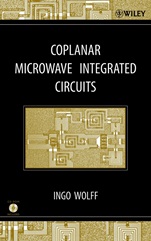
Coplanar Microwave Integrated Circuits
ISBN 9780471121015
Autor: Ingo Wolff
Wydawca: Wiley
Dostępność: 3-6 tygodni
Cena: 899,85 zł
Przed złożeniem zamówienia prosimy o kontakt mailowy celem potwierdzenia ceny.
ISBN13: |
9780471121015 |
ISBN10: |
0471121010 |
Autor: |
Ingo Wolff |
Oprawa: |
Hardback |
Rok Wydania: |
2006-08-04 |
Ilość stron: |
560 |
Wymiary: |
241x166 |
Tematy: |
TJ |
The tools and techniques to fully leverage coplanar technology
Coplanar Microwave Integrated Circuits sets forth the theoretical underpinnings of coplanar waveguides and thoroughly examines the various coplanar components such as discontinuities, lumped elements, resonators, couplers, and filters, which are essential for microwave integrated circuit design. Based on the results of his own research findings, the author effectively demonstrates the many advantages of coplanar waveguide technology for modern circuit design.
Following a brief introductory chapter, the text thoroughly covers the material needed for successful design and realization of coplanar microwave circuits, including:Fundamental transmission properties of coplanar waveguides using a full wave analysisDetailed analysis of most discontinuities used in coplanar waveguide designLumped elements in coplanar technology that are needed in circuit designDevelopment of software for coplanar circuit design, including a CD–ROM containing a test version of the software for modeling coplanar circuit components and circuitsApplication of derived results to build more complex components such as lumped element filters, waveguide filters, millimeter wave filters, end–coupled waveguide structures, waveguide couplers, and Wilkinson couplers for different frequency ranges in coplanar technology
The final chapter focuses on special coplanar microwave integrated circuits that have been developed using the software presented in the text. The book concludes with a thought–provoking discussion of the advantages and disadvantages of the coplanar technique.
Extensive use of figures and tables helps readers easily digest and visualize complex concepts. A bibliography is included at the end of each chapter for further study and research.
Coplanar Microwave Integrated Circuits is recommended for graduate students and engineers in RF microwave
s who want to reap all the advantages and possibilities of coplanar technology.
Spis treści:
Preface.
1. Introduction.
References.
2. Transmission Properties of Coplanar Waveguides.
2.1 Rigorous, Full–Wave Analysis of Transmission Properties.
2.1.1 The Coplanar Waveguide with a Single Center Strip and Finite Ground–Plane Width.
2.1.2 The Coplanar Waveguide with a Single Center Strip and Infinite Ground–Plane Width.
2.1.3 Coupled Coplanar Waveguides.
2.1.3.1 Scattering Matrix of Coupled Coplanar Waveguides.
2.1.3.2 Coupled Coplanar Waveguides and Microstrip Lines—A Comparison.
2.2 Quasi–Static Analysis of Coplanar Waveguides Using the Finite Difference Method.
2.2.1 Introduction.
2.2.2 The Finite Difference Method as Applied to the Analysis of Coplanar Waveguide Structures.
2.2.3 The Solution of Laplace’s Equation for Planar and Coplanar Line Structures Using the Finite Difference Method.
2.2.4 Application of the Quasi–Static Techniques to the Analysis of Coplanar Waveguides.
2.2.5 Characteristic Parameters of Coplanar Waveguides.
2.2.6 The Influence of the Metalization Thickness on the Line Parameters.
2.2.7 The Influence of the Ground Strip Width on the Line Parameters.
2.2.8 The Influence of the Shielding on the Line Parameters.
2.2.9 Special Forms of Coplanar Waveguides.
2.2.10 Coplanar–like Waveguides.
2.2.11 Coupled Coplanar Waveguide Structures.
2.2.11.1 Analysis of the Characteristic Parameter Matrices.
2.2.11.2 Determination of the Scattering Matrix of Coupled Coplanar Waveguides.
2.3 Closed Formula Static Analysis of Coplanar Waveguide Properties.
2.3.1 Analysis of a Generalized Coplanar Waveguide with Supporting Substrate Layers.
2.3.1.1 Structure SCPW1.
2.3.1.2 Structure SCPW2.
2.3.1.3 Structure SCPW3.
2.3.1.4 Numerical Results.
2.3.2 Static Formulas for Calculating the Parame
ters of General Broadside–Coupled Coplanar Waveguides.
2.3.2.1 Analytical Formulas and Results for the General Broadside–Coupled Coplanar Waveguide.
2.3.2.2 Analysis of an Asymmetric Supported BSC–CPW.
2.3.2.3 Application of the GBSC–CPW as Single CPW.
2.3.2.4 Criteria for the Coplanar Behavior of the Structure.
Bibliography and References.
3. Coplanar Waveguide Discontinuities.
3.1 The Three–Dimensional Finite Difference Analysis.
3.2 Computation of the Electric Field Strength.
3.3 Computation of the Magnetic Field Strength.
3.3.1 Convergence and Error Discussion for the Analysis Technique.
3.4 Coplanar Waveguide Discontinuities.
3.4.1 Modeling the Discontinuities.
3.4.2 Extraction of the Model Parameters.
3.5 Description of Coplanar Waveguide Discontinuities.
3.5.1 The Coplanar Open End.
3.5.2 The Coplanar Waveguide Short–Circuited End.
3.5.3 The Gap in a Coplanar Waveguide.
3.5.4 The Coplanar Waveguide Step.
3.5.5 Air Bridges in Coplanar Waveguides.
3.5.6 The Coplanar Waveguide Bend.
3.5.7 The Coplanar Waveguide T–Junction.
3.5.7.1 Analysis of the Odd–Mode Excitation.
3.5.8 The Coplanar T–Junction as a Mode Converter.
3.5.9 The Coplanar Waveguide Crossing.
Bibliography and References.
4. Coplanar Lumped Elements.
4.1 Introduction.
4.2 The Coplanar Interdigital Capacitor.
4.2.1 The Lumped Element Modeling Approach.
4.2.2 Enhancement of the Interdigital Capacitor Model for Application at Millimeter–Wave Frequencies.
4.3 The Coplanar Metal–Insulator–Metal (MIM) Capacitor.
4.4 The Coplanar Spiral Inductor.
4.4.1 Enhancement of the Inductor Model for Millimeter–Wave Frequencies.
4.4.2 Coupled Coplanar Rectangular Inductors.
4.5 The Coplanar Rectangular Spiral Transformer.
4.6 The Coplanar Thin–Film Resistor.
Bibliography and References.
5. Coplanar Element
Library and Circuit Design Program.
5.1 Introduction.
5.2 Modeling, Convergence, and Accuracy.
5.3 Overview on Coplan for ADSTM.
5.3.1 Data Items.
5.3.2 Library Elements.
5.4 Cache Management.
5.5 Layout.
5.6 Coplanar Data Items.
5.6.1 Overview.
5.6.2 Description of the Data Items.
5.6.2.1 Coplanar Substrate Data Definition C—SUB.
5.6.2.2 Coplanar Line–Type Data Definition C—LINTYP.
5.6.2.3 Coplanar Coupled Lines Data Definition C—NL—TYP.
5.6.2.4 Coplanar Bridge–Type Data Definition C—AIRTYP.
5.6.2.5 Coplanar Grid Data Definition C—GRID.
5.6.2.6 Process (Foundry) Used for Fabrication C—PROCES.
5.6.2.7 Technological Data Definition (Default Foundry) C—TECH.
5.6.2.8 Layer Data Definition (Default Foundry) C—LAYER.
5.7 The Coplanar Components and Their Models.
5.7.1 Coplanar Waveguide RF–Port C—PORT.
5.7.2 Coplanar Transmission Line C—LIN.
5.7.3 Coplanar Inter–Metal via (No Step) Connection C—METIA.
5.7.4 Coplanar Resistively Loaded Transmission Line C—TFG.
5.7.5 Coplanar MIM–Capacitor to Ground C—CAPLIN.
5.7.6 Coplanar Open–Ended Transmission Line C—OPEN.
5.7.7 Coplanar Short–Circuited Transmission Line C—SHORT.
5.7.8 Gap in a Coplanar Transmission Line C—GAP.
5.7.9 Step in a Coplanar Transmission Line C—STEP.
5.7.10 Coplanar Waveguide Taper C—TAPER.
5.7.11 Coplanar Air Bridges C—AIR.
5.7.12 Bend in a Coplanar Transmission Line C—BEND.
5.7.13 T–Junction in Coplanar Transmission Lines C—TEE.
5.7.14 Crossing of Coplanar Transmission Lines C—CROSS.
5.7.15 Coplanar Interdigital Capacitor C—IDC.
5.7.16 Coplanar Rectangular Inductor C—RIND.
5.7.17 Coplanar Thin–Film Resistor C—TFR.
5.7.18 Coplanar Metal–Insulator–Metal Capacitor CR
Koszyk
Książek w koszyku: 0 szt.
Wartość zakupów: 0,00 zł
Informacje


Kontakt
Gambit
Centrum Oprogramowania
i Szkoleń Sp. z o.o.
Al. Pokoju 29b/22-24
31-564 Kraków
Siedziba Księgarni
ul. Kordylewskiego 1
31-542 Kraków
+48 12 410 5991
+48 12 410 5987
+48 12 410 5989
Subskrypcje
Administratorem danych osobowych jest firma Gambit COiS Sp. z o.o. Na podany adres będzie wysyłany wyłącznie biuletyn informacyjny.
Autoryzacja płatności

Informacje na temat autoryzacji płatności poprzez PayU.

© Copyright 2012: GAMBIT COiS Sp. z o.o. Wszelkie prawa zastrzeżone.
Projekt i wykonanie: Alchemia Studio Reklamy