


Wydawcy
Katalog tematyczny
- Archeologia (109)
- Ekonomia, finanse, business (13704)
- Filozofia (1445)
- Historia (3040)
- Języki i językoznawstwo (2356)
- Lifestyle, hobby i rozrywka (475)
- Medycyna (9704)
- Nauki humanistyczne (4)
- Nauki o Ziemi i środowisku (2638)
- Nauki ścisłe (20412)
- Nauki społeczne (8486)
- Nauki techniczne (13450)
- Budownictwo lądowe (1045)
- Chemia przemysłowa (2258)
- Elektronika i telekomunikacja (3287)
- Energetyka (1122)
- Inne nauki stosowane (363)
- Inżynieria biochemiczna (507)
- Inżynieria transportu (232)
- Mechanika i materiały (3316)
- Nauka o środowisku (321)
- Rolnictwo (507)
- Technika, ogólnie (475)
- Prawo (1696)
- Publikacje informacyjne i interdyscyplinarne (1288)
- Religia i wierzenia (917)
- Technika komputerowa (4067)
- Zdrowie, relacje międzyludzkie i rozwój osobisty (657)





Informacje szczegółowe o książce
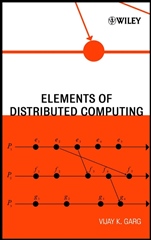
Elements of Distributed Computing
ISBN 9780471036005
Autor: Vijay K. Garg
Wydawca: Wiley
Dostępność: 3-6 tygodni
Cena: 687,75 zł
Przed złożeniem zamówienia prosimy o kontakt mailowy celem potwierdzenia ceny.
ISBN13: |
9780471036005 |
ISBN10: |
0471036005 |
Autor: |
Vijay K. Garg |
Oprawa: |
Hardback |
Rok Wydania: |
2002-06-12 |
Ilość stron: |
448 |
Wymiary: |
241x156 |
Tematy: |
TJ |
A lucid and up–to–date introduction to the fundamentals of distributed computing systems
As distributed systems become increasingly available, the need for a fundamental discussion of the subject has grown. Designed for first–year graduate students and advanced undergraduates as well as practicing computer engineers seeking a solid grounding in the subject, this well–organized text covers the fundamental concepts in distributed computing systems such as time, state, simultaneity, order, knowledge, failure, and agreement in distributed systems.
Departing from the focus on shared memory and synchronous systems commonly taken by other texts, this is the first useful reference based on an asynchronous model of distributed computing, the most widely used in academia and industry. The emphasis of the book is on developing general mechanisms that can be applied to a variety of problems. Its examples–clocks, locks, cameras, sensors, controllers, slicers, and synchronizers–have been carefully chosen so that they are fundamental and yet useful in practical contexts.
The text′s advantages include:
∗ Emphasizes general mechanisms that can be applied to a variety of problems
∗ Uses a simple induction–based technique to prove correctness of all algorithms
∗ Includes a variety of exercises at the end of each chapter
∗ Contains material that has been extensively class tested
∗ Gives instructor flexibility in choosing appropriate balance between practice and theory of distributed computing
Spis treści:
Foreword.
Preface.
Introduction.
Model of a Computation.
Logical Clocks.
Verifying Clock Algorithms.
Clocks of Different Dimensions.
Mutual Exclusion: Using Timestamps.
Mutual Exclusion: Tokens and Quorums.
Drinking Philosophers Problem.
Leader Election.
Global State.
Observing Global Predicates.
Observing Conjuctive Predic
ates.
Channel Predicates.
Termination Detection.
Control of a Distributed Computation.
Causal Message Ordering.
Synchronous and Total Message Ordering.
Computation of a Global Functon.
Repeated Global Computation of a Global Function.
Synchronizers.
Slicers.
Distributed Shared Memory.
Self–Stabilization.
Knowledge and Common Knowledge.
Consensus Under Asynchrony.
Consensus Under Synchrony.
Failure Detectors.
Easy Problems in Asychronous Systems.
Checkpointing for Recovery.
Message Logging for Recovery.
Appendix: Partial Orders.
Bibliography.
Index.
Nota biograficzna:
VIJAY K. GARG, PhD, is a professor in the Electrical and Computer Engineering Department at the University of Texas at Austin and a leading researcher in distributed computing systems..
Okładka tylna:
A lucid and up–to–date introduction to the fundamentals of distributed computing systems
As distributed systems become increasingly available, the need for a fundamental discussion of the subject has grown. Designed for first–year graduate students and advanced undergraduates as well as practicing computer engineers seeking a solid grounding in the subject, this well–organized text covers the fundamental concepts in distributed computing systems such as time, state, simultaneity, order, knowledge, failure, and agreement in distributed systems.
Departing from the focus on shared memory and synchronous systems commonly taken by other texts, this is the first useful reference based on an asynchronous model of distributed computing, the most widely used in academia and industry. The emphasis of the book is on developing general mechanisms that can be applied to a variety of problems. Its examples–clocks, locks, cameras, sensors, controllers, slicers, and synchronizers–have been carefully chosen so that they are fundamental and yet useful in practical contexts.The text′s advantages include:
∗ Emphasizes general mechanisms that can be applied to a variety of problems
∗ Uses a simple induction–based technique to prove correctness of all algorithms
∗ Includes a variety of exercises at the end of each chapter
∗ Contains material that has been extensively class tested
∗ Gives instructor flexibility in choosing appropriate balance between practice and theory of distributed computing
Koszyk
Książek w koszyku: 0 szt.
Wartość zakupów: 0,00 zł
Informacje


Kontakt
Gambit
Centrum Oprogramowania
i Szkoleń Sp. z o.o.
Al. Pokoju 29b/22-24
31-564 Kraków
Siedziba Księgarni
ul. Kordylewskiego 1
31-542 Kraków
+48 12 410 5991
+48 12 410 5987
+48 12 410 5989
Subskrypcje
Administratorem danych osobowych jest firma Gambit COiS Sp. z o.o. Na podany adres będzie wysyłany wyłącznie biuletyn informacyjny.
Autoryzacja płatności

Informacje na temat autoryzacji płatności poprzez PayU.

© Copyright 2012: GAMBIT COiS Sp. z o.o. Wszelkie prawa zastrzeżone.
Projekt i wykonanie: Alchemia Studio Reklamy