


Wydawcy
Katalog tematyczny
- Archeologia (109)
- Ekonomia, finanse, business (13704)
- Filozofia (1445)
- Historia (3040)
- Języki i językoznawstwo (2356)
- Lifestyle, hobby i rozrywka (475)
- Medycyna (9704)
- Nauki humanistyczne (4)
- Nauki o Ziemi i środowisku (2638)
- Nauki ścisłe (20412)
- Astronomia (294)
- Biologia (5119)
- Chemia (6540)
- Chemia analityczna (361)
- Chemia fizyczna (346)
- Chemia nieorganiczna (137)
- Chemia organiczna (535)
- Krystalografia (27)
- Minerologia (46)
- Fizyka (3309)
- Matematyka (4574)
- Nauki ścisłe, ogólnie (503)
- Nauki społeczne (8486)
- Nauki techniczne (13450)
- Prawo (1696)
- Publikacje informacyjne i interdyscyplinarne (1288)
- Religia i wierzenia (917)
- Technika komputerowa (4067)
- Zdrowie, relacje międzyludzkie i rozwój osobisty (657)





Informacje szczegółowe o książce
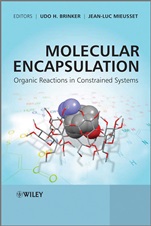
Molecular Encapsulation: Organic Reactions in Constrained Systems
ISBN 9780470998076
Autor: Udo H. Brinker, Jean–Luc Mieusset
Wydawca: Wiley
Dostępność: 3-6 tygodni
Cena: 807,45 zł
Przed złożeniem zamówienia prosimy o kontakt mailowy celem potwierdzenia ceny.
ISBN13: |
9780470998076 |
ISBN10: |
0470998075 |
Autor: |
Udo H. Brinker, Jean–Luc Mieusset |
Oprawa: |
Hardback |
Rok Wydania: |
2010-06-25 |
Ilość stron: |
520 |
Wymiary: |
249x173 |
Tematy: |
PN |
The inclusion of small guest molecules within suitable host compounds results in constrained systems that imbue novel properties upon the incarcerated organic substrates. Supramolecular tactics are becoming widely employed and this treatise spotlights them. Often, the impact of encapsulation on product formation is substantial. The use of constrained systems offers the means to steer reactions along desired pathways. A broad overview of various supramolecular approaches aimed to manipulate chemical reactions are featured.
The following topics are covered in detail:
– general concepts governing the assembly of the substrate with the reaction vessel
– preparation of molecular reactors
– stabilization of reactive intermediates
– reactions in water, in organic solvents, and in the solid state
– photochemical reactions
– reactions with unusual regioselectivity
Molecular Encapsulation: Organic Reactions in Constrained Systems is an essential guide to the art of changing the outcome and the selectivity of a chemical reaction using nano–sized reaction vessels. It will find a place on the bookshelves of students and researchers working in the areas of supramolecular chemistry, nanotechnology, organic and pharmaceutical chemistry, and materials science as well.
Spis treści:
List of Contributors
1. Reaction Control by Molecular Recognition
Yoshihisa Inoue, Cheng Yang, Chenfeng Ke and Yu Liu
1.1 Introduction
1.2 Photochemical Reactions Mediated by Macrocyclic Compounds
1.3 Photochemical Reactions with Biomolecules
1.4 Photochemical Reactions with Confined Cages Based on Inorganic and Organic–Inorganic Hybrid Materials
1.5. Photochemical Reactions with other Artificial Hosts
1.6 Photoreaction Control by External Variants
1.7 Conclusions
References
2. Reactions in Cyclodextrins
Ronald Breslow
2.1
Introduction
2.2 Acylations of the Cyclodextrins by Bound Substrates
2.3 Catalytic Reactions in Cyclodextrin Cavities: Aromatic Substitution
2.4 Other Solvents than Water
2.5 Catalytic Reactions Produced by Cyclodextrins With Covalently Attached Catalytic Groups
2.6 Binding by Cyclodextrins and their Dimers and Trimers
2.7 Mimics of Enzymes that use Thiamine Pyrophosphate as a Co–Enzyme
2.8 Aldol Condensations Catalyzed by Cyclodextrin Derivatives
2.9 Mimics of Enzymes Using Coenzyme B12 as a Cofactor
2.10 Mimics of Cytochrome P–450
References
3. Cyclodextrins as Molecular Reactors
Chris J. Easton and Hideki Onagi
3.1 Introduction
3.2 Regiocontrolled Electrophilic Aromatic Substitutions
3.3 Catalysis of Hydrolytic Reactions
3.4 A Molecular Reactor for the Synthesis of Indigoid Dyes
3.5 Manipulation of Cycloadditions
3.6 Conclusion
References
4. Reactions Mediated by Cyclodextrins
Keiko Takahashi
4.1 Introduction
4.2 The Inclusion Phenomena of Cyclodextrins
4.3 Origin of microvessel as molecular flask
4.4 Organic reactions mediated by CyD in water
4.5 Conclusion
References
5. Reactions in Zeolites
Jean Sommer and Stéphane Walspurger
5.1 The confinement effect
5.2 Superelectrophilic activation in zeolites
5.3 Huisgen [3+2]–cycloadditions
5.4 Multicomponent reactions
5.5 Conclusion
References
6. Chemistry in Self–Assembled Reactors
Jarl Ivar van der Vlugt, Tehila S. Koblenz, Jeroen Wassenaar and Joost N. H. Reek
6.1 Introduction
6.2 Self–Assembled Nanocapsules
6.3 Encapsulation effects in catalysis
6.4 Hydrogen Bonded Capsules
6.5 Capsules based on metal–ligand interactions
6.6 Tetrahedral Cages Based on Octahedral M3+ Ions
6.7 Octahedral and Square Pyramidal Cages Base
d on Square–Planar M2+ Ions
6.8 Hydrophobic Effects as the Driving Force for the Self–Assembly of Nanocapsules
6.9 Ligand Template Approach using Lewis Acid/Base Interactions
6.9.1 Hydroformylation
6.10 Virus Capsids, Proteins and Micellar Systems
6.11 Micellar Systems
6.12 Conclusions and outlook
References
7. Concave Reagents
Ulrich Lüning
7.1 Introduction
7.2 Classes of Concave Reagents
7.3 Reactions and Catalyses
7.4 Summary and outlook
References
8. Reactions in Calixarenes
Luigi Mandolini, Roberta Cacciapaglia and Stefano Di Stefano
8.1 Introduction
8.2 Calixarenes as Hosts
8.3 Calixarenes as Molecular Platforms
8.4 Concluding Remarks
References
9. Reactions in Carcerands
Ralf Warmuth
9.1 Introduction
9.2 Types of Inner Phase Reactions
9.3 Probing the Properties of the Inner Phase
9.4. Through–Shell Reactions
9.5 Intramolecular Thermal Reactions
9.6 Inner Phase Photochemistry
9.7 Conclusions and Outlook
Acknowledgements
References
10. Encapsulation of Reactive Intermediates
Jean–Luc Mieusset and Udo H. Brinker
10.1 Introduction
10.2 Encapsulation of Labile Species
10.3 Isolation of Non–covalently Bonded Aggregates
10.4 Inclusion of Reactive Intermediates
References
11. Dye Encapsulation
Bradley T. Smith, Jeremiah J. Gassensmith and Easwaran Arunkumar
11.1 Introduction
11.2 Reversible dye encapsulation inside organic container molecules
11.3 Reversible dye encapsulation by biological receptors
11.4 Permanent dye encapsulation inside rotaxanes
11.5 Permanent encapsulation inside inorganic matrices
11.6 Conclusion
References
12. Organic Cations in Constrained Systems
Werner Abraham, L. Grubert
12.1 Introduction
12.2 Host–Guest Complexes with Organic Catio
ns
12.3 Extended Hosts and Capsules
12.4 Cucurbiturils
12.5 Complex Systems and Applications
12.6 Conclusions
References
13. Proteins as Host for Enantioselective Catalysis: Artificial Metalloenzymes Based on the Biotin–Streptavidin Technology
Thomas R. Ward
13.1 Introduction
13.2 The Biotin–Avidin Technology
13.3 The chemical optimization dimension
13.3.1 The genetic optimization dimension
13.4 Artificial hydrogenases
13.5 Artificial allylic alkylases
13.6 Artificial transfer hydrogenase
13.7 Enantioselective sulfoxidation based on vanadyl–loaded streptavidin
13.8 Conclusions and Outlook
Acknowledgement
References
14. Chemical Reactions with RNA and DNA Enzymes
Andres Jäschke
14.1 Introduction
14.2 Catalysis by naturally occurring ribozymes
14.3 How to generate artificial RNA and DNA catalysts
14.4 The catalytic spectrum of artificial ribozymes
14.5 Deoxyribozymes – DNA molecules with catalytic properties
14.6 Catalysis of C–C bond formation by Diels–Alderase ribozymes
14.7 Conclusion
References
15. Reactions in Supramolecular Systems
Lucia Zakharova, Alla Bencionovna Mirgorodskaya, Elena Petrovna Zhiltsova, Ludmila Andreevna Kudryavtseva and Alexander Ivanovich Konovalov
15.1 Introduction
15.2 The Single Micellar Systems. Factors of Concentration and Micellar Microenvironment
15.3 The Role of the Structural Factor in Supramolecular Catalytic Systems
15.4 Binary Surfactant Systems
15.5 Polycomponent Catalytic Systems Based on Amphiphyles and Polymers
Acknowledgments
Dedication
References
16. Encapsulation Processes by Bilayer Vesicles
Marc C.A. Stuart and Jan B.F.N. Engberts
16.1 Introduction
16.2 Catalysis by Vesicles. Encapsulation of Reactants
16.3 Liposomal Encapsulation in Drug Delivery
16.4 Vesicle–n
ucleic acid interactions: gene transfer using lipoplexes
References
17. Reactions in Liposomes
Pasquale Stano and Pier Luigi Luisi
17.1 Introduction
17.2 Lipid Vesicles (Liposomes)
17.3 Experimental Strategies and Theoretical Aspects
17.4 A theoretical framework for complex reactions in liposomes
17.5 Four cases of compartmentalized reactions
17.6 Conclusion
Acknowledgements
References
Okładka tylna:
The inclusion of small guest molecules within suitable host compounds results in constrained systems that imbue novel properties upon the incarcerated organic substrates. Supramolecular tactics are becoming widely employed and this treatise spotlights them. Often, the impact of encapsulation on product formation is substantial. The use of constrained systems offers the means to steer reactions along desired pathways. A broad overview of various supramolecular approaches aimed to manipulate chemical reactions are featured.
The following topics are covered in detail:
– general concepts governing the assembly of the substrate with the reaction vessel
– preparation of molecular reactors
– stabilization of reactive intermediates
– reactions in water, in organic solvents, and in the solid state
– photochemical reactions
– reactions with unusual regioselectivity
Molecular Encapsulation: Organic Reactions in Constrained Systems is an essential guide to the art of changing the outcome and the selectivity of a chemical reaction using nano–sized reaction vessels. It will find a place on the bookshelves of students and researchers working in the areas of supramolecular chemistry, nanotechnology, organic and pharmaceutical chemistry, and materials science as well.
Koszyk
Książek w koszyku: 0 szt.
Wartość zakupów: 0,00 zł
Informacje


Kontakt
Gambit
Centrum Oprogramowania
i Szkoleń Sp. z o.o.
Al. Pokoju 29b/22-24
31-564 Kraków
Siedziba Księgarni
ul. Kordylewskiego 1
31-542 Kraków
+48 12 410 5991
+48 12 410 5987
+48 12 410 5989
Subskrypcje
Administratorem danych osobowych jest firma Gambit COiS Sp. z o.o. Na podany adres będzie wysyłany wyłącznie biuletyn informacyjny.
Autoryzacja płatności

Informacje na temat autoryzacji płatności poprzez PayU.

© Copyright 2012: GAMBIT COiS Sp. z o.o. Wszelkie prawa zastrzeżone.
Projekt i wykonanie: Alchemia Studio Reklamy