


Wydawcy
Katalog tematyczny
- Archeologia (109)
- Ekonomia, finanse, business (13704)
- Filozofia (1445)
- Historia (3040)
- Języki i językoznawstwo (2356)
- Lifestyle, hobby i rozrywka (475)
- Medycyna (9704)
- Nauki humanistyczne (4)
- Nauki o Ziemi i środowisku (2638)
- Nauki ścisłe (20412)
- Nauki społeczne (8486)
- Nauki techniczne (13450)
- Budownictwo lądowe (1045)
- Chemia przemysłowa (2258)
- Elektronika i telekomunikacja (3287)
- Energetyka (1122)
- Inne nauki stosowane (363)
- Inżynieria biochemiczna (507)
- Inżynieria transportu (232)
- Mechanika i materiały (3316)
- Nauka o środowisku (321)
- Rolnictwo (507)
- Technika, ogólnie (475)
- Prawo (1696)
- Publikacje informacyjne i interdyscyplinarne (1288)
- Religia i wierzenia (917)
- Technika komputerowa (4067)
- Zdrowie, relacje międzyludzkie i rozwój osobisty (657)





Informacje szczegółowe o książce
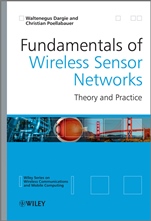
Fundamentals of Wireless Sensor Networks: Theory and Practice
ISBN 9780470997659
Autor: Waltenegus Dargie, Christian Poellabauer
Wydawca: Wiley
Dostępność: 3-6 tygodni
Cena: 502,95 zł
Przed złożeniem zamówienia prosimy o kontakt mailowy celem potwierdzenia ceny.
ISBN13: |
9780470997659 |
ISBN10: |
0470997656 |
Autor: |
Waltenegus Dargie, Christian Poellabauer |
Oprawa: |
Hardback |
Rok Wydania: |
2010-07-23 |
Ilość stron: |
330 |
Wymiary: |
253x197 |
Tematy: |
TJ |
In this book, the authors describe the fundamental concepts and practical aspects of wireless sensor networks. The book provides a comprehensive view to this rapidly evolving field, including its many novel applications, ranging from protecting civil infrastructure to pervasive health monitoring. Using detailed examples and illustrations, this book provides an inside track on the current state of the technology. The book is divided into three parts. In Part I, several node architectures, applications and operating systems are discussed. In Part II, the basic architectural frameworks, including the key building blocks required for constructing large–scale, energy–efficient sensor networks are presented. In Part III, the challenges and approaches pertaining to local and global management strategies are presented – this includes topics on power management, sensor node localization, time synchronization, and security. At the end of each chapter, the authors provide practical exercises to help students strengthen their grip on the subject. There are more than 200 exercises altogether.
Key Features:
•Offers a comprehensive introduction to the theoretical and practical concepts pertaining to wireless sensor networks
•Explains the constraints and challenges of wireless sensor network design; and discusses the most promising solutions
•Provides an in–depth treatment of the most critical technologies for sensor network communications, power management, security, and programming
•Reviews the latest research results in sensor network design, and demonstrates how the individual components fit together to build complex sensing systems for a variety of application scenarios
•Includes an accompanying website containing solutions to exercises (http://www.wiley.com/go/dargie—fundamentals)
This book serves as an introductory text to the field of wireless sensor networks at both graduate and advanced unde
rgraduate level, but it will also appeal to researchers and practitioners wishing to learn about sensor network technologies and their application areas, including environmental monitoring, protection of civil infrastructure, health care, precision agriculture, traffic control, and homeland security.
Spis treści:
Preface
Part One Introduction
1 Motivation for a Network of Wireless Sensor Nodes
1.1 Definitions and Background
1.2 Challenges and Constraints
1.3 Structure of the Book
References
2 Applications
2.1 Structural Health Monitoring
2.2 Traffic Control
2.3 Health Care
2.4 Pipeline Monitoring
2.5 Precision Agriculture
2.6 Active Volcano
2.7 Underground Mining
References
3 Node Architecture
3.1 The Sensing Subsystem
3.2 The Processor Subsystem
3.3 Communication Interfaces
3.4 Prototypes
References
4 Operating Systems
4.1 Functional Aspects
4.2 Non Functional Aspects
4.3 Prototypes
4.4 Evaluation
References
Part Two Basic Architectural Framework
5 Physical Layer
5.1 Basic Components
5.2 Source Encoding
5.3 Chanel Encoding
5.4 Modulation
5.5 Signal Propagation
References
6 Medium Access Control
6.1 Overview
6.2 Wireless MAC protocols
6.3 Characteristics of MAC Protocols in Sensor Networks
6.4 Contention Free MAC Protocols
6.5 Contention Based MAC Protocols
6.6 Hybrid MAC Protocols
6.7 Summary
References
7 Network Layer
7.1 Overview
7.2 Routing Metrics
7.3 Flooding and Gossiping
7.4 Data Centric Routing
7.5 Proactive Routing
7.6 On Demand Routing
7.7 Hierarchical Routing
7.8 Location Based Routing
7.9 Quality of Service Based Routing Protocols
7.10 Summary
References
Part Three Node and Network Management
8 Power Management
8.1 Local Power Management Aspects
8.2 Dynamic power manageme
nt
8.3 Conceptual Architecture
References
9 Time Synchronization
9.1 Clocks and the Synchronization Problem
9.2 Time Synchronization in Wireless Sensor Networks
9.3 Basics of Time Synchronization
9.4 Time Synchronization Protocols
References
10 Localization
10.1 Overview
10.2 Ranging Techniques
10.3 Range Based Localization
10.4 Range Free Localization
10.5 Event Driven Localization
References
11 Security
11.1 Fundamentals of Network Security
11.2 Challenges of Security in Wireless Sensor Networks
11.3 Security Attacks in Sensor Networks
11.4 Protocols and Mechanisms for Security
11.5 IEEE 802.15.4 and ZigBee Security
11.6 Summary
References
12 Sensor Network Programming
12.1 Challenges in Sensor Network Programming
12.2 Node Centric Programming
12.3 Macroprogramming
12.4 Dynamic Reprogramming
12.5 Sensor Network Simulators
References
Okładka tylna:
In this book, the authors describe the fundamental concepts and practical aspects of wireless sensor networks. The book provides a comprehensive view to this rapidly evolving field, including its many novel applications, ranging from protecting civil infrastructure to pervasive health monitoring. Using detailed examples and illustrations, this book provides an inside track on the current state of the technology. The book is divided into three parts. In Part I, several node architectures, applications and operating systems are discussed. In Part II, the basic architectural frameworks, including the key building blocks required for constructing large–scale, energy–efficient sensor networks are presented. In Part III, the challenges and approaches pertaining to local and global management strategies are presented – this includes topics on power management, sensor node localization, time synchronization, and security. At the end of each chapter, the authors provide
practical exercises to help students strengthen their grip on the subject. There are more than 200 exercises altogether.
Key Features:
•Offers a comprehensive introduction to the theoretical and practical concepts pertaining to wireless sensor networks
•Explains the constraints and challenges of wireless sensor network design; and discusses the most promising solutions
•Provides an in–depth treatment of the most critical technologies for sensor network communications, power management, security, and programming
•Reviews the latest research results in sensor network design, and demonstrates how the individual components fit together to build complex sensing systems for a variety of application scenarios
•Includes an accompanying website containing solutions to exercises (http://www.wiley.com/go/dargie—fundamentals)
This book serves as an introductory text to the field of wireless sensor networks at both graduate and advanced undergraduate level, but it will also appeal to researchers and practitioners wishing to learn about sensor network technologies and their application areas, including environmental monitoring, protection of civil infrastructure, health care, precision agriculture, traffic control, and homeland security.
Koszyk
Książek w koszyku: 0 szt.
Wartość zakupów: 0,00 zł
Informacje


Kontakt
Gambit
Centrum Oprogramowania
i Szkoleń Sp. z o.o.
Al. Pokoju 29b/22-24
31-564 Kraków
Siedziba Księgarni
ul. Kordylewskiego 1
31-542 Kraków
+48 12 410 5991
+48 12 410 5987
+48 12 410 5989
Subskrypcje
Administratorem danych osobowych jest firma Gambit COiS Sp. z o.o. Na podany adres będzie wysyłany wyłącznie biuletyn informacyjny.
Autoryzacja płatności

Informacje na temat autoryzacji płatności poprzez PayU.

© Copyright 2012: GAMBIT COiS Sp. z o.o. Wszelkie prawa zastrzeżone.
Projekt i wykonanie: Alchemia Studio Reklamy