


Wydawcy
Katalog tematyczny
- Archeologia (109)
- Ekonomia, finanse, business (13704)
- Filozofia (1445)
- Historia (3040)
- Języki i językoznawstwo (2356)
- Lifestyle, hobby i rozrywka (475)
- Medycyna (9704)
- Nauki humanistyczne (4)
- Nauki o Ziemi i środowisku (2638)
- Nauki ścisłe (20412)
- Nauki społeczne (8486)
- Nauki techniczne (13450)
- Prawo (1696)
- Publikacje informacyjne i interdyscyplinarne (1288)
- Religia i wierzenia (917)
- Technika komputerowa (4067)
- Zdrowie, relacje międzyludzkie i rozwój osobisty (657)





Informacje szczegółowe o książce
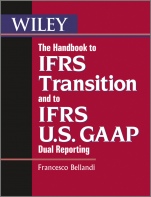
The Handbook to IFRS Transition and to IFRS U.S. GAAP Dual Reporting: Interpretation, Implementation and Application to Grey Areas
ISBN 9780470977125
Autor: Francesco Bellandi
Wydawca: Wiley
Dostępność: 3-6 tygodni
Cena: 530,25 zł
Przed złożeniem zamówienia prosimy o kontakt mailowy celem potwierdzenia ceny.
ISBN13: |
9780470977125 |
ISBN10: |
0470977124 |
Autor: |
Francesco Bellandi |
Oprawa: |
Paperback |
Rok Wydania: |
2012-03-30 |
Ilość stron: |
846 |
Wymiary: |
236x186 |
Tematy: |
KF |
The Handbook to IFRS Transition and to IFRS U.S. GAAP Dual Reporting is the most comprehensive handbook covering transition issues an absolute must have companion in order to deal with the complex transitional issues faced by companies over to IFRS. It should be on the desks of all accountants preparing for IFRS.
Steve Collings FMAAT, FCCA, Audit and Technical Partner at Leavitt Walmsley Associates Ltd, and author of The Interpretation and Application of International Standards on Auditing
In The Handbook to IFRS and to IFRS U.S. GAAP Dual Reporting, Francesco Bellandi adopts a practical, operational approach to show how systems, processes, and procedures can be put in place to report a complete set of general purpose primary financial statements under IFRS and U.S. GAAP.
The first part of the book addresses the requirements for adopting IFRS for the first time, and provides corporate examples and illustrations. Enforcement decisions by regulators are examined, along with considerations arising from US. GAAP and the SEC guidance that has been developed in the context of the use of IFRSs by foreign private issuers.
The second part compares the two bodies of standards against each other, at an item–by–item level, in order to identify solutions under one set of standards to issues arising under the other. The author provides ready–made dual reporting tools to aid financial statement preparers in designing the structure of the financial statements under IFRSs, U.S. GAAP, and SEC rules and regulations, as well as to reconcile respective captions and the line items. Potential problem areas are highlighted through an examination of the subtleties and interpretations relating to the IASB–IFRSs, certain jurisdictional versions of IFRSs, and implications in SEC filings.
Each chapter contains commentary sections, which highlight the similarities differences, and grey areas between IFRS, U.S. GAAP, the SEC rules and regulations, and other accounting jurisdictions. Planning point sections throughout the book prove recommendations and purpose multiple resolutions to issue that practitioners, including corporate staff, may face.
Preface xxxiii
About the Author xxxv
1 Introduction and Scope of Book 1
1.1 Nature of Accounting Literature and Pertinent Pronouncements 1
1.2 Significance of the IFRS Transition 1
1.3 IFRS Transition Scenario 3
1.4 Scope of the Book 6
2 IFRS First–Time Adoption Requirements and Interaction with U.S. GAAP and SEC Rules and Regulations 11
2.1 Chapter Preview 11
2.2 IFRS 1 Amendments and Effective Dates 11
2.3 Rationale of IFRS 1 12
2.4 Accounting Steps in Migrating to IFRSs 18
2.5 First IFRS Financial Statements 20
2.6 Entities Affected by IFRS 1 28
2.7 Compliance with IFRSs 29
2.8 Transition Date 37
2.9 Accounting Policies 37
2.10 The Impact of Alternative Bases of Reporting 46
2.11 Accounting Estimates 54
2.12 The Opening IFRS Statement of Financial Position 61
2.13 Comparative Information 67
2.14 Exceptions and Exemptions in the Context of Comparability 80
2.15 Interim Reporting 87
2.16 Reconciliations and Disclosures 95
2.17 Exceptions to the Retrospective Application of Other IFRSs 101
2.18 Exemption for Past Business Combinations 126
2.19 Exemptions from Other IFRSs 149
2.20 Short–Term Exemptions from Other IFRSs 205
2.21 Implications for Financial Statement Preparers 210
3 Dual Reporting for The Statement of Financial Position 215
3.1 Chapter Preview 215
3.2 Context of the Statement of Financial Position 216
3.3 Structure of the Statement of Financial Position 220
3.4 Certain Other Structural Elements of the Statement of Financial Position 234
3.5 Captions and Line Items 241
3.6 Implications for Financial Statement Preparers 344
4 Dual Reporting for the Statements of Income 347
4.1 Chapter Preview 347
4.2 Different Forms of Statements of Income 348
4.3 Context of Statements 357
4.4 Structure of the Statement of Income 363
4.5 Aggregations and Subtotals 366
4.6 Analysis of Expenses 440
4.7 Captions and Line Items 450
4.8 Implications for Financial Statement Preparers 516
5 Dual Reporting for the Statement of Cash Flows 521
5.1 Chapter Preview 521
5.2 Context of the Statement of Cash Flows 522
5.3 Cash and Cash Equivalents 527
5.4 Direct versus IndirectMethod 536
5.5 Other Structural Elements of the Statement of Cash Flows 547
5.6 Special Issues 597
5.7 Captions and Line Items 636
5.8 Implications for Financial Statement Preparers 646
6 Dual Reporting for the Statement of Changes in Equity 655
6.1 Chapter Preview 655
6.2 Context of the Statement of Changes in Equity 656
6.3 Different Concepts of the Statement of Changes in Equity 664
6.4 The Structure of the Statement of Changes in Equity 669
6.5 Specific Elements 696
6.6 Captions and Line Items 703
6.7 Implications for Financial Statement Preparers 727
7 Dual Reporting for Interim Financial Statement 731
7.1 Chapter Preview 731
7.2 Accounting Principles for Interim Financial Statements 732
7.3 Types of Interim Financial Information 742
7.4 Reporting Entities 744
7.5 Approaches to Interim Reporting 752
7.6 Bases of Accounting in Interim Financial Statements 755
7.7 Periods to be Covered 758
7.8 Frequency of Reporting 763
7.9 Reporting Deadlines 763
7.10 Audited versus Unaudited 764
7.11 Set of Interim Financial Statements 765
7.12 Condensed Format of Interim Financial Statements 770
7.13 Implications for Financial Statement Preparers 777
Key Elements and Decisions 777
Other Control Points 778
Table of Exhibits 781
Bibliography 785
Index 789
Koszyk
Książek w koszyku: 0 szt.
Wartość zakupów: 0,00 zł
Informacje


Kontakt
Gambit
Centrum Oprogramowania
i Szkoleń Sp. z o.o.
Al. Pokoju 29b/22-24
31-564 Kraków
Siedziba Księgarni
ul. Kordylewskiego 1
31-542 Kraków
+48 12 410 5991
+48 12 410 5987
+48 12 410 5989
Subskrypcje
Administratorem danych osobowych jest firma Gambit COiS Sp. z o.o. Na podany adres będzie wysyłany wyłącznie biuletyn informacyjny.
Autoryzacja płatności

Informacje na temat autoryzacji płatności poprzez PayU.

© Copyright 2012: GAMBIT COiS Sp. z o.o. Wszelkie prawa zastrzeżone.
Projekt i wykonanie: Alchemia Studio Reklamy