


Wydawcy
Katalog tematyczny
- Archeologia (109)
- Ekonomia, finanse, business (13704)
- Filozofia (1445)
- Historia (3040)
- Języki i językoznawstwo (2356)
- Lifestyle, hobby i rozrywka (475)
- Medycyna (9704)
- Nauki humanistyczne (4)
- Nauki o Ziemi i środowisku (2638)
- Nauki ścisłe (20412)
- Nauki społeczne (8486)
- Nauki techniczne (13450)
- Budownictwo lądowe (1045)
- Chemia przemysłowa (2258)
- Elektronika i telekomunikacja (3287)
- Energetyka (1122)
- Inne nauki stosowane (363)
- Inżynieria dźwięku (22)
- Materiały wybuchowe (3)
- Optyka stosowana (106)
- Przestrzeń kosmiczna (22)
- Technika morska (44)
- Technologia górnicza (9)
- Inżynieria biochemiczna (507)
- Inżynieria transportu (232)
- Mechanika i materiały (3316)
- Nauka o środowisku (321)
- Rolnictwo (507)
- Technika, ogólnie (475)
- Prawo (1696)
- Publikacje informacyjne i interdyscyplinarne (1288)
- Religia i wierzenia (917)
- Technika komputerowa (4067)
- Zdrowie, relacje międzyludzkie i rozwój osobisty (657)





Informacje szczegółowe o książce
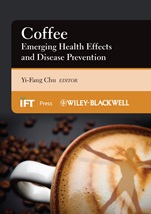
Coffee: Emerging Health Effects and Disease Prevention
ISBN 9780470958780
Autor: Yi–Fang Chu
Wydawca: Wiley
Dostępność: 3-6 tygodni
Cena: 1 033,20 zł
Przed złożeniem zamówienia prosimy o kontakt mailowy celem potwierdzenia ceny.
ISBN13: |
9780470958780 |
ISBN10: |
0470958782 |
Autor: |
Yi–Fang Chu |
Oprawa: |
Hardback |
Rok Wydania: |
2012-03-02 |
Ilość stron: |
352 |
Wymiary: |
251x173 |
Tematy: |
TT |
Coffee is one of the most beloved beverages in the world, making itthe second most traded commodity in the world (just behind crudeoil). The conventional notion that drinking coffee might bedetrimental to human health derives from studies carried out in the1950s and 1960s. This research failed to account for cigarettesmoking which, as was discovered later, confounded and maskedcoffee′s benefits. Since then, and especially since the newmillennium, research evidence for coffee′s health benefits hasmounted significantly. More and more large and long–term studieshave demonstrated that coffee offers protection against type 2diabetes, assorted cancers, and neurodegenerative diseasesincluding Parkinson′s and Alzheimer′s diseases.
Coffee: Emerging Health Benefits and Disease Preventionis the first book to present a contemporary and comprehensivesummary of the newly–understood bioactive effects of the manycompounds in coffee. The breadth and depth of coverage is extensiveand balanced, focusing on the following topics: coffee constituentsand their bioavailability; pro– and antioxidant properties; thehealth benefits and disease prevention effects of coffee; andpotential negative health impacts. Multiple chapters describecoffee′s positive impacts on health and various diseases, includingtype 2 diabetes, neurodegenerative diseases, cancer andcardiovascular and liver diseases. Coffee′s positive effects onmood, suicide rate and cognitive performance are addressed, as arethe negative health impacts of coffee on pregnancy, insulinsensitivity, dehydration, gastric irritation, anxiety, andwithdrawal syndrome issues.
Written by many of the top researchers in the world, this volumeis a must–have reference for food professionals in academia,industry, and governmental & regulatory agencies whose workinvolves coffee.
Preface xvii
List of Contributors xix
List of Abbreviations xxii
Acknowledgement xxv
1 Introduction 1
Thomas Hatzold
1.1 Coffee a popular beverage 1
1.2 Coffee from a nutritional perspective 1
1.3 Potential beneficial effects of coffee 2
1.4 Limitations to the beneficial effects 3
1.5 History 5
1.6 Coffee production worldwide 5
1.7 Coffee processing: formation and fate of bioactive compounds5
1.8 New processes to optimize the health benefits of coffee10
1.9 Coffee preparation 12
1.10 Coffee beverages and specialties 14
1.11 Coffee consumption 14
1.12 Conclusions 16
2 Coffee Constituents 21
Adriana Farah
2.1 Introduction 21
2.2 Production of coffee and coffee–based beverages 22
2.3 Natural coffee constituents 26
2.4 Incidental coffee constituents 43
2.5 Concluding remarks 50
3 Bioavailability of Coffee Chlorogenic Acids 59
Angelique Stalmach
3.1 Introduction 59
3.2 Chlorogenic acids: contribution of coffee to dietary levelsingested 59
3.4 Conclusions 72
4 Coffee and Alzheimer s Disease: Animal and CellularEvidence 77
Marshall G. Miller and Barbara Shukitt–Hale
4.1 Introduction 77
4.2 Alzheimer s disease 77
4.3 Coffee 81
4.4 Caffeine 82
4.5 Phenolics 86
4.6 Other coffee constituents 89
4.7 Conclusions 91
5 Coffee and Alzheimer s Disease EpidemiologicEvidence 97
Joan Lindsay, Pierre–Hugues Carmichael, EdeltrautKr¨oger, and Danielle Laurin
5.1 Introduction 97
5.2 Review of epidemiologic studies of coffee in relation toAlzheimer′s disease, dementia, and selected aspects of cognitivefunctioning 98
5.3 The strength of the evidence for preventingAlzheimer s disease 106
6 Coffee and Parkinson′s Disease 111
Jing–Wei Lim and Eng–King Tan
6.1 Introduction 111
6.2 Pathogenesis of Parkinson′s disease 111
6.3 Gene and environmental/lifestyle factors 112
6.4 Clinical evidence linking coffee consumption and Parkinson′sdisease 113
6.5 Neuroprotection and active components of coffee 115
6.6 Adenosine receptor antagonism and Parkinson′s disease116
6.7 Caffeine rescue of Parkinson′s disease in animal models116
6.8 Clinical trials of adenosine receptor antagonists inParkinson′s disease 117
6.9 Caffeine–mediated genetic susceptibility of Parkinson′sdisease 118
6.10 Summary 118
7 Coffee and Liver Health 123
Pablo Muriel and Jonathan Arauz
7.1 The liver 123
7.2 Epidemiologic studies 124
7.3 Coffee, fibrosis, and cirrhosis 124
7.4 Coffee and animal models of hepatic fibrosis 126
7.5 Cytokines and liver fibrosis 127
7.6 Mechanism of coffee s protective effect 128
7.7 Adenosine A2A receptors and caffeine 132
7.8 Caffeine metabolism and drug interactions 134
7.9 Conclusions 134
8 Coffee and Type 2 Diabetes Risk 141
Nathan V. Matusheski, Siamak Bidel, and JaakkoTuomilehto
8.1 Introduction 141
8.2 Observational associations between coffee consumption andtype 2 diabetes risk 142
8.3 Coffee preparation 154
8.4 Observational associations between coffee consumption anddiabetes risk factors 156
8.5 Intervention studies in human subjects 159
8.6 Possible mechanisms of action 166
8.7 Summary and conclusions 170
9 Coffee and Cardiovascular Diseases 181
Siamak Bidel and Jaakko Tuomilehto
9.1 Introduction 181
9.2 Coffee components and CVD 181
9.3 Early, transient, or acute effects of coffee consumption onCVD 183
9.4 Coffee metabolism and CVD: genetic influences 185
9.5 Long–term habitual coffee consumption and CVD 185
9.6 Coffee consumption and heart failure 189
9.7 Coffee consumption and stroke 189
9.8 Summary 190
10 Coffee and Cancers 197
Andre Nkondjock
10.1 Introduction 197
10.2 Breast cancer 198
10.3 Colorectal cancer 198
10.4 Prostate cancer 199
10.5 Bladder cancer 199
10.6 Gastric cancer 200
10.7 Ovarian cancer 201
10.8 Pancreatic cancer 201
10.9 Liver cancer 201
10.10 Head and neck cancers 202
10.11 Endometrial cancer 203
10.12 Kidney cancer 204
10.13 Brain cancer 204
10.14 Cancer survival 204
10.15 Conclusions 205
11 Coffee Consumption and Mortality Risk 211
Kemmyo Sugiyama, Shinichi Kuriyama, and Ichiro Tsuji
11.1 Introduction 211
11.2 Coffee consumption and all–cause mortality 211
11.3 Coffee consumption and CVD mortality 221
11.4 Coffee consumption and cancer mortality 222
11.5 Possible mechanism of CVD mortality reduction by coffee223
11.6 Conclusions 223
12 Is Coffee the Next Red Wine? Coffee Polyphenol andCholesterol Efflux 227
Harumi Kondo, Makoto Ayaori, and Katsunori Ikewaki
12.1 High–density lipoprotein and cardiovascular disease 227
12.2 Coffee and cardiovascular disease 227
12.3 Coffee polyphenols 228
12.4 Coffee polyphenols and cholesterol efflux 229
13 Additional Positive Impacts on Health 233
Yi–Fang Chu and Yumin Chen
13.1 Coffee intake and reduced risk of suicide 233
13.2 Enhanced cognitive performance and mood 235
13.3 Coffee bioactive compounds 236
14 Epidemiological Evidence for Maternal Prenatal Coffee andCaffeine Consumption and Miscarriage Risk 243
Ronna L. Chan
14.1 Introduction 243
14.2 Coffee consumption during pregnancy: a three–decade–oldconcern 243
14.3 Evidence from the current literature 244
14.4 Methodological concerns and limitations for studies oncoffee or caffeine exposure and miscarriage 247
14.5 Risk for recurrent miscarriage 253
14.6 Conclusion, public health implications, and recommendationsfor future studies 254
15 Acrylamide in Coffee 259
Richard H. Stadler and Viviane Theurillat
15.1 Introduction 259
15.2 Methods of analysis 260
15.3 Occurrence in coffee and exposure estimates 260
15.4 Mechanisms of formation 262
15.5 Mitigation options 264
15.6 Risk assessment and risk management 268
15.7 Conclusions 270
16 Impact of Coffee on Gastric Acid Secretion 275
Malte J. Rubach and Veronika Somoza
16.1 Introduction 275
16.2 Regulation of gastric acid secretion 276
16.3 Effects of coffee on gastric secretion 279
16.4 Optimization of coffee bean processing to reduce thegastric acid stimulatory potential of coffee 285
16.5 Dietary impact on the gastric acid stimulatory potential ofcoffee 286
16.6 Conclusions 287
17 Potential Mental Risks 293
Emma Childs and Harriet de Wit
17.1 Epidemiology of coffee and other forms of caffeine 293
17.2 Beneficial effects of caffeine 295
17.3 Risks associated with caffeine use 296
17.4 Summary and conclusions 301
18 Furan in Coffee 307
Helmut Guenther
18.1 Introduction 307
18.2 Physical and chemical properties 307
18.3 Toxicology and risk assessment 307
18.4 Occurrence of furan in coffee 309
18.5 Conclusion 316
References 316
Index 319
Dr Yi–Fang Chu was Head of the Global Coffee Wellness Research Group at Kraft Foods Global Inc., Glenview, Illinois, USA. He is currently with PepsiCo Global Nutrition, Barrington, Illinois
Koszyk
Książek w koszyku: 0 szt.
Wartość zakupów: 0,00 zł
Informacje


Kontakt
Gambit
Centrum Oprogramowania
i Szkoleń Sp. z o.o.
Al. Pokoju 29b/22-24
31-564 Kraków
Siedziba Księgarni
ul. Kordylewskiego 1
31-542 Kraków
+48 12 410 5991
+48 12 410 5987
+48 12 410 5989
Subskrypcje
Administratorem danych osobowych jest firma Gambit COiS Sp. z o.o. Na podany adres będzie wysyłany wyłącznie biuletyn informacyjny.
Autoryzacja płatności

Informacje na temat autoryzacji płatności poprzez PayU.

© Copyright 2012: GAMBIT COiS Sp. z o.o. Wszelkie prawa zastrzeżone.
Projekt i wykonanie: Alchemia Studio Reklamy